Udon Thani Travel Guide
Udon Thani is one of the larger cities in Isan, the northeast region of Thailand. It is not a classic tourist destination, but it has a few standout attractions — most notably the seasonal Red Lotus Lake and the UNESCO-listed Ban Chiang archaeological site — plus good food, night markets and a genuine local atmosphere. Many travellers use it as a base for exploring the surrounding province or as a stop on the way to Nong Khai and the Lao border. It feels more like everyday Thailand than a polished resort town.
How to Get There
Flying in
Udon Thani International Airport has frequent flights from Bangkok (Don Mueang and Suvarnabhumi) with AirAsia, Nok Air, Thai Lion Air and others. Flight time is about 1 hour. The airport is a short taxi or songthaew ride from the city centre.
By train
Overnight trains from Bangkok take roughly 8–10 hours. The station is convenient for the city.
By bus
Frequent buses leave from Bangkok’s Mo Chit / Mochit Bus Terminal. Journey time is around 8 hours.
Within the city, songthaews, tuk-tuks and Grab cover most distances. The centre is relatively compact.

Climate & Best Time to Visit
Udon Thani has a more continental climate than the coasts, with clearer seasons.
Best time: November to February
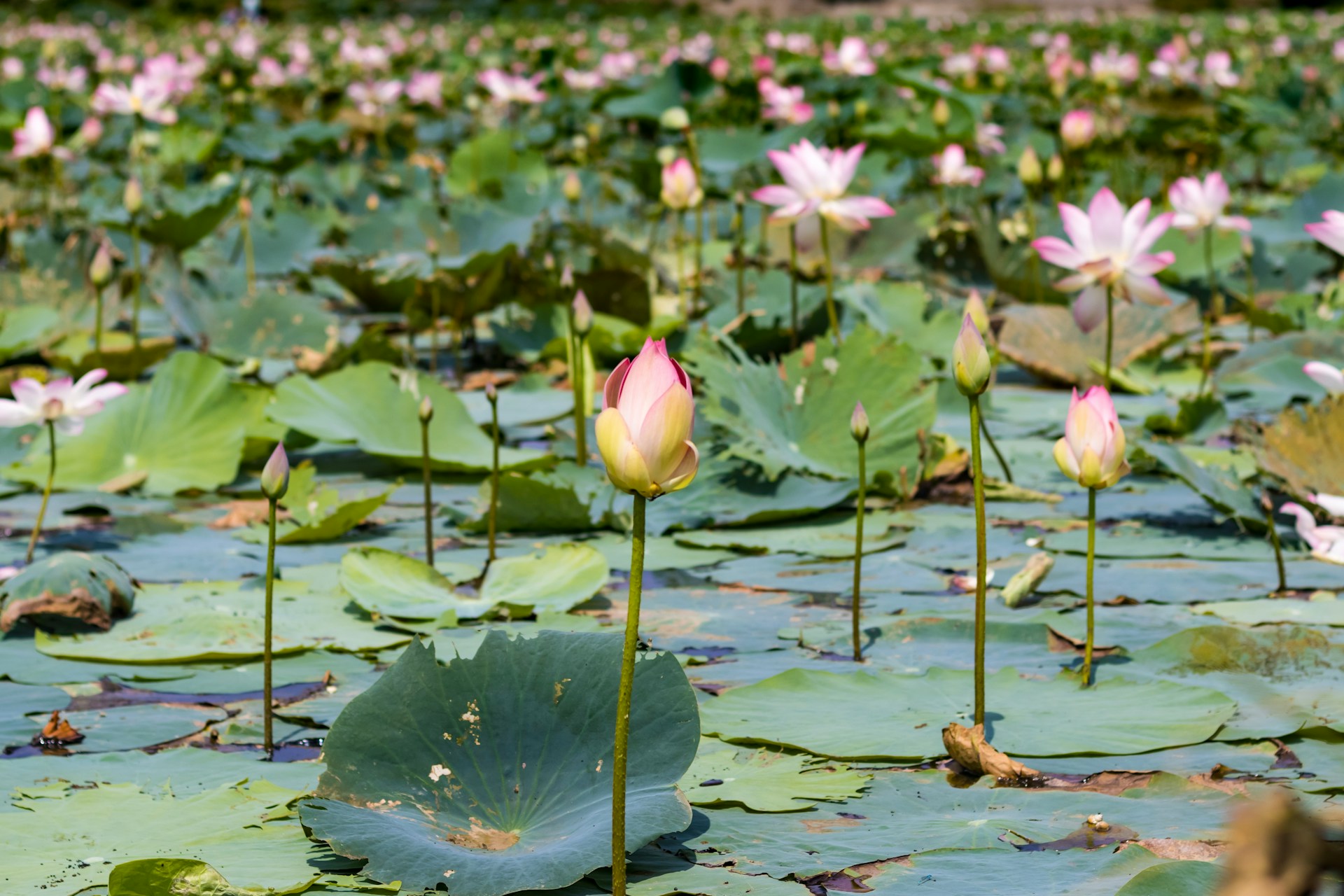
Cooler, dry weather that is comfortable for sightseeing. Nights can feel surprisingly cool. This is also the peak season for the Red Lotus Lake bloom (roughly December–February).
Hot season: March and April
Temperatures rise sharply, often into the mid-30s °C or higher, with dry heat.
Rainy season: May to October
Heavier rain, especially July–September. The landscape is greener, but outdoor plans can be disrupted. Accommodation is cheaper.

What You’ll Love Doing Here
The two main draws are outside the city. Red Lotus Lake (Talay Bua Daeng), about 45–50 minutes away, fills with pink lotus flowers in the cool season. Early morning boat rides among the blooms are the classic experience. Ban Chiang, also around 50 km from the city, is a UNESCO World Heritage Site with a museum and archaeological remains of a prehistoric culture famous for its pottery.

In the city itself, night markets and street food are the highlights. Isan cuisine — spicy, sour and full of herbs — is excellent here. Nong Prajak Park offers a relaxed lakeside setting for walking and people-watching. There are also local temples and a modest nightlife scene around the park and market areas.
Evenings are low-key and local. Most visitors eat well, walk around the park or markets, and turn in reasonably early.
Pros and Cons
What people love
- Red Lotus Lake in peak bloom is genuinely beautiful
- Ban Chiang offers real historical interest
- Excellent and affordable Isan food
- Authentic, non-touristy atmosphere
- Good transport links and a practical base for the region
What can frustrate people
- Limited major attractions inside the city itself
- Hot season can be extremely hot and dry
- Red Lotus Lake is highly seasonal
- Less English spoken than in major tourist centres
- Not a place for beaches or dramatic scenery
Why Go
Udon Thani works best as a short stop or a base for the surrounding province rather than a primary holiday destination. Come for the Red Lotus Lake in the cool season, visit Ban Chiang if you are interested in history, and enjoy the food and everyday Isan life. It is practical, friendly and authentic. Pair it with Nong Khai or further exploration of the northeast if you have more time, and you will get a good sense of a part of Thailand that most beach travellers never see.