Khon Kaen Travel Guide
Khon Kaen is the biggest city in Isan and a genuine regional hub. It’s not a classic tourist destination, but that’s part of the appeal. You’ll find a large central lake, good temples, excellent local food, a lively night market scene, and one of Thailand’s most interesting dinosaur museums just outside town. It’s a practical place to pause if you’re travelling through the northeast, and it gives you a real sense of everyday modern Isan life without the heavy tourist overlay of Chiang Mai or Bangkok.
How to Get There
From Bangkok
The easiest options are the frequent buses and VIP coaches from Mo Chit (Northern Bus Terminal). The journey takes around 6–7 hours. Overnight trains from Krung Thep Aphiwat Central Terminal are also available and take 7–8 hours. Flights from Don Mueang or Suvarnabhumi to Khon Kaen Airport take about 1 hour and are the fastest choice if you prefer not to sit for half a day.
Once in the city, songthaews, tuk-tuks and Grab cover most places. The central lake area and main temples are walkable if you’re staying nearby.
Climate & Best Time to Visit
Khon Kaen has a classic Isan climate with three clear seasons.
Best time: November to February
Cooler temperatures, low humidity and almost no rain. Perfect for walking around the lake, visiting temples and exploring the surrounding countryside. This is the most comfortable period by far.
Hot season: March to May
It gets extremely hot, often reaching the high 30s or low 40s. Early mornings and evenings are still usable, but midday outdoor time is tough.
Rainy season: June to October
Heavy afternoon storms are common, especially July–September. The countryside turns very green, but flooding can occasionally affect lower-lying areas. Hotel rates are lower and the city is quieter.
What You’ll Love Doing Here
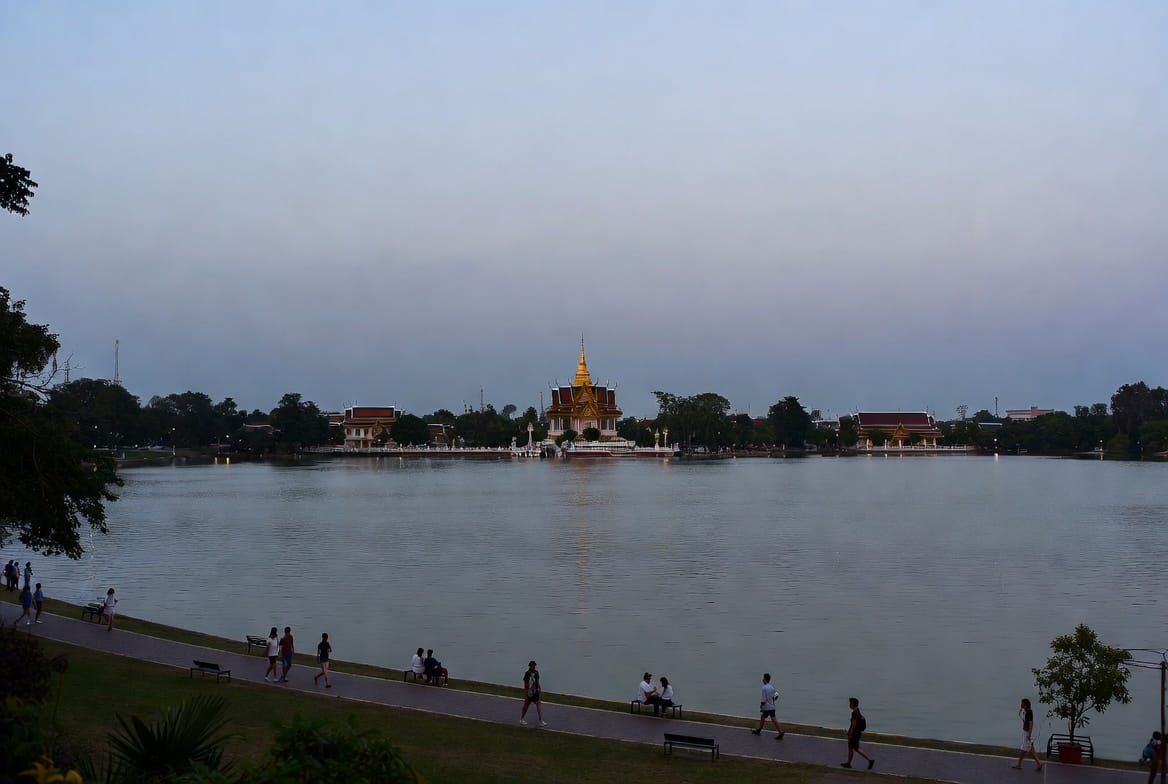
The heart of the city is Bueng Kaen Nakhon, a large artificial lake with a walking and cycling path around it. Locals come here in the late afternoon and evening to exercise, eat snacks and relax. It’s the best place to feel the everyday rhythm of Khon Kaen.
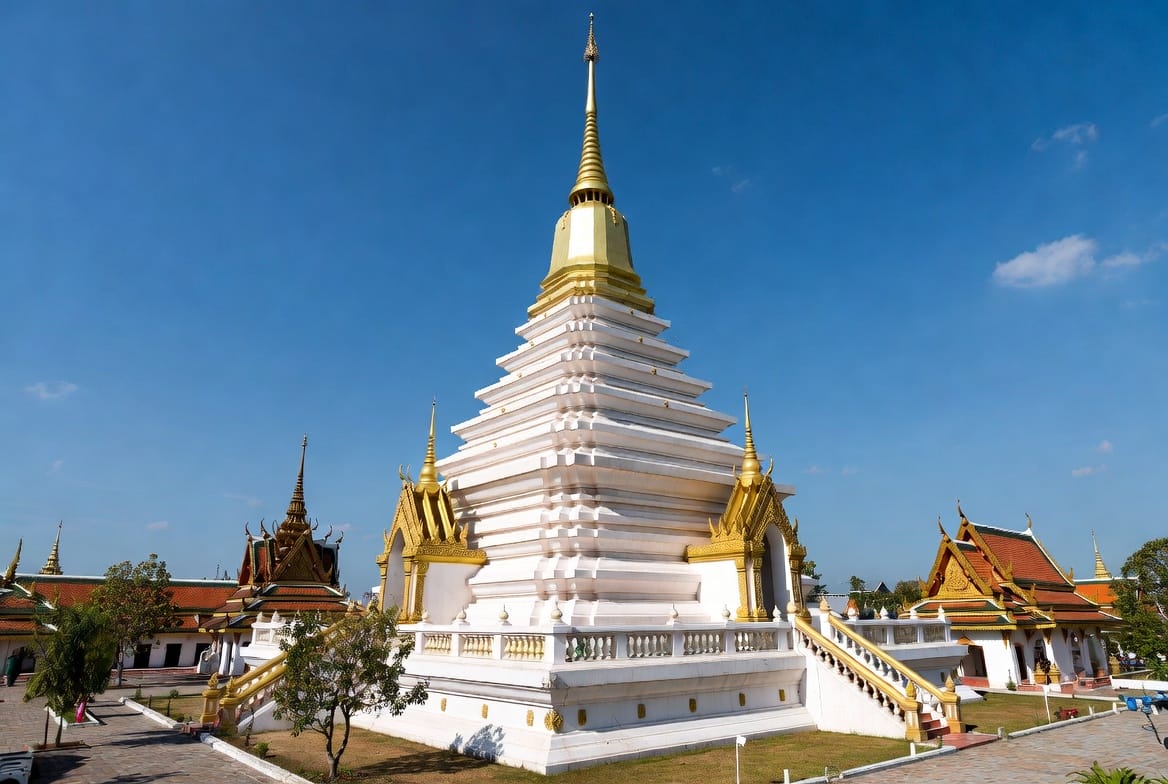
Right beside the lake stands Phra Mahathat Kaen Nakhon (also known as Wat Nong Wang), a tall nine-storey stupa. You can climb to the upper levels for panoramic views over the lake and city. The murals inside show Isan culture and local history.
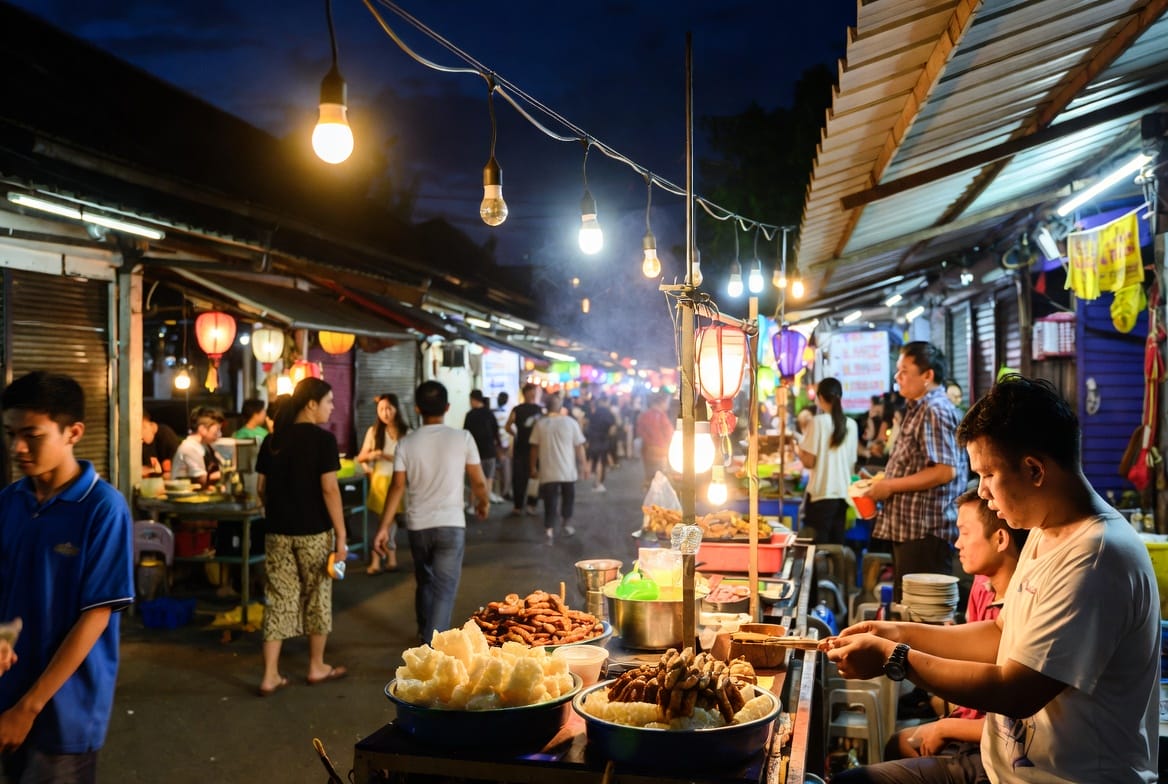
Food is a real highlight. Isan cuisine is bold, spicy and delicious. The night bazaars and markets around the lake and central area are full of grilled chicken, papaya salad, sticky rice and local sweets at very reasonable prices. Ton Tann Night Market is another popular evening spot.
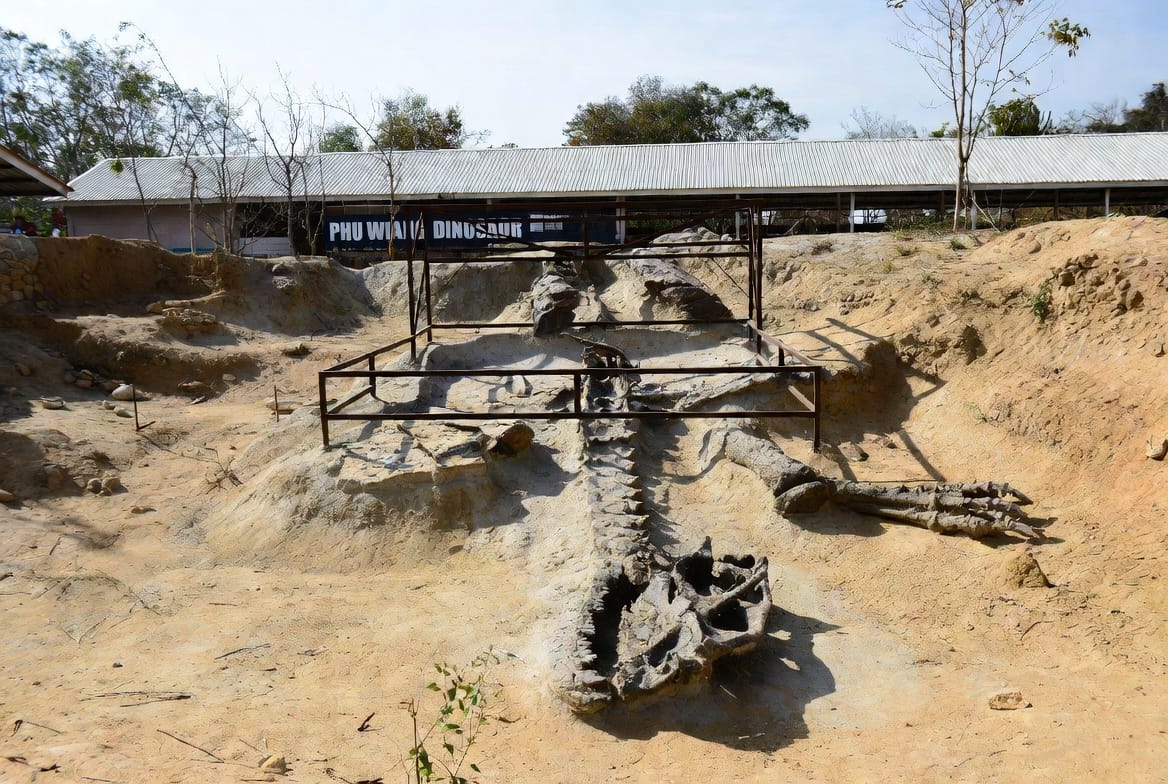
About 80–90 km west of the city is Phu Wiang National Park and the excellent Phu Wiang Dinosaur Museum. This is one of the most important dinosaur fossil sites in Thailand. You can see excavation pits, real fossils and well-presented displays. It’s an easy and worthwhile day trip if you’re interested in natural history.
Other options include the older Phra That Kham Kaen chedi (the provincial symbol), the National Museum, and silk-weaving villages if you want to see traditional crafts. The city has a large university, so the atmosphere feels younger and more energetic than many other Isan towns.
Pros and Cons
What people love
- Genuine regional city atmosphere with few foreign tourists
- Excellent and inexpensive Isan food
- Pleasant central lake for evening walks
- Interesting dinosaur museum and fossil sites nearby
- Good transport links across the northeast
What can frustrate people
- Not a major sightseeing destination — limited “wow” attractions
- Hot season is extremely hot
- Traffic can be heavy in the city centre
- Public transport within the city is basic
- English is less widely spoken than in the big tourist centres
Why Go
Khon Kaen works best as a practical and cultural stop rather than a holiday destination in its own right. Come if you’re travelling through Isan, want to experience a real Thai regional city, or are interested in the dinosaur sites. Walk around the lake at sunset, climb the nine-storey stupa, eat well at the night markets, and make the day trip to Phu Wiang if you have time. It’s honest, unpretentious and gives you a clear window into everyday life in the northeast — which is exactly why some travellers enjoy it more than the more polished tourist spots.