Ubon Ratchathani Travel Guide
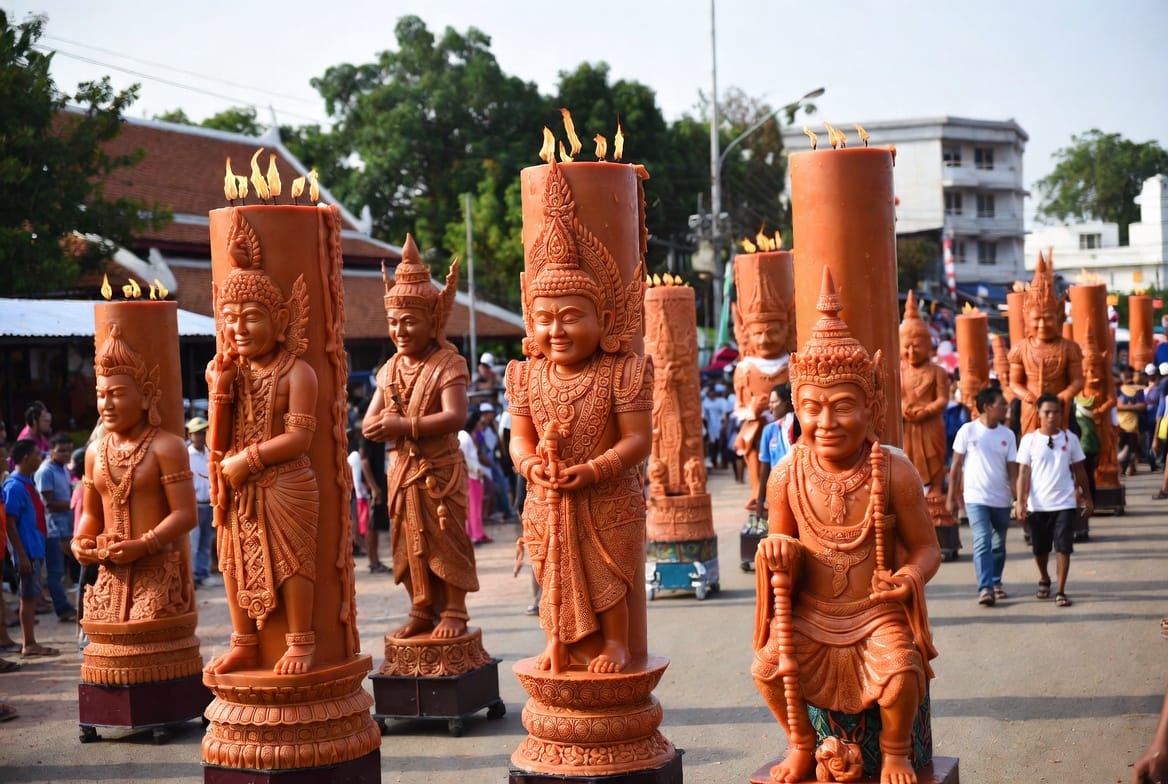
Ubon Ratchathani sits in the far northeast of Thailand, near the borders with Laos and Cambodia. It is one of Isan’s larger cities and is best known for its spectacular Candle Festival in July, when giant elaborately carved wax sculptures are paraded through the streets. Beyond the festival, the city has several interesting temples, good local food and easy access to natural sites such as Sam Phan Bok (sometimes called Thailand’s Grand Canyon) and the Mekong River area around Khong Chiam. It feels authentic and relatively untouristed compared with the major destinations further west.
How to Get There
Flying in
Ubon Ratchathani Airport (UBP) has frequent flights from Bangkok (about 1 hour 15–30 minutes) with AirAsia, Nok Air, Thai Lion Air and others. The airport is close to the city centre.
By train
Overnight trains from Bangkok take roughly 10–12 hours. The station is in Warin Chamrap, a short songthaew or taxi ride from the main city area.
By bus
VIP and regular buses leave from Bangkok’s Mo Chit Bus Terminal. Journey time is typically 9–12 hours.
Within the city, songthaews, tuk-tuks and Grab cover most distances. The centre is manageable on foot around the main parks and temples.
Climate & Best Time to Visit
Ubon follows the classic Isan pattern of cool, hot and rainy seasons.
Best time: November to February
Cooler, dry weather ideal for sightseeing and outdoor trips. This is also a good window for visiting Sam Phan Bok when water levels are lower.
Hot season: March to May
Temperatures climb significantly and the heat can be intense.
Rainy season: June to October
Heavier rain, especially July–September. The Candle Festival takes place in July (around the start of Buddhist Lent), so the city is busier then despite the weather. Landscapes are greener.
What You’ll Love Doing Here
The Candle Festival is the single biggest draw if your timing aligns with late July. Giant beeswax sculptures depicting Buddhist and mythological scenes are paraded through the city in a colourful, highly photogenic event.
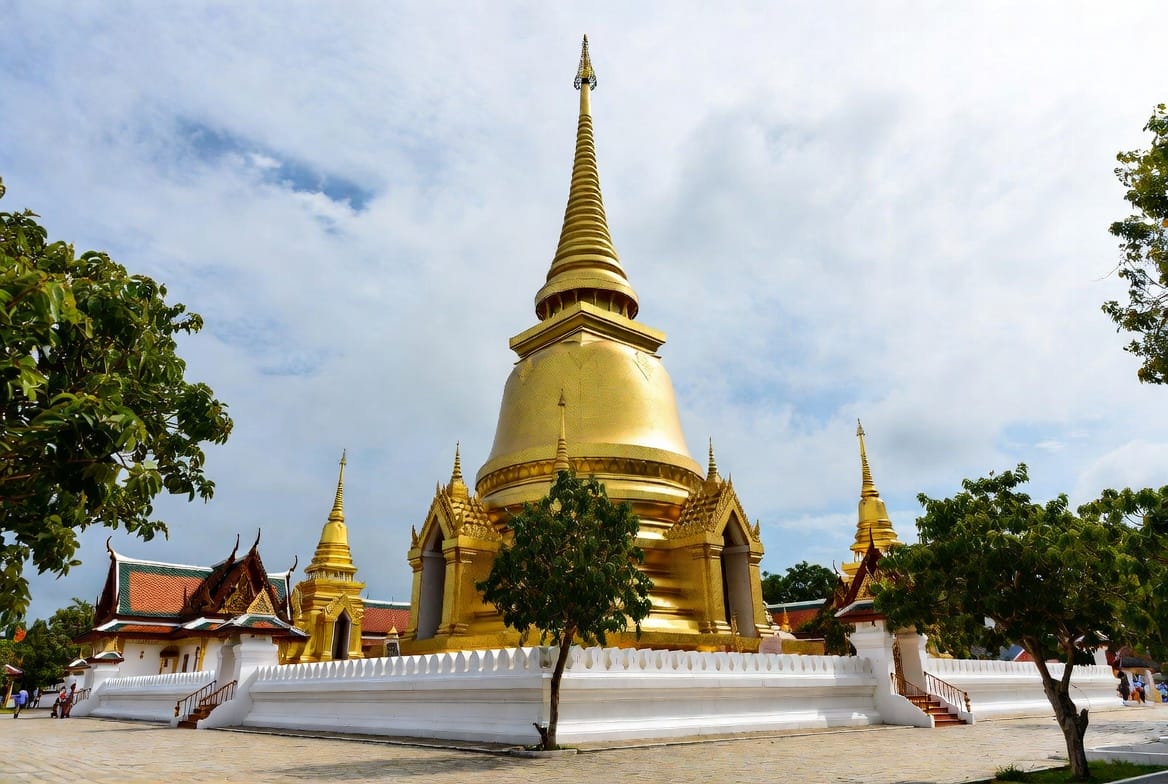
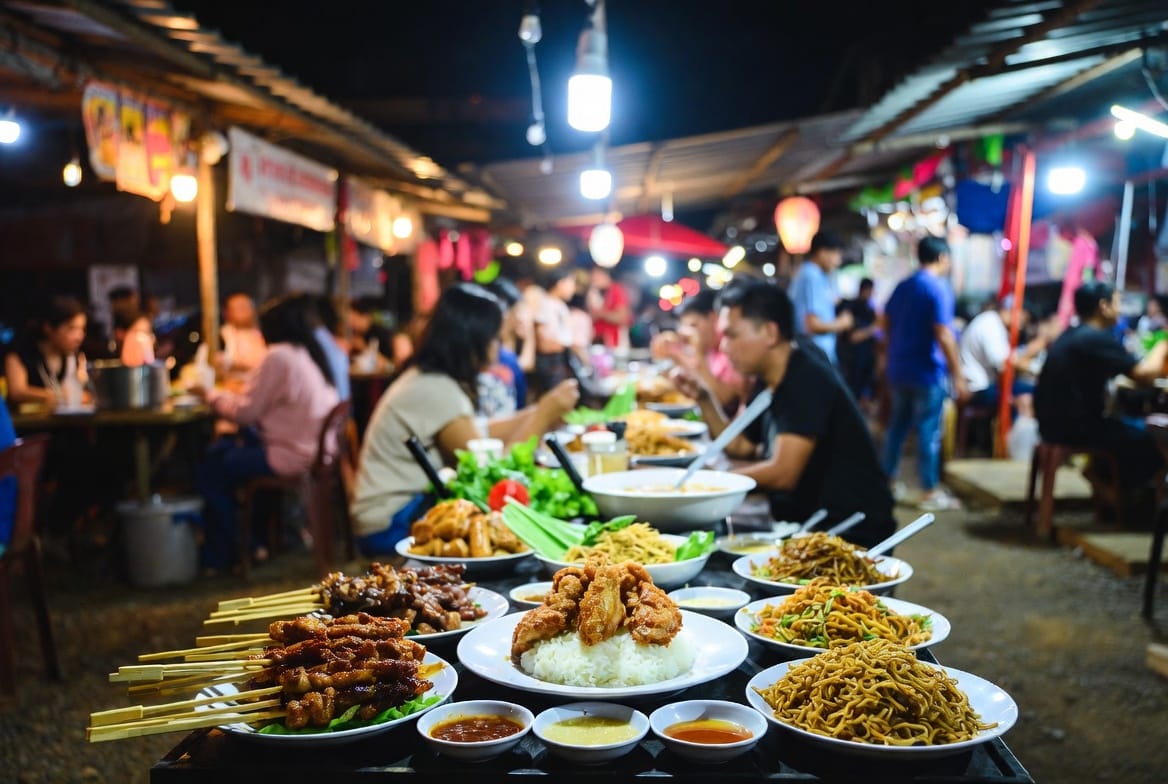
Outside festival time, the city has several worthwhile temples, including Wat Phra That Nong Bua with its impressive golden stupa and Wat Thung Si Muang with its classic wooden scripture library. Night markets and street food are excellent for sampling Isan dishes.
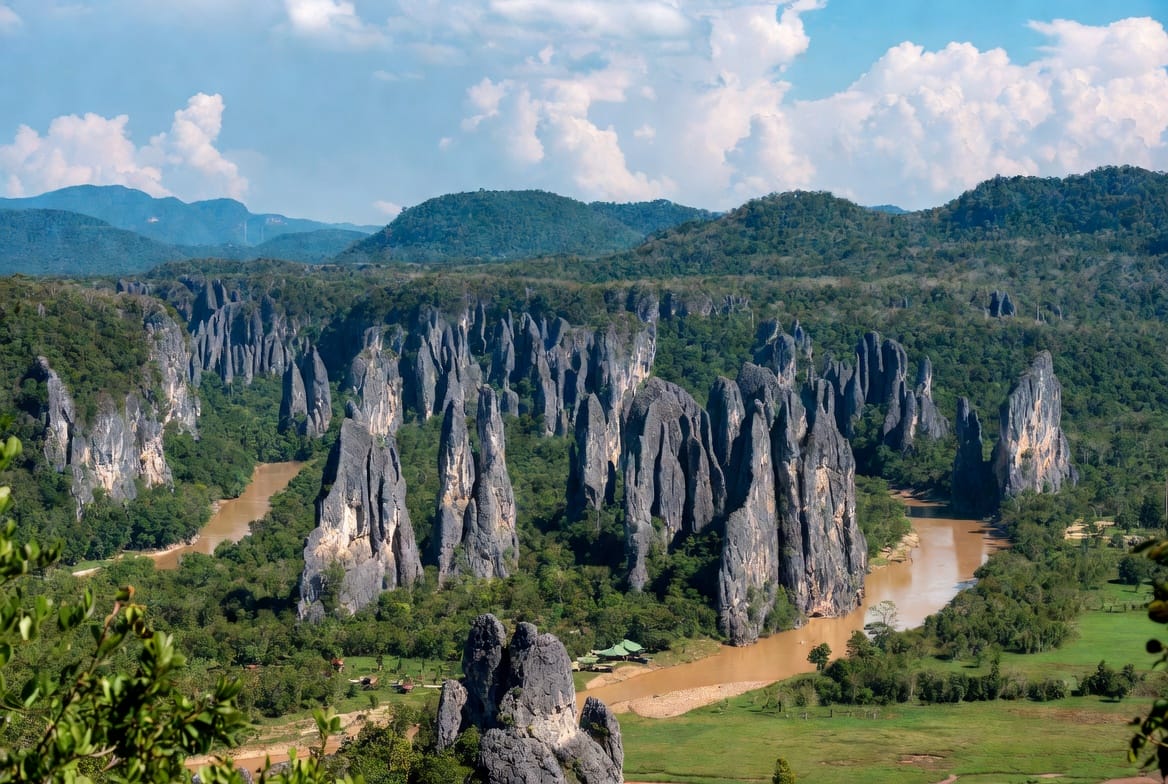
Day trips are a strong reason to visit the area. Sam Phan Bok on the Mekong offers striking eroded rock formations when water levels are low. Nearby Pha Taem National Park has prehistoric cliff paintings and Mekong viewpoints. Khong Chiam, where the Mun River meets the Mekong, is a pleasant riverside stop.
Evenings in the city are relaxed — markets, simple restaurants and a quiet provincial feel.
Pros and Cons
What people love
- The Candle Festival is one of Thailand’s most distinctive cultural events
- Interesting temples and authentic Isan atmosphere
- Good access to Sam Phan Bok and Mekong scenery
- Excellent local food at fair prices
- Far fewer foreign tourists than the major destinations
What can frustrate people
- Limited major attractions if you are not interested in temples or nature day trips
- Hot season is very hot; rainy season can disrupt outdoor plans
- Less English and tourist infrastructure than western or southern Thailand
- Candle Festival crowds and higher prices in July
- Not a place for beaches or dramatic mountain scenery within the city
Why Go
Ubon Ratchathani is worth visiting if you want a genuine Isan city experience, especially if you can time it for the Candle Festival or combine it with Sam Phan Bok and the Mekong. It is practical to reach by plane, has good food and a friendly local atmosphere, and serves as a useful base for the far northeast. Come for the culture and the river scenery rather than polished tourist attractions, and you will find it rewarding in a quiet, understated way.