Pai Travel Guide
Pai is the kind of place that makes people change their plans. What starts as a two-night stop often turns into a week. It’s a small mountain town surrounded by green hills, rice fields and dramatic red canyons. The vibe is relaxed and a little bohemian — think scooters, cafés, live music and long conversations. It’s perfect if you want nature, a slower pace, and a friendly backpacker atmosphere without the intensity of the bigger cities or beach islands.
How to Get There
From Chiang Mai (the usual route)
Almost everyone arrives from Chiang Mai. The journey takes 3.5 to 4.5 hours along a famously winding mountain road (762 curves, if you’re counting). Shared minivans are the most popular option. They leave frequently from Chiang Mai’s Arcade Bus Terminal (Terminal 2) and cost around 200–250 baht. The ride can be bumpy and motion-sickness is common, so sit near the front if you can and consider taking something for the curves.
Slightly cheaper buses also run the route, and private transfers or taxis are available if you want more comfort (and the chance to stop for photos). Experienced riders sometimes rent motorbikes for the trip, but the road demands real skill and concentration.
From further afield
There is no airport in Pai and no train. If you’re coming from Bangkok or elsewhere, fly or travel to Chiang Mai first, then continue by minivan. Some people include Pai as part of the longer Mae Hong Son Loop.
Climate & Best Time to Visit
Pai sits in a valley and feels noticeably cooler than the lowlands, especially at night.
Best time: November to February
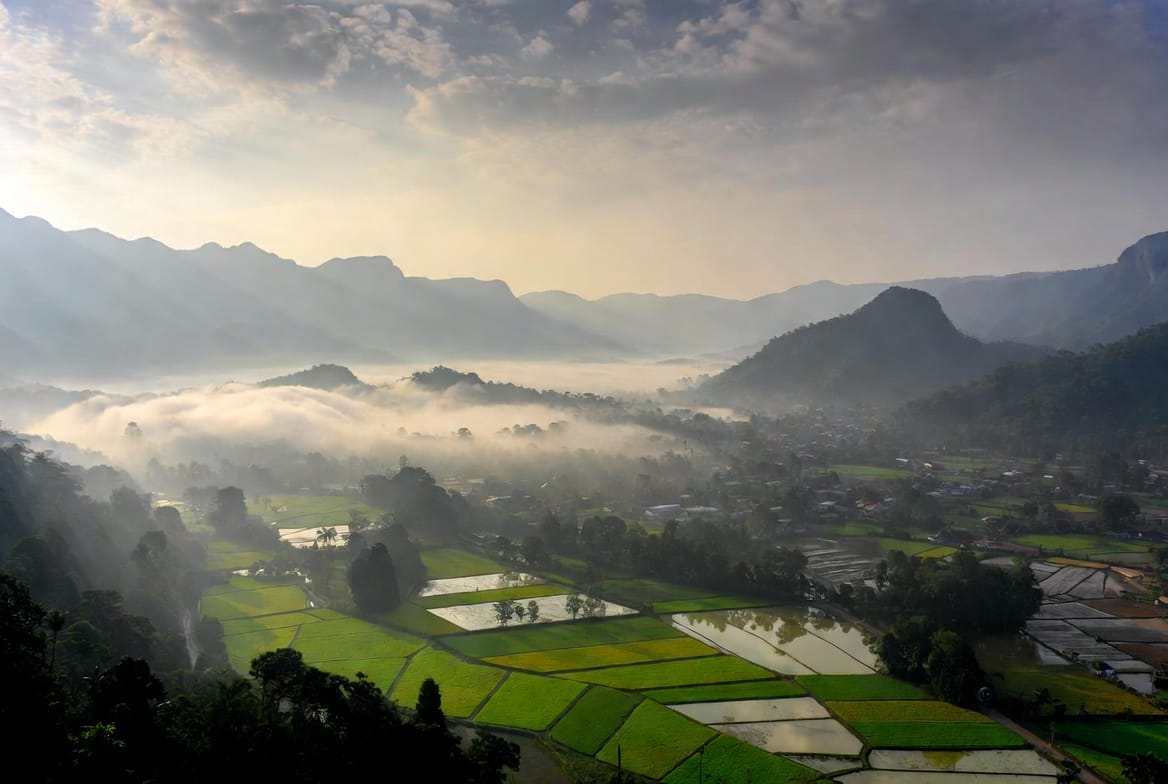
This is peak season for good reason. Days are warm and pleasant (around 25–30°C), nights can drop to 10–15°C (you’ll want a hoodie or light jacket), and the air is usually clear. Mornings often start with beautiful mist in the valley. Perfect for canyon walks, hot springs and scooter rides.
Hot and smoky: March to mid-April
Temperatures climb and the burning season can fill the valley with haze. Views disappear and the air quality suffers. Many people avoid this window unless they’re coming specifically for Songkran.
Green season: June to October
Afternoon rains are common, the landscape turns incredibly green, and waterfalls are at their best. Crowds drop and prices are lower. The trade-off is slippery paths and the occasional heavy downpour. November is often a sweet spot — still green but with clearer skies.
What You’ll Love Doing Here
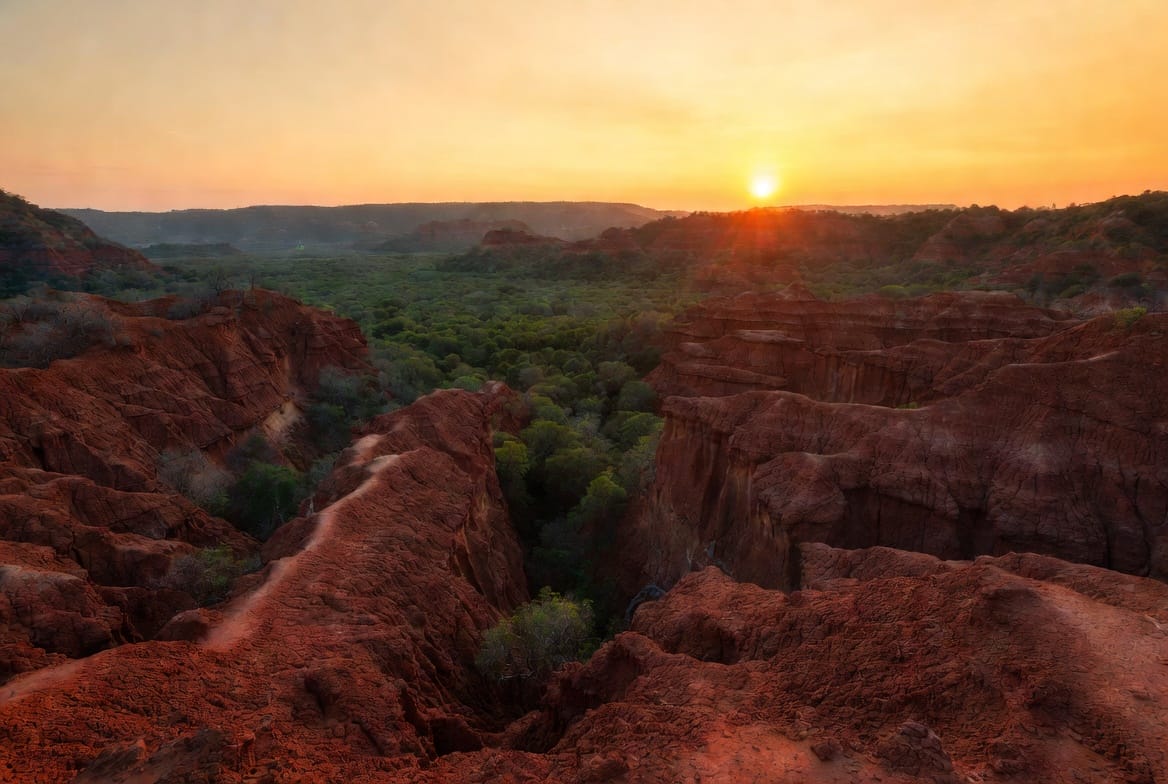
The star attraction is Pai Canyon (Kong Lan). Narrow red sandstone ridges wind above a green valley, with steep drops on both sides and no railings. It’s dramatic and photogenic, especially at sunset. Go late in the afternoon, bring water, and watch your step.
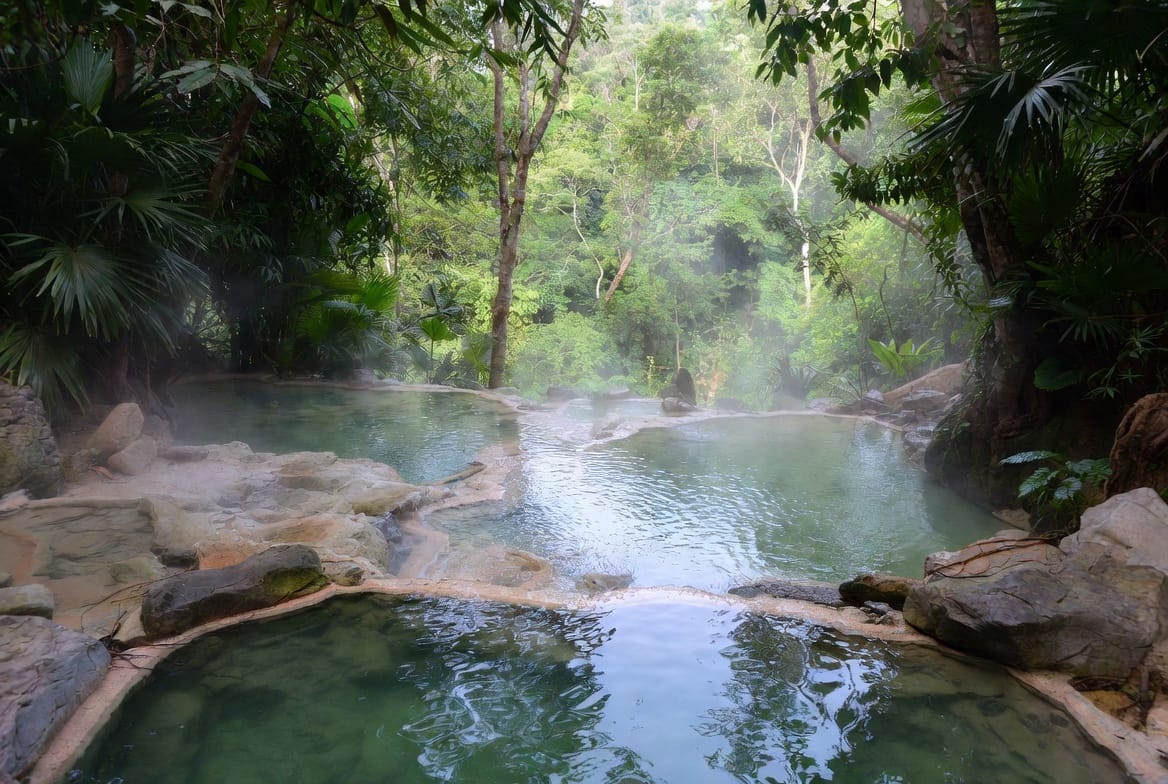
Just a short ride away are the Tha Pai Hot Springs. Natural mineral pools sit in a peaceful jungle setting. Some pools are gently warm, others are hot enough to cook an egg. It’s a lovely place to soak after a day on a scooter or hiking.
Waterfalls are easy to reach. Pam Bok has a fun natural rock slide, while Mor Paeng and others offer swimming holes and short jungle walks. For something more adventurous, the multi-hour trek to Mae Yen Waterfall is rewarding if you’re up for it.
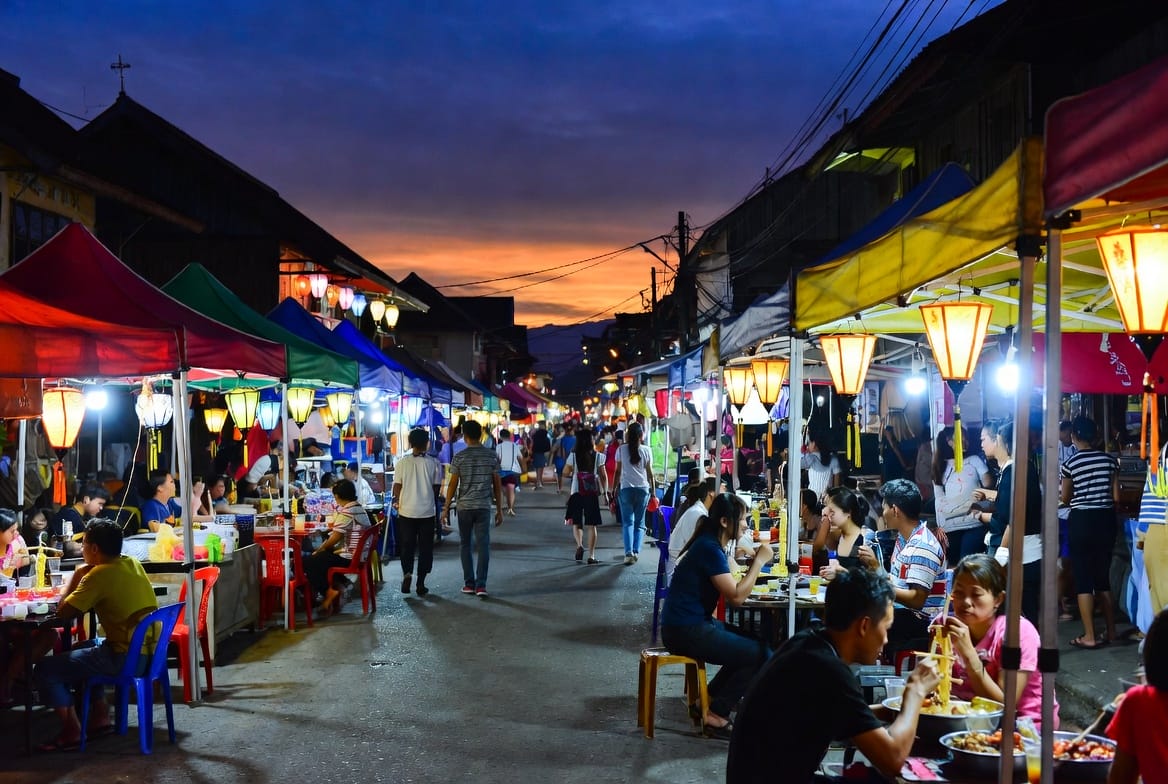
Every evening the main street turns into the Pai Walking Street Night Market. Food stalls, live music, crafts and a friendly mixed crowd of travellers and locals create a relaxed, social atmosphere. It’s one of the best parts of staying in town.
Other easy pleasures include renting a scooter to explore rice fields and viewpoints, visiting the memorial bridge, or just spending slow mornings in one of the many good cafés. Yoga, massage and live music are easy to find if that’s your style.
Pros and Cons
What people love
- Beautiful nature right on the doorstep (canyon, hot springs, waterfalls, viewpoints)
- Relaxed, friendly atmosphere that encourages longer stays
- Great evening market and a fun mix of travellers
- Cooler climate and dramatic mountain scenery
- Easy to get around by scooter once you’re there
What can frustrate people
- The road from Chiang Mai is long, winding and can cause motion sickness
- It gets busy in peak season (especially December–January)
- Burning season haze in March–April can ruin the views
- Some parts of town feel quite touristy and “backpacker bubble”
- Limited rainy-day indoor options if the weather turns
Why Go
Pai is for people who like the idea of slowing down. Come for the canyon sunsets and hot springs, stay for the easy mornings, good coffee and the feeling that you don’t need a strict itinerary. Visit in the cool season if you can, rent a scooter, watch at least one sunset at the canyon, and give yourself permission to stay longer than planned. That’s usually when Pai works its quiet magic.