Mae Hong Son Travel Guide
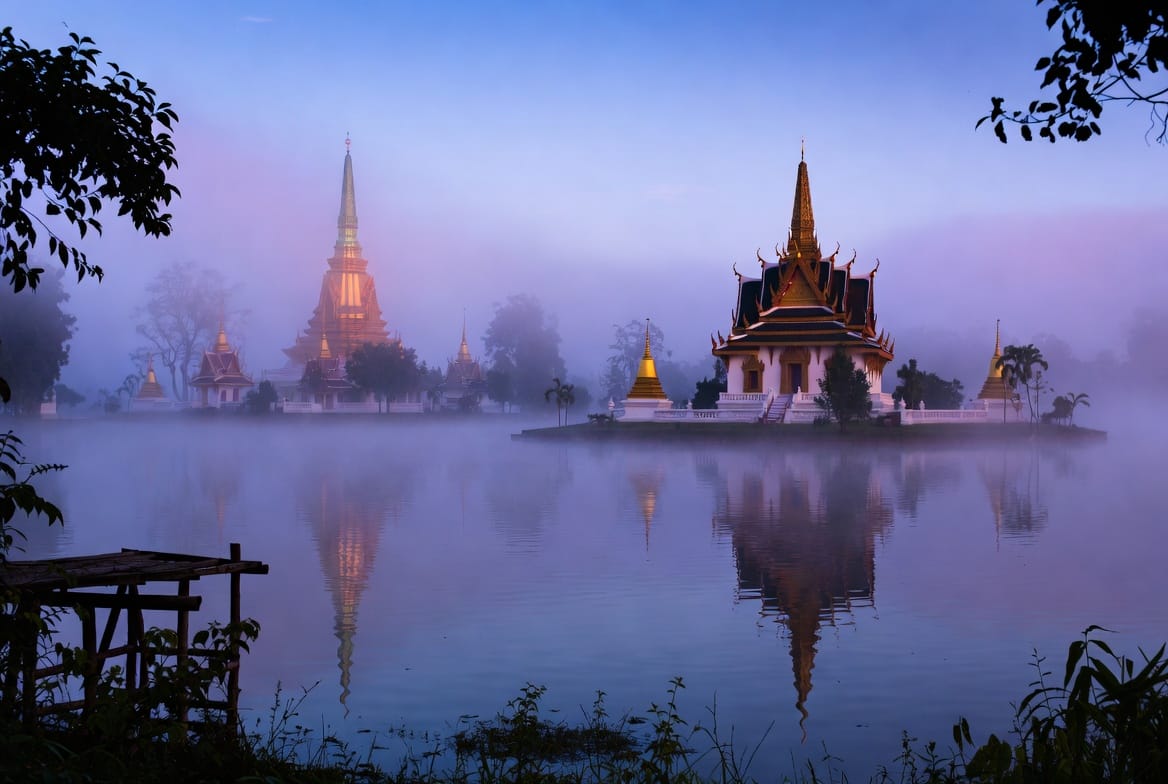
Mae Hong Son is a small, sleepy town tucked into a valley near the Myanmar border in northwest Thailand. Surrounded by forested mountains, it has a distinct Shan and Burmese flavour that feels different from the rest of the north. The classic postcard view is the pair of lakeside temples, Wat Jong Kham and Wat Jong Klang, reflecting in the water on misty mornings. Many people reach it as part of the winding Mae Hong Son Loop from Chiang Mai, but the town itself is worth a couple of nights if you want cooler air, gentle walks and a slower pace.
How to Get There
From Chiang Mai
The most common way is by minivan or bus. The northern route via Pai takes around 5.5–7 hours on a very winding road (Highway 1095). The southern route via Mae Sariang is longer but less twisty. Both are scenic.
From Bangkok
Direct overnight buses take 15–17 hours. Flying is possible but limited — check current schedules to Mae Hong Son Airport (HGN), as service can be irregular. Many people fly into Chiang Mai and continue by road.
Once in town the centre is compact and easy to explore on foot or by rented bicycle/scooter. Songthaews and tuk-tuks are available for short trips.
Climate & Best Time to Visit
Mae Hong Son sits in a mountain valley and is cooler than the lowlands.
Best time: November to February
Cool, dry and often misty in the mornings — the classic “sea of mist” period. This is when the town looks its best and the temperature is most comfortable for walking.
Hot season: March and April
Warmer and drier. Still workable, but the valley can feel hot by afternoon and smoke from burning can reduce visibility.
Rainy season: May to October
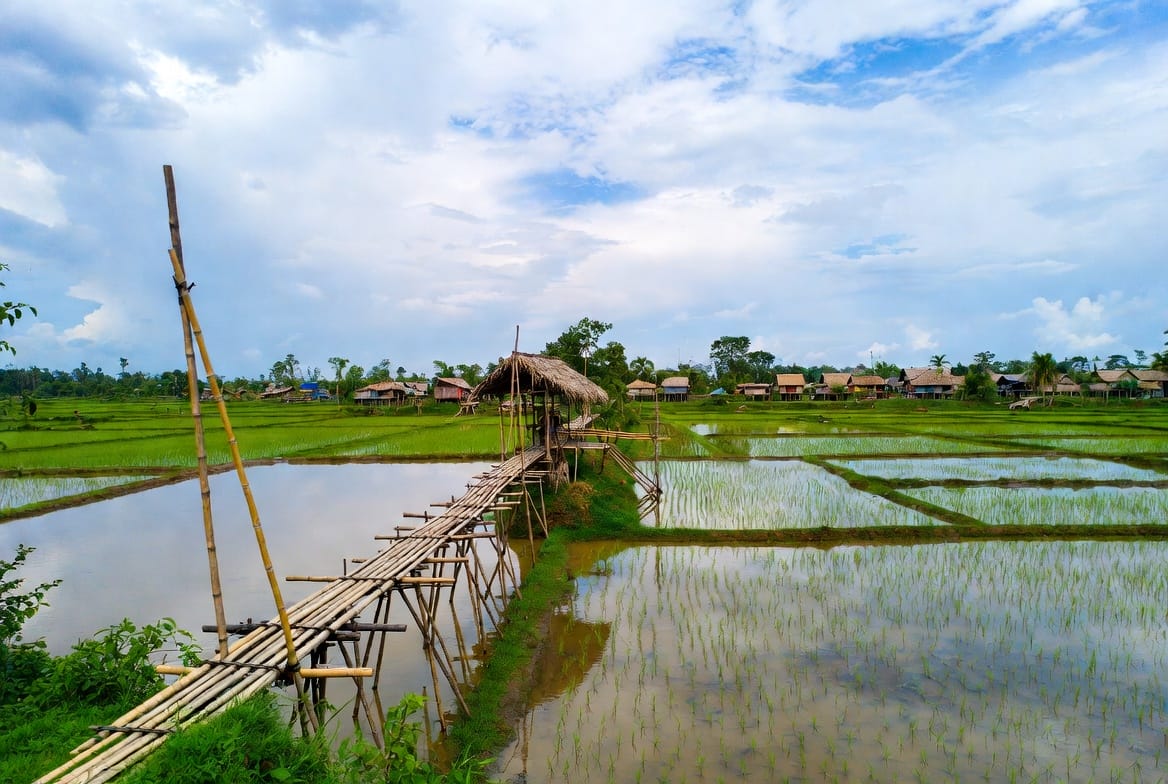
Heavier rain, greener landscapes, and fewer visitors. Some mountain roads can be affected, and the famous mist is less reliable.
What You’ll Love Doing Here
Start with the two lakeside temples — Wat Jong Kham and Wat Jong Klang. They sit side by side on the edge of a small lake and look especially beautiful at sunrise when the mist is still hanging in the valley. The architecture is distinctly Shan/Burmese rather than central Thai.
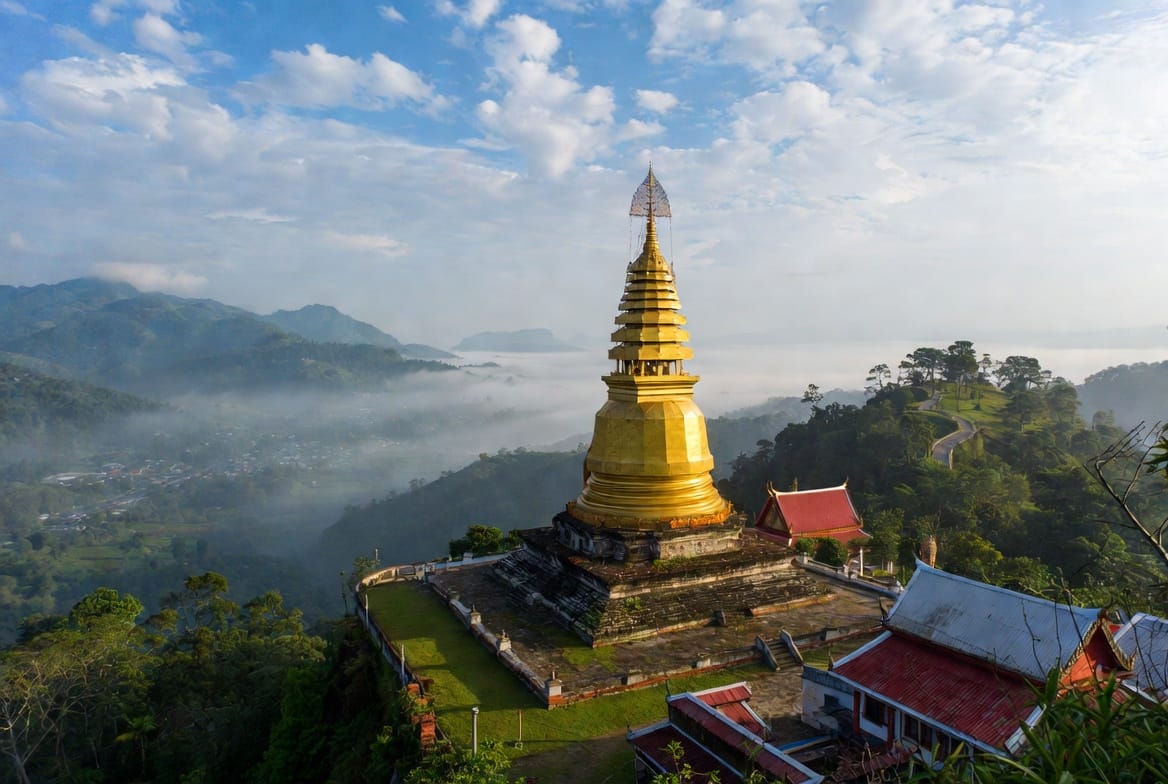
Climb up to Wat Phra That Doi Kong Mu for the best viewpoint over the town. Early morning is ideal if you want the misty panorama that Mae Hong Son is famous for.
A short trip out of town brings you to the Su Tong Pae Bridge, a long bamboo walkway that crosses rice fields. It was built so local monks could walk to the village for alms. It is especially photogenic and peaceful in the early morning or late afternoon.
Mae Hong Son is also the natural overnight stop on the Mae Hong Son Loop, one of Thailand’s most popular motorbike and driving routes. Even if you are not doing the full loop, the surrounding countryside offers easy day trips, trekking options and a slower rhythm than Pai or Chiang Mai.
Evenings are quiet. Walk around the lake, eat at a simple restaurant or the night market, and enjoy the cooler mountain air.
Pros and Cons
What people love
- Beautiful lakeside temples and misty valley views
- Cooler climate than much of northern Thailand
- Strong Shan cultural flavour and relaxed atmosphere
- Great stop on the Mae Hong Son Loop
- Fewer crowds than Pai or Chiang Mai
What can frustrate people
- Getting there involves long, winding roads
- Limited nightlife and entertainment
- Can feel very quiet if you are looking for a lively scene
- Hot season brings heat and occasional smoke haze
- Public transport within the province is limited
Why Go
Mae Hong Son is for travellers who prefer atmosphere over a long list of attractions. Come for the misty mornings by the lake, the hilltop views, the bamboo bridge, and the feeling of being in a quieter, more mountainous corner of the north. It works perfectly as part of the Loop or as a peaceful two-night escape from Chiang Mai. If you like cooler air, Shan-style temples and a slower pace, you will probably find yourself lingering longer than planned.