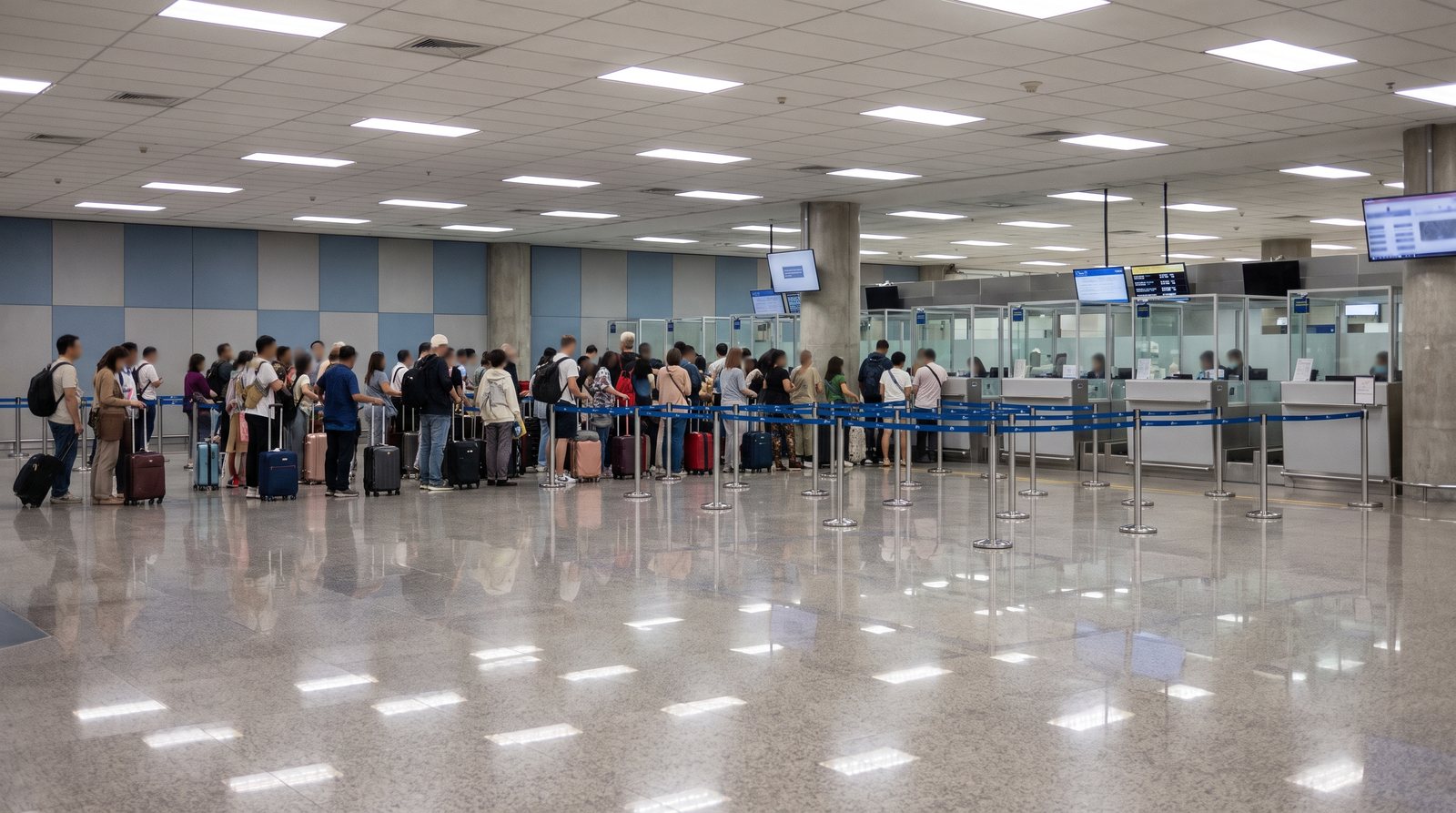
The biggest piece of Thailand travel news this week is finally settled rather than rumoured. On 31 August 2026 the Royal Gazette published the four Ministry of Interior regulations that replace Thailand's 60-day visa exemption with a 30-day one. They come into force after the standard 15-day interval, which means the new rules apply to arrivals from 15 September 2026. If you are in the middle of Thailand vacation planning, this is the one date to write down.
We covered the framework in July, when the Cabinet had approved it but nothing had been published. That caveat is now gone. Below is what the published text actually says, who it affects, who it does not, and how a 30-day ceiling changes the shape of a Thailand itinerary — which, for most holidays, is barely at all.
What was published, and when it starts
The regulations appear in the Royal Gazette of 31 August 2026, Volume 143, Special Issue 207 Ngor — the primary source behind every piece of Thailand travel news you will read on this in the next fortnight. The first of the four repeals the July 2024 measure that granted 60 days visa-free to 93 countries and territories. The other three establish what replaces it.
All four carry the same commencement clause: entry into force 15 days after publication. In practice that gives a clean split.
- Arrive on or before 14 September 2026 — you are admitted under the current rules and stamped for up to 60 days.
- Arrive on or after 15 September 2026 — you are admitted under the new rules and stamped for up to 30 days.
- Already in Thailand — you keep the stay you were granted on arrival. A 60-day stamp issued on 10 September runs its full course; it is not shortened retroactively.
That last point matters more than it sounds. If you are already booked to travel to Thailand in the first half of September and want the longer stamp, nothing about your trip needs to change.
Who gets 30 days
The published list contains 60 countries and territories — one more than the 59 quoted in July's government briefings, a discrepancy the Gazette text resolves. It includes the United States, the United Kingdom, Canada, Australia, New Zealand, all 27 EU member states, Japan, Singapore, Malaysia, Indonesia, India, Taiwan, Israel, Turkey, South Africa, the Gulf states and the Maldives.
Two further changes sit alongside it. Mauritius and Seychelles move to a 15-day exemption. Visa on Arrival, currently open to 31 nationalities, shrinks to three: Azerbaijan, Belarus and Serbia. India, which appeared in early drafts as a Visa on Arrival country, was moved to the 30-day exemption list instead.
One wording change is easy to miss. The new regulation frames the exemption as being for tourism. It drops the reference to short-term work and business engagements that the repealed 60-day scheme carried. If you were relying on the exemption for meetings or conference attendance, check your category with a Royal Thai Embassy rather than assuming.
Bilateral agreements are untouched
Plenty of nationalities are not on any of the three new lists and still do not need a visa, because they travel under separate bilateral agreements that these four regulations do not repeal. Those continue to provide, among others, 30 days for China, Hong Kong, Macao, Russia, Vietnam, Laos, Mongolia, Kazakhstan and Timor-Leste; 90 days for South Korea, Argentina, Brazil, Chile and Peru; and 14 days for Cambodia and Myanmar.
This is the point of the "one country, one scheme" principle behind the reform: each nationality sits in exactly one category instead of qualifying under two at once. It is also why so much Thailand travel news coverage has been contradictory — a headline about "the" visa rule is almost always describing only one of the categories.
The land border rule to watch
The genuinely new restriction is not the number of days. It is that travellers using the 30-day exemption may generally enter Thailand through a land border checkpoint no more than twice per calendar year. Nationals of Brunei, Indonesia, Malaysia and Singapore are excluded from the limit, and the Minister of Interior can exempt others later.
There is no equivalent cap on arrivals by air. But if your plan involves hopping to Laos, Cambodia or Malaysia and walking back in repeatedly, that route is now counted.
Extensions, and what a longer stay costs
Thirty days is the initial stamp, not the ceiling. Under the approved framework, travellers admitted on the 30-day exemption can apply once for an extension of up to a further 30 days at an immigration office inside Thailand, subject to approval. The standard immigration extension fee is 1,900 baht, and you will need a passport photo, a copy of your passport and arrival stamp, and a local address.
For anything longer or more certain, the cleaner route is a Tourist Visa applied for before you fly. Thailand's e-Visa system has operated worldwide since January 2025, so applications go online to the relevant Thai mission rather than by post.
What 30 days actually means for a Thailand itinerary
Here is the reassuring part, and it is the part most Thailand travel news coverage buries. The median foreign holiday in Thailand runs somewhere between nine and fourteen days. A 30-day ceiling does not touch it. The travellers who need to replan are the ones building six- and eight-week routes — and even then, one extension covers most of it.
Thirty days is, if anything, a generous frame. A well-paced version might look like this:
- Days 1–5, Bangkok. The Grand Palace and Wat Pho early, the Chao Phraya express boat instead of taxis, and Bangkok street food from Yaowarat to Wang Lang market. Our Bangkok guide has the neighbourhood breakdown.
- Days 6–9, the eastern seaboard. Two hours from Bangkok, with plenty of things to do in Pattaya beyond the obvious — Jomtien's quieter beachfront, the Sanctuary of Truth, and the Koh Larn beaches a 45-minute ferry away. See the Pattaya and Jomtien guide.
- Days 10–14, the north. Chiang Mai, Chiang Rai or the Mae Hong Son loop for temples, mountain air and Thai culture at a slower tempo.
- Days 15–24, the islands. The Andaman side reopens for the season from mid-October. Krabi, Koh Lanta and the Phi Phi group on one coast; Koh Kood travel and Koh Chang on the Gulf side for something quieter.
- Days 25–30, buffer. Weather, ferries and a slow last week back through Bangkok. Never plan to fly out on your final permitted day.

Practical tips before you book
- Check the date you land, not the date you fly. A flight departing 14 September that lands on the 15th falls under the new rule.
- Complete the TDAC. The Thailand Digital Arrival Card is unchanged and still required. Use the official Immigration Bureau channel; the paid lookalike sites offer nothing you cannot do free.
- Carry an onward ticket. Exemption entries have always been checkable against proof of onward travel, and airlines enforce it at check-in more often than immigration does.
- Do not overstay. The fine is 500 baht a day up to a 20,000 baht cap, plus a re-entry ban for longer overstays. Extend in person instead — a week early, not on the last afternoon.
- Budget for the extension if your trip is 31–60 days. 1,900 baht and half a morning at an immigration office is cheaper and simpler than a visa run.
- Time it with the season. Cool, dry weather runs November to February across most of the country, which is also when the Andaman and Gulf coasts are both workable.
The wider Thailand tourism update
The visa change is one of several moving parts this autumn, and it is worth reading alongside the rest of the Thailand travel news calendar. A proposed 450-baht tourist fee is still working its way through the system rather than in force. New security rules on checked baggage screening start on 16 October. And the marine national parks reopen through October, which is when a 30-day route to the Thailand islands becomes worth building.
None of it changes the basic arithmetic. Thirty days is enough for a superb trip through most of the best places to visit in Thailand. It just rewards planning the route before you land rather than improvising a sixth week.
More Thailand travel news
Sources
- Thailand introduces new 30-day and 15-day visa exemption rules from 15 September — Tourism Authority of Thailand, 1 September 2026
- Ministry of Interior regulations, Royal Gazette Vol. 143, Special Issue 207 Ngor — Royal Thai Government Gazette, 31 August 2026
- Thailand to officially cut visa-free stay to 30 days on September 15, 2026 — VisasNews, 31 August 2026
- Thailand confirms it will cut visa-free stays to 30 days for EU travellers — Euronews Travel, 1 September 2026
- Tourism Authority of Thailand newsroom — TAT Newsroom