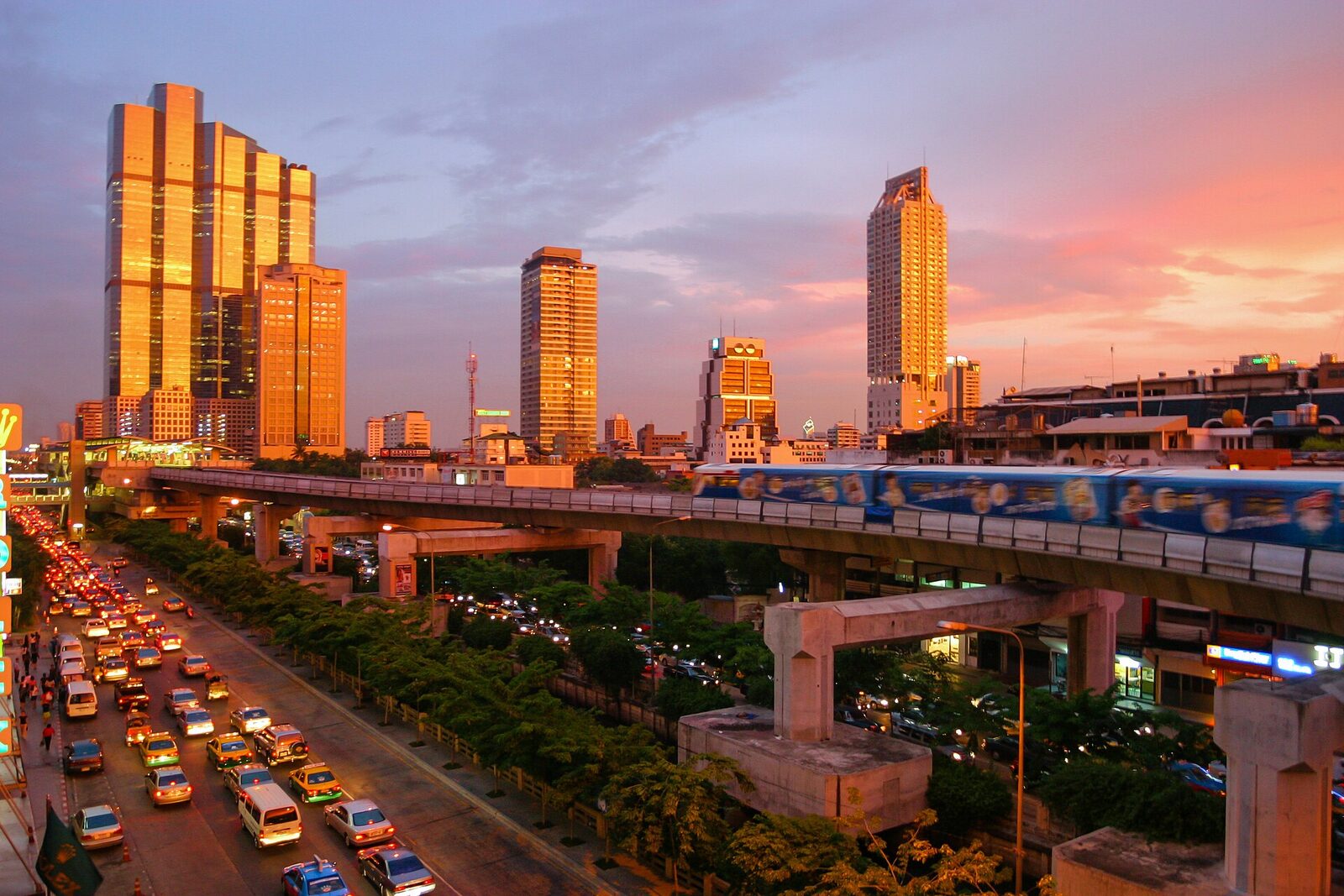
If you have a trip booked, this is the Bangkok tourism question of the week: the capital absorbed more than 300 millimetres of rain in under 72 hours between 24 and 27 September — close to a month's worth in a weekend — and parts of the city flooded. The short answer is that Bangkok is open. Both airports are running, the Skytrain and the metro never stopped, and the Grand Palace, Wat Pho and Wat Arun have stayed open to visitors throughout.
The longer answer is about roads, and about time. Below is what is actually affected, how long to allow for an airport transfer this week, and how to think about the rest of your Thailand itinerary if Bangkok was meant to be the first stop.
What happened, in plain numbers
Heavy monsoon rain sat over the Chao Phraya basin for most of a weekend. The Bangkok Metropolitan Administration declared an emergency on the morning of 26 September; floodwater blocked main-road traffic at 37 separate points and more than 52,000 households were affected. Three people died, two of them in Bueng Kum in the east of the city.
The government then declared 28 and 29 September special public holidays in Bangkok, Nonthaburi, Pathum Thani and Samut Prakan — not a shutdown of the city, but a deliberate move to keep commuter traffic off flooded roads while pumps did their work. City engineers put drainage at two to three days once the rain stops.
Bangkok tourism right now: what is open
This is the part most Thailand travel news coverage has buried. The Tourism Authority of Thailand has been publishing daily condition reports, and the picture for visitors is better than the photographs suggest.
- Airports — Suvarnabhumi (BKK) and Don Mueang (DMK) are both open, with no airspace closures. Suvarnabhumi had long baggage delays on 27 September; that has eased.
- Rail — the BTS Skytrain, the MRT, the SRT Red Line and the Airport Rail Link are all running. Elevated track is exactly what a flooded city needs.
- Central districts — Siam and Ratchaprasong, Yaowarat (Chinatown), Talat Noi and Song Wat are all accessible.
- Big sights — the Grand Palace, the Temple of the Emerald Buddha, Wat Pho and Wat Arun are open on normal hours.
- Worst affected — the eastern and northern fringes: Min Buri, Khlong Sam Wa, Saphan Sung, Lat Krabang, plus Chaeng Watthana, Vibhavadi Rangsit and Ramkhamhaeng roads.
- Rest of the country — Chiang Mai, Phuket, Krabi and Koh Samui are all operating normally.
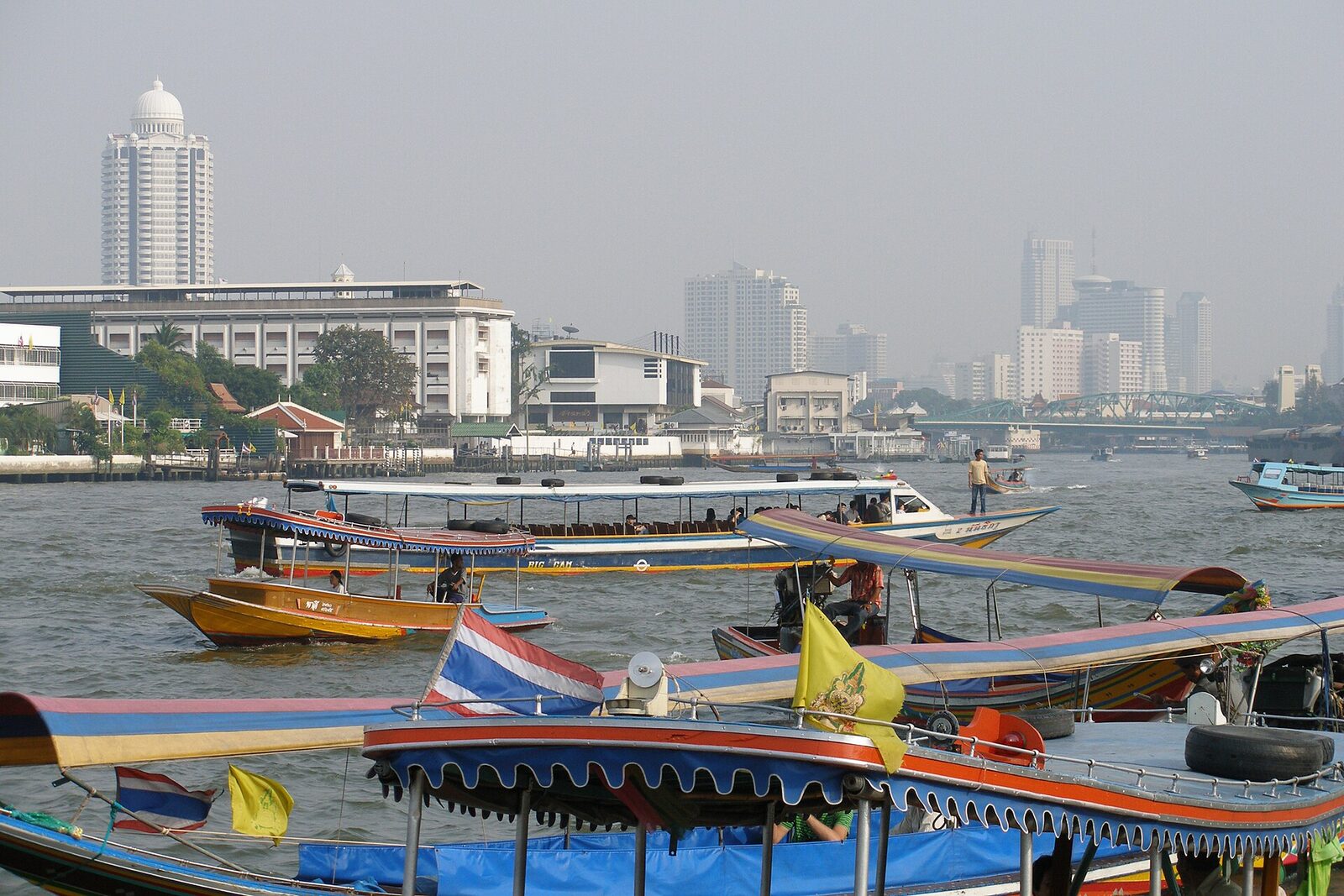
In other words, the flooding is concentrated in outer residential districts that most visitors never see. The riverside and the shopping-and-temple core, where you will actually spend your days, are dry.
Getting to the airport: allow more time than you think
This is the one part of Bangkok tourism that will genuinely bite you this week. Road journeys across Bangkok are slow, and the approach roads to both airports are among the affected areas. The TAT is advising visitors to add two to three hours to hotel-to-airport transfers.
- Suvarnabhumi — allow three hours before an international departure, two for a domestic flight. Avoid the Lat Krabang approach; ask your driver for Motorway 7 or the Burapha Withi Expressway.
- Don Mueang — add two to three hours. Vibhavadi Rangsit is one of the worst roads in the city at the moment.
- Airport Rail Link — 45 baht from Phaya Thai to Suvarnabhumi, roughly 30 minutes, and completely immune to traffic. This week it is not the budget option, it is the sensible one.
- SRT Red Line — 33–42 baht from Bang Sue to Don Mueang, about 17 minutes. Same logic.
- Airport buses A1–A4 — running, but they use the same congested roads as everything else.
- Taxi or Grab — fine for short central hops; surge pricing and long waits are common in the rain, and Bolt drivers cannot collect inside airport grounds.
If your hotel is anywhere near a BTS, MRT or Red Line station, plan the whole journey around rail and treat the taxi as the last few hundred metres.

Street food, markets and Thai culture in the wet
Rain does not close Bangkok tourism down, it just moves it under cover. The Bangkok street food stalls of Yaowarat trade as usual once the afternoon downpour passes, and the covered sections of Or Tor Kor and Wang Lang markets barely notice the weather. A wet afternoon is the right time for the things people usually skip: the Jim Thompson House, the National Museum, a Thai massage course at Wat Pho, or an hour learning how a temple is actually laid out — Thai culture at walking pace rather than in a queue under the sun.
Should you change your Thailand itinerary?
Probably not — but you might reorder it. The TAT has described the effect on Bangkok tourism bookings as a perception problem rather than a collapse in demand, and it expects a 5 to 10 per cent dip in Chinese arrivals over the Golden Week holiday. Most travellers are not cancelling; they are flipping the order of their stops.
That is the smart move. If Bangkok was your first three nights, consider flying straight through to the coast and coming back to the capital at the end of the trip, by which time the water will be long gone.
- Andaman side — Phuket and Krabi are coming out of their own monsoon and will be reliably fine from November. The Similan and Surin Thailand islands reopen on 15 October.
- Gulf side — Koh Samui is in its driest stretch of the year right now.
- Two hours from Bangkok — the list of things to do in Pattaya runs well past the beach road, and the 30-baht ferry to the Koh Larn beaches takes about 45 minutes. See our Pattaya and Jomtien guide.
- Far east coast — Koh Kood travel through Trat rewards anyone willing to add a longer transfer for near-empty sand.
- North — Chiang Mai is dry, cool and completely unaffected.
Why October is still a good bet
Here is the reassuring part of this Bangkok tourism story. Late September is the wettest fortnight of the Thai year in the central plains, and the monsoon withdraws from about the third week of October. What follows is the best weather Thailand gets: warm, dry and clear from November through to March.
The calendar backs that up. Ok Phansa falls on 26 October, Loy Krathong and Yi Peng on 24 and 25 November, and the winter airline schedule — with more long-haul seats into Bangkok and Phuket than any previous season — starts on 25 October. Anyone doing Thailand vacation planning for the high season is looking at a country that will be dry long before they land.
Practical tips if you travel to Thailand this week
- Book a hotel near a rail station. Sukhumvit, Silom, Siam and the riverside are all well served and all dry.
- Use rail for anything over two kilometres. BTS fares run about 17–62 baht, MRT 17–45 baht.
- Leave for the airport absurdly early. Three hours before an international flight, and take the train if you can.
- Check the TAT's 1672 Travel Buddy hotline — it runs 24 hours in English and posts daily condition updates.
- Pack a light rain shell and sandals you can rinse. Not an umbrella you will lose — a hood.
- Do not wade. Floodwater in a city hides open drains and live cabling; that is how most of the injuries happen.
- Keep the plan loose. Book the flights, leave the day trips until you can see a forecast.
- Take out insurance that covers weather disruption before you fly, not after.
None of this is a reason to stay away. Bangkok has drained worse than this before and carried on, and the season is about to turn in the traveller's favour. If you were planning to travel to Thailand in October, keep the booking, keep the Skytrain map on your phone, and give yourself an extra hour everywhere you go.
More Thailand travel news
Sources
- Bangkok flooding: TAT updates visitors on travel conditions — TravelDailyNews Asia, 28 September 2026
- Bangkok floods threaten China Golden Week arrivals, TAT warns — The Nation Thailand, 28 September 2026
- TAT announces special public holidays on 28-29 September 2026 — TAT Newsroom
- Bangkok and three neighbouring provinces get two-day holiday as Thailand ramps up flood response — Malay Mail, 27 September 2026
- Bangkok floods: can you still get around and reach the airports? — Theo Courant, 28 September 2026