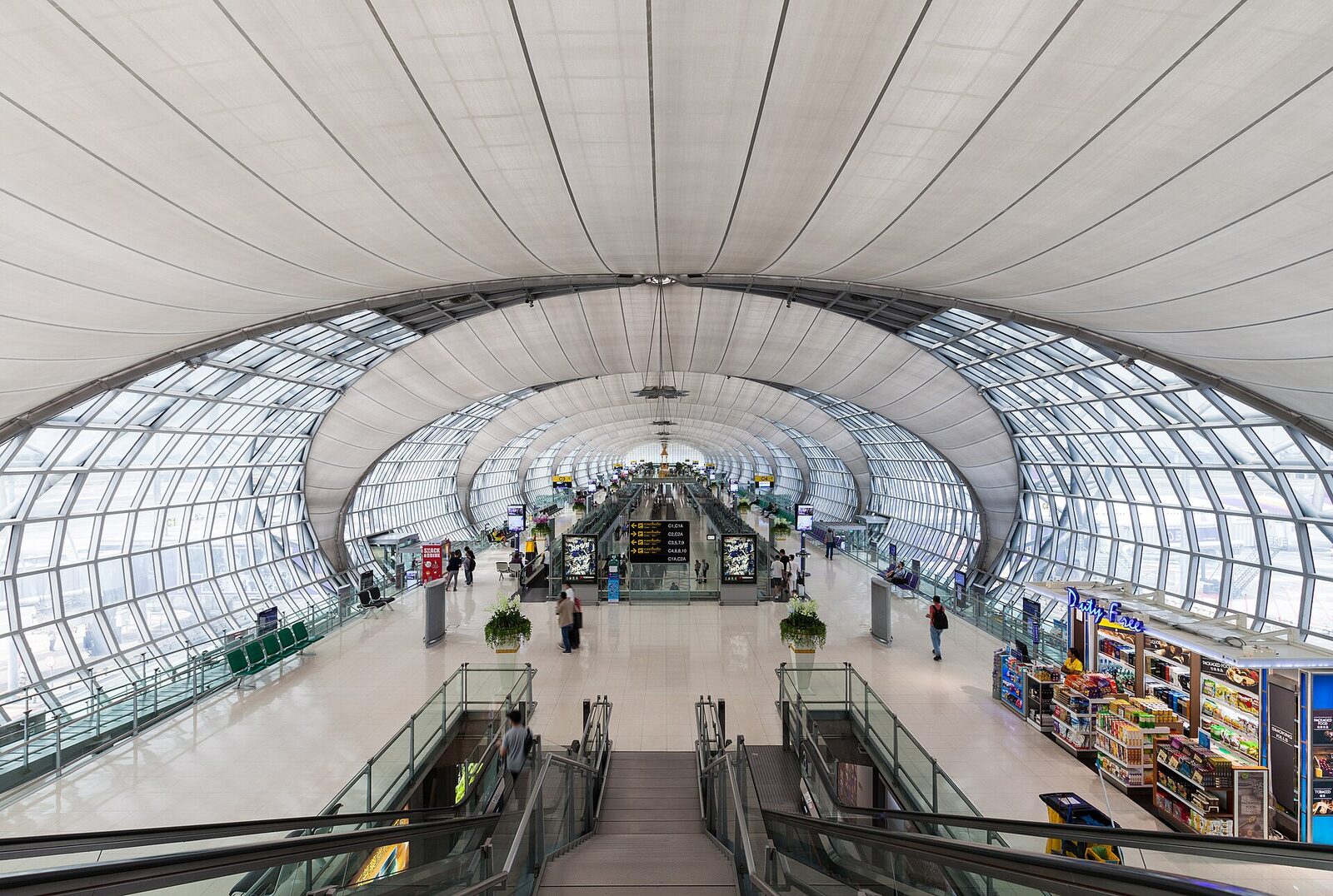
Here is a Thailand tourism update that will matter to anyone who has ever stared at a seven-hour connection in Bangkok and decided it was not worth leaving the terminal. On 5 October 2026, at the Ministry of Transport, the Tourism Authority of Thailand signed a three-year letter of intent with six aviation and tourism partners to build something called the Amazing Thailand Transfer Passenger Privilege — free short tours for international passengers with long layovers, run out of four airports from early 2027.
It is a small idea with a large target. Suvarnabhumi alone handles roughly 1.3 million transfer and transit passengers a year, and officials reckon about a tenth of them have connections long enough to use. TAT wants a tenth of that group in the first stage.
Thailand tourism update: what was actually signed
The agreement was chaired by Deputy Prime Minister and Transport Minister Phiphat Ratchakitprakarn, with TAT Governor Thapanee Kiatphaibool and Department of Airports Director-General Danai Ruangsorn signing alongside representatives of Thai Airways International, the Airlines Association of Thailand, Suvarnabhumi Airport Hotel and Kasetsart University's Faculty of Engineering. The engineering faculty is there for a reason: somebody has to model how long it really takes to clear immigration, reach a temple, eat, and get back through security without missing a flight.
“Thailand can turn time between flights into time spent discovering the destination,” Thapanee said at the signing. The Transport Ministry's framing is more commercial — the project supports Thailand's ambition to be a regional aviation hub — but the effect is the same either way. A four-hour taste of the country is the cheapest advertisement imaginable for a future two-week holiday, which is why this Thailand tourism update is really a marketing story wearing a transport ministry's clothes.
The four airports, and who qualifies
- Suvarnabhumi (BKK) — the main event, and the airport with by far the most long connections.
- Don Mueang (DMK) — Bangkok's low-cost hub, where self-transfer layovers are often longest.
- Phuket (HKT) — southern gateway, with Old Town and the west-coast beaches within reach.
- Krabi (KBV) — the smallest of the four, and the one with the shortest run to open water.
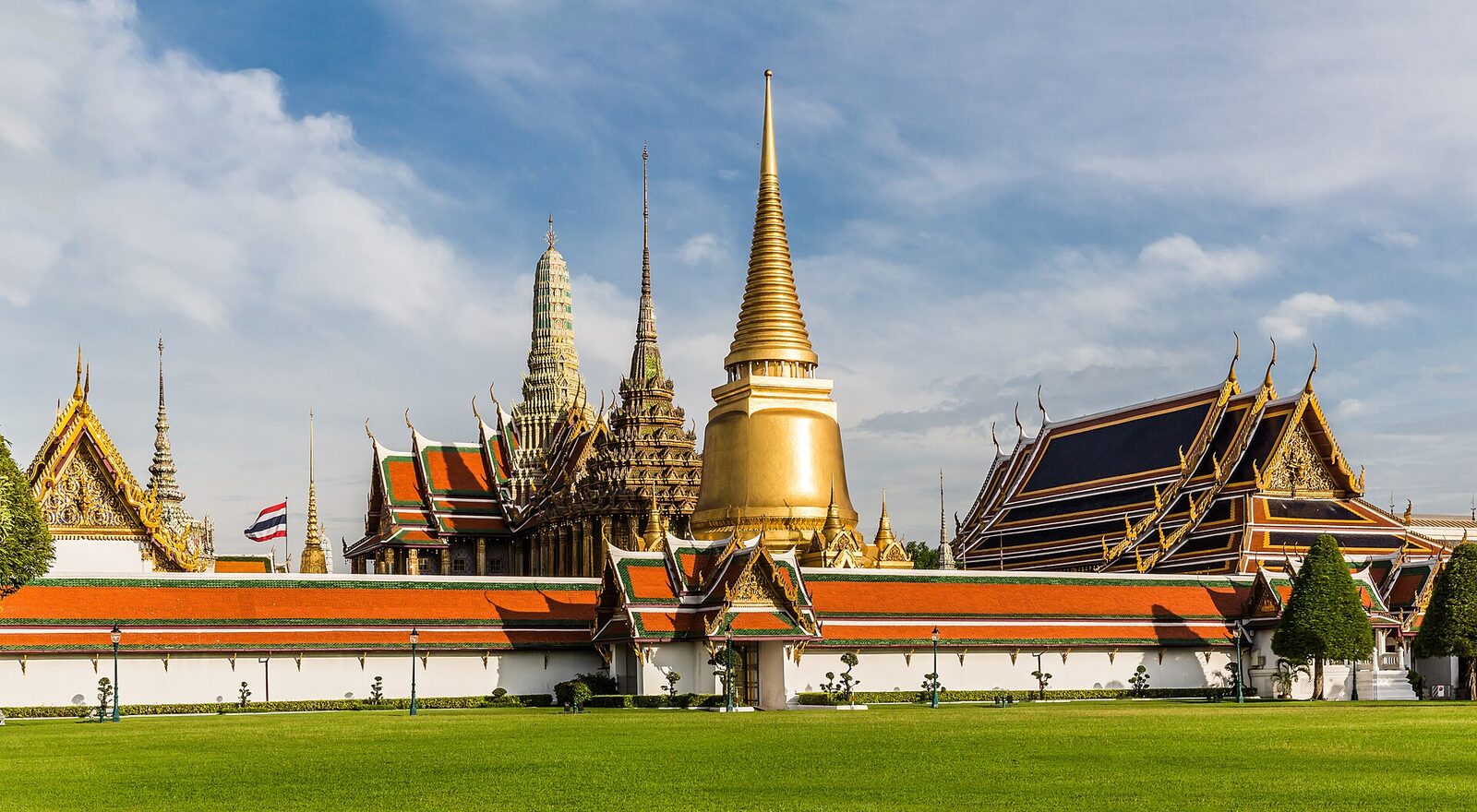
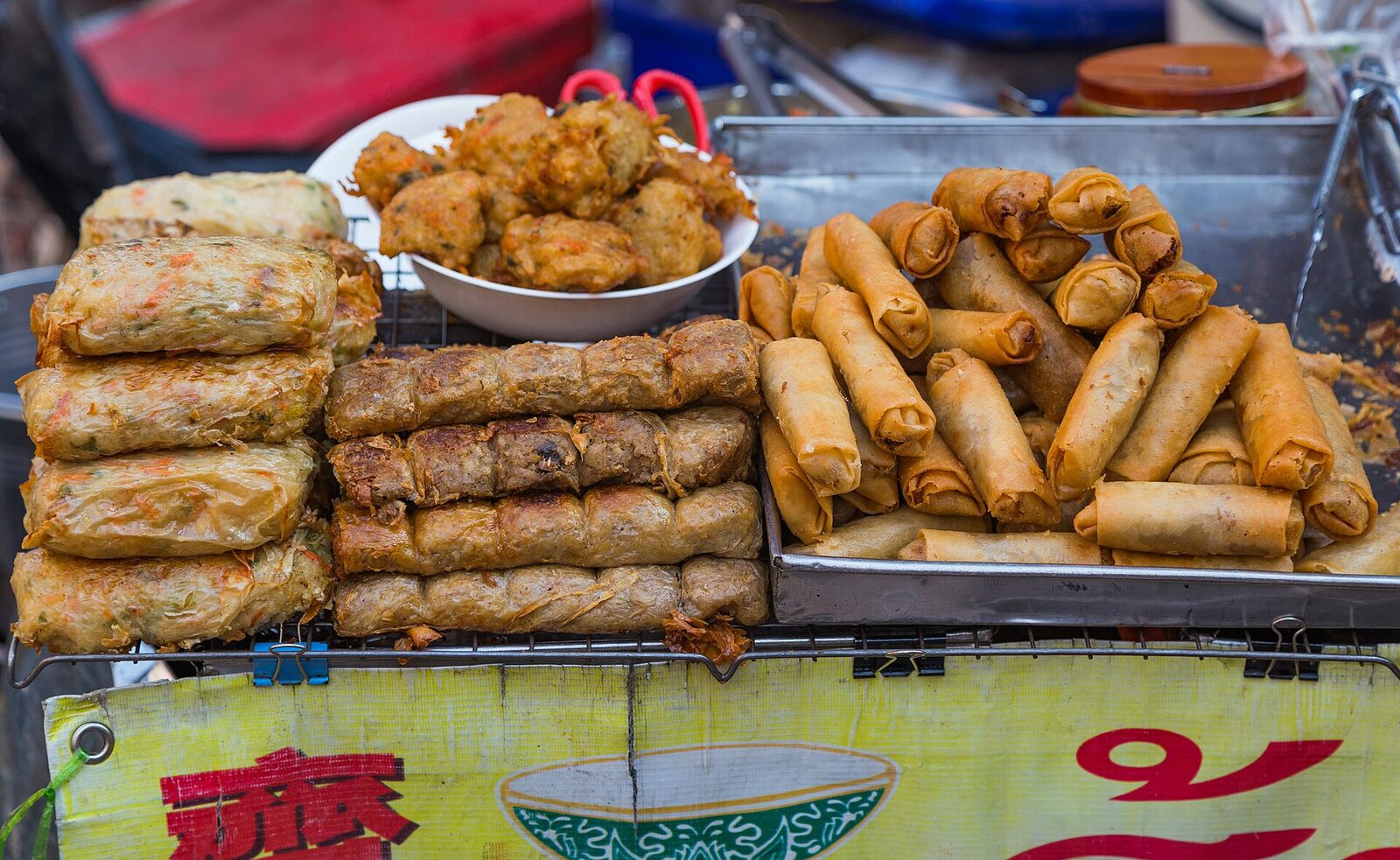
The working threshold is a connection of roughly six to eight hours — below six the maths stops working, above eight most people would rather book a hotel. Three package types have been sketched out: a City Express built around the Grand Palace, the Temple of the Emerald Buddha and the Ancient City in Samut Prakan; a Food Express built around Thai cooking and Bangkok street food; and a Wellness Express built around spa treatments and traditional Thai massage. The first packages are expected to be free, funded from TAT's existing budget, as an incentive rather than a product. Booking channels, final routes and exact eligibility rules have not been published.
The first packages are expected to be free, funded from TAT's existing budget, as an incentive rather than a product. Booking channels, final routes and the exact eligibility rules have not been published.
The catch nobody should skip: you are entering Thailand
This is the part worth reading twice. Leaving the transit area means formally entering the country, which puts you under the same rules as any other arrival: the Thailand Digital Arrival Card, and visa exemption or a visa depending on your nationality. A stopover tour does not create a separate legal category, and a stamp used on a layover is a stamp used.
If you hold a passport that gets visa-free entry, read our explainer on the 30-day visa exemption and its current status before you assume anything. Automated passport control has made the queue itself far less of an obstacle than it was — our Thailand tourism update on the Suvarnabhumi e-gates rollout covers who can use them.
What to do on a Bangkok layover right now
The scheme starts in 2027. The connection you are flying next month does not wait for it, and a six-hour Bangkok layover is already workable without any official programme. The arithmetic is unforgiving: budget an hour from gate to kerb, an hour back through check-in and security, and keep two hours of buffer. On a seven-hour connection that leaves roughly three usable hours in the city.
- Airport Rail Link — the City Line runs Suvarnabhumi to Phaya Thai in about 27 minutes for 15 to 45 baht depending on distance, from 05:30 to midnight, every 10 to 13 minutes. It is the only transfer immune to Bangkok traffic.
- Metered taxi — from the public taxi rank on Level 1, with a 50-baht airport surcharge and tolls on top. Faster than the train off-peak, slower than walking at 17:00.
- Grab or Bolt — fixed price before you book, which removes the only real friction of a taxi. Pick-up points are signposted at both Bangkok airports.
- Left luggage — available in both Suvarnabhumi terminals; do not drag a cabin bag around Chinatown in October heat.
- A shower and a nap instead — the airport transit hotel charges by the block of hours, and on a red-eye connection that is the better use of the time.
Three hours is enough for exactly one thing done properly. Chatuchak Weekend Market is two stops from Phaya Thai if it is a Saturday or Sunday. Yaowarat, Bangkok's Chinatown, is the strongest argument for a food-led layover and is at its best after 18:00. The Grand Palace closes at 15:30, so it only works on a morning connection. And if your dates fall on one of the big nights in the Thai festivals 2026 calendar — Loy Krathong on 24–25 November, say — a layover becomes a reason to miss the onward flight on purpose. Pick one thing, and do not try to chain two.
Why this matters for Thailand vacation planning
Thailand has spent 2026 trying to convert visitor volume into visitor value, and this fits the pattern. A transfer passenger is worth almost nothing to a restaurant in Samut Prakan or a massage school in Phaya Thai; the same person, three hours into the city, is worth a few thousand baht. Spreading that money to shops, attractions and local operators near the airports is the stated point of the agreement.
For travellers the useful read is different. If a layover becomes a reliable half-day sample, the obvious next step is building the stopover in deliberately — a 24-hour Bangkok stop on the way to Europe or Australia, which is the cheapest way to add a city to a Thailand itinerary without adding a flight. That is Thailand vacation planning at its most efficient, and it is already how a lot of people who travel to Thailand regularly use the capital.
It also changes the calculus on what comes after. Two hours southeast of Suvarnabhumi the east coast begins, and the list of things to do in Pattaya runs a long way past the beach road — our Pattaya and Jomtien guide has the detail, and the Koh Larn beaches are a 30-baht ferry from Bali Hai Pier. Further east, Koh Kood travel through Trat remains the quietest of the big Thailand islands. North, the cool season is opening the Thai culture circuit around Chiang Mai, among the best places to visit in Thailand between now and February. The Bangkok guide is where to start if the layover turns into a stay.
Practical tips for a Thailand layover
- Check your connection is long enough before you plan anything. Six hours is the floor, and that is six hours gate-to-gate, not six hours of free time.
- Complete the Thailand Digital Arrival Card before you fly. It is required to enter, and doing it on airport wi-fi while the clock runs is a bad trade.
- Confirm your airline will re-check you in. On a single ticket this is routine; on a self-transfer between Suvarnabhumi and Don Mueang, you own the risk entirely.
- Carry a few hundred baht in cash. Street stalls, the rail link ticket machines and small temples are cash-first.
- Keep your boarding pass and passport on you, not in a bag. Re-entry through departures needs both.
- Do not attempt a Don Mueang–Suvarnabhumi connection under four hours. The free inter-airport shuttle takes 50 minutes in no traffic and considerably more in some.
- Dress for the Grand Palace if that is the plan — covered shoulders and knees, no exceptions, and the queue for loan sarongs eats twenty minutes.
- Set an alarm for your return leg, not your departure. The single most common layover mistake is budgeting for the journey back and not for the queue at the end of it.
None of this is exotic. It is simply the difference between treating Bangkok as a corridor and treating it as a city you happen to be standing in. From 2027, if the pilot works, Thailand will hand you the itinerary and pay for it — the most traveller-friendly Thailand tourism update of the year so far. Until then the Airport Rail Link costs 45 baht and leaves every eleven minutes, which is close enough.
More Thailand travel news
Sources
- TAT signs LOI with aviation and tourism partners to turn transit into travel experiences — TAT Newsroom, 7 October 2026
- Thailand to offer free stopover tours for transit passengers — The Nation Thailand, 7 October 2026
- Thailand plans free tours for passengers on long layovers — The Thaiger
- Thailand plans to turn airport layovers into short tourism trips — Pattaya Mail
- Airport Rail Link (Bangkok) — fares, stations, journey times and operating hours — Wikipedia