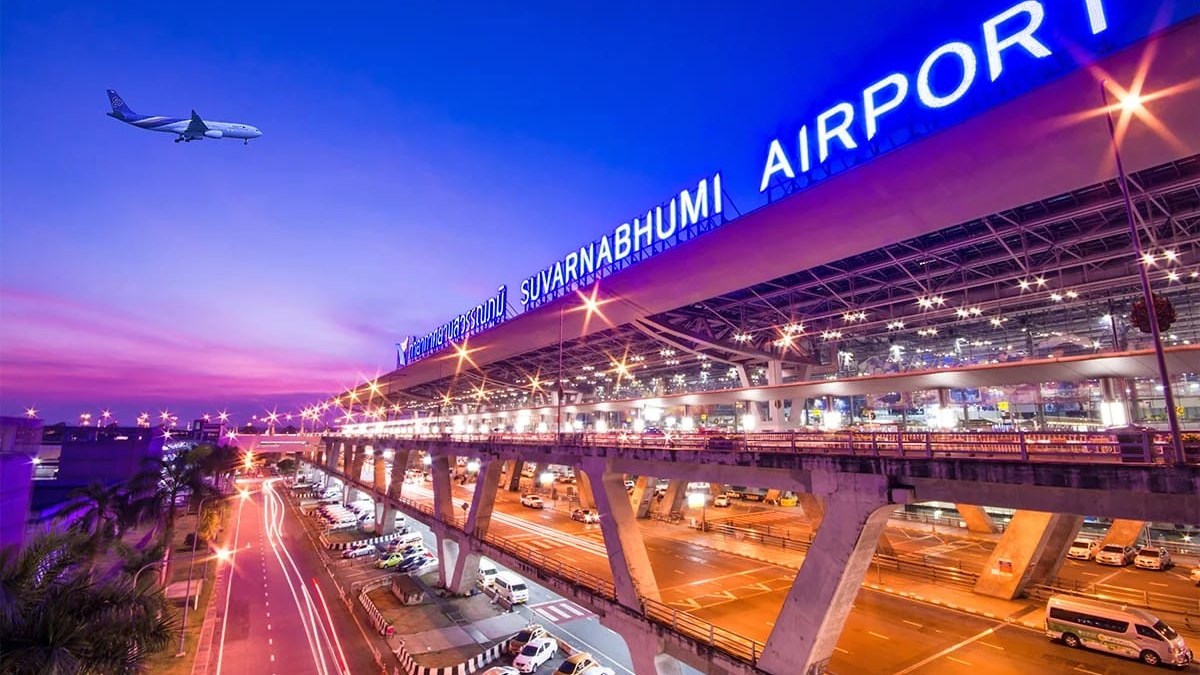
The most useful Thailand tourism update of the week happens in the one room nobody photographs: the arrivals immigration hall at Bangkok's Suvarnabhumi Airport. Thailand's Immigration Bureau has opened the automated arrival gates to holders of 33 passports, up from two. If you have entered Thailand before on the passport in your hand, your next entry may take under a minute instead of an hour.
That is a genuine change to the shape of a first day, and it is the kind of detail that quietly decides whether travel to Thailand starts well or starts tired. Below is what actually changed, the four conditions that decide which lane you stand in, and how to use the time you get back.
What this Thailand tourism update changes at Suvarnabhumi
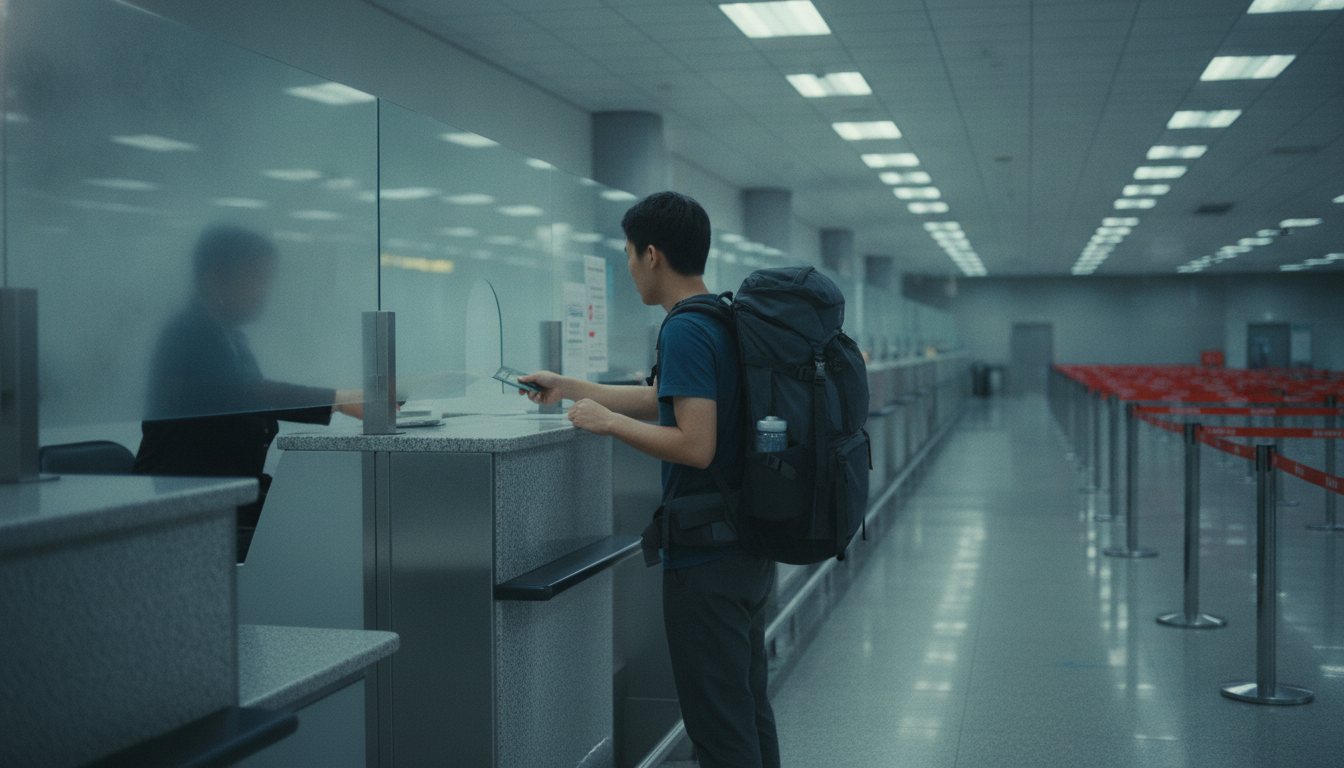
Automated channels are not new here. Departures at Suvarnabhumi have used them since 15 December 2023, with 16 channels on the departure side and a crossing time comfortably under a minute. Arrivals were the bottleneck: until this month the arrival gates were open only to Singapore and Hong Kong passport holders under reciprocal arrangements, while everyone else queued.
- What is new: 31 more nationalities added to the arrival auto gates, for a total of 33.
- Where: Suvarnabhumi (BKK) arrivals. Don Mueang and the regional airports are not part of this step.
- Announced: 20-21 September 2026, by the Immigration Bureau.
- Rollout: phased, by gate and by database integration. An eligible passport does not guarantee an open gate on day one.
- Scale: officials expect the gates to absorb roughly 53 percent of international arrivals once the system is running at full capacity.
For context on why this matters, manual queues at peak arrival banks have been running up to an hour. Cutting half the hall out of that line changes the arithmetic for everyone left in it, including travellers whose passports are not on the list.
The four conditions that decide your lane
This is the part most summaries get wrong. Holding one of the 33 passports is necessary but not sufficient. All four of these must be true:
- You have entered Thailand before on the same passport. Your fingerprints and facial image must already be in the immigration database. A renewed or replaced passport resets this.
- You are entering under visa exemption. Visa holders still use a staffed counter.
- You have filed the Thailand Digital Arrival Card (TDAC). Do it online before you fly, not in the queue.
- You hold a biometric passport with an ICAO-standard chip, and you are at least 120 cm tall. Children below that height, non-chip passports and passengers needing assistance continue at the desks.
Who is on the 33-passport list
The passport list at the centre of this Thailand tourism update breaks down like this:
- Europe: Austria, Belgium, Czech Republic, Denmark, Finland, France, Germany, Greece, Hungary, Ireland, Italy, Latvia, Luxembourg, Malta, Netherlands, Norway, Poland, Portugal, Slovakia, Slovenia, Spain, Sweden, Switzerland, United Kingdom.
- Asia-Pacific: Australia, Hong Kong, Japan, Malaysia, New Zealand, Singapore, South Korea.
- Americas: Canada.
- Middle East: United Arab Emirates.
Not on the list, at least in this phase: the United States, China, India, Russia, Israel and Taiwan. If that is your passport, nothing about your arrival changes today except that the hall around you should move faster.
What it does to your first morning in Bangkok
The practical value of this Thailand tourism update is an hour. A saved hour at 07:00 is worth more than a saved hour at any other point in a trip, because it is the hour that decides whether day one is a nap or a city. Budget the morning like this:
- Gate to kerb: 15-25 minutes if the e-gate works and your bag is on the first belt. Allow 45-90 minutes if you are enrolling at a counter.
- Airport Rail Link: about 15-45 baht into the city, City Line to Phaya Thai or Makkasan. Carry small notes for the machines.
- Grab: roughly 300-500 baht to Sukhumvit in light traffic, more in rain or rush hour.
- Bolt: usually a little cheaper than Grab; kerbside pickup can be patchier at dawn.
- Metered taxi: still fine from the official rank. Insist on the meter, and expect expressway tolls in cash on top.
Use the hour on breakfast. Bangkok street food is at its best before 09:00, when the rice-porridge and pork-skewer carts are still working the office crowd rather than the tour groups. A bowl of jok runs 40-60 baht. That is a better first memory of Bangkok than a hotel lobby at 11:00 waiting for a room.
How a faster arrival reshapes a Thailand itinerary
The honest answer is that it does not move any island closer. What it does is make the same-day connection realistic again, and that is where Thailand vacation planning gets interesting.
A morning landing that clears immigration by 07:30 puts you on a domestic hop to Krabi, Samui or Phuket before lunch, or in a minivan to the coast by 10:00. For things to do in Pattaya on a first day, that is the difference between a beach afternoon and a hotel check-in. The Pattaya and Jomtien run from Suvarnabhumi is roughly 90-120 minutes by road, and the bus from the airport's public transport centre is under 200 baht.
From there the Thailand islands open up quickly. Koh Larn beaches are a 45-minute ferry from Bali Hai Pier at 30 baht each way, which makes them a genuine day trip rather than a logistics project. Koh Kood travel is the opposite case and still rewards the effort: it needs a Trat flight or a long drive plus a speedboat, so it belongs at the start of a trip, not bolted onto the end.
A workable two-week Thailand itinerary built around a dawn arrival: three nights in Bangkok for the river, the Grand Palace and the markets; five nights on the Gulf or Andaman coast; four nights north for cooler air, temples and a cooking class; then back to the capital with a full day spare. Thai culture days work in a downpour. Boat days do not. Keep one indoor spare day in October and November.
Practical tips for Thailand vacation planning before you fly
- File the TDAC in the days before departure and screenshot the confirmation. Airport wi-fi at 06:00 is not a plan.
- Travel on the same passport you last used to enter Thailand. If you renewed it, expect the counter.
- The 30-day visa exemption that took effect on 15 September 2026 still governs how long you can stay. The gate is speed, not permission.
- Power banks stay in the cabin. From 16 October 2026, Thai airports may open a checked bag without you present if screening flags it.
- Arrive at the gate with your passport already open at the photo page and your hat and sunglasses off. The camera is unforgiving.
- If the gate rejects you, do not argue with it. Step out and join the staffed line. Rejections at a phased rollout are common and mean nothing about your status.
The narrow read on this Thailand tourism update is that a repeat visitor with a chipped passport, a filed arrival card and no visa now walks past the longest queue in Thai tourism. The broader read is that the country has decided speed at the border is part of the product. For anyone planning travel to Thailand this high season, that is worth more than another festival poster.
Sources
- Thailand's airport auto gates expand to 33 nationalities — Time Out Bangkok, 22 September 2026
- Thailand to expand eGates to 33 nationalities at Bangkok Suvarnabhumi — TravelMole, September 2026
- Automated Immigration Lanes at Suvarnabhumi: 2026 Update — Tisland Travel, 2026
- Thailand introduces new 30-day and 15-day visa exemption rules from 15 September — TAT Newsroom, September 2026