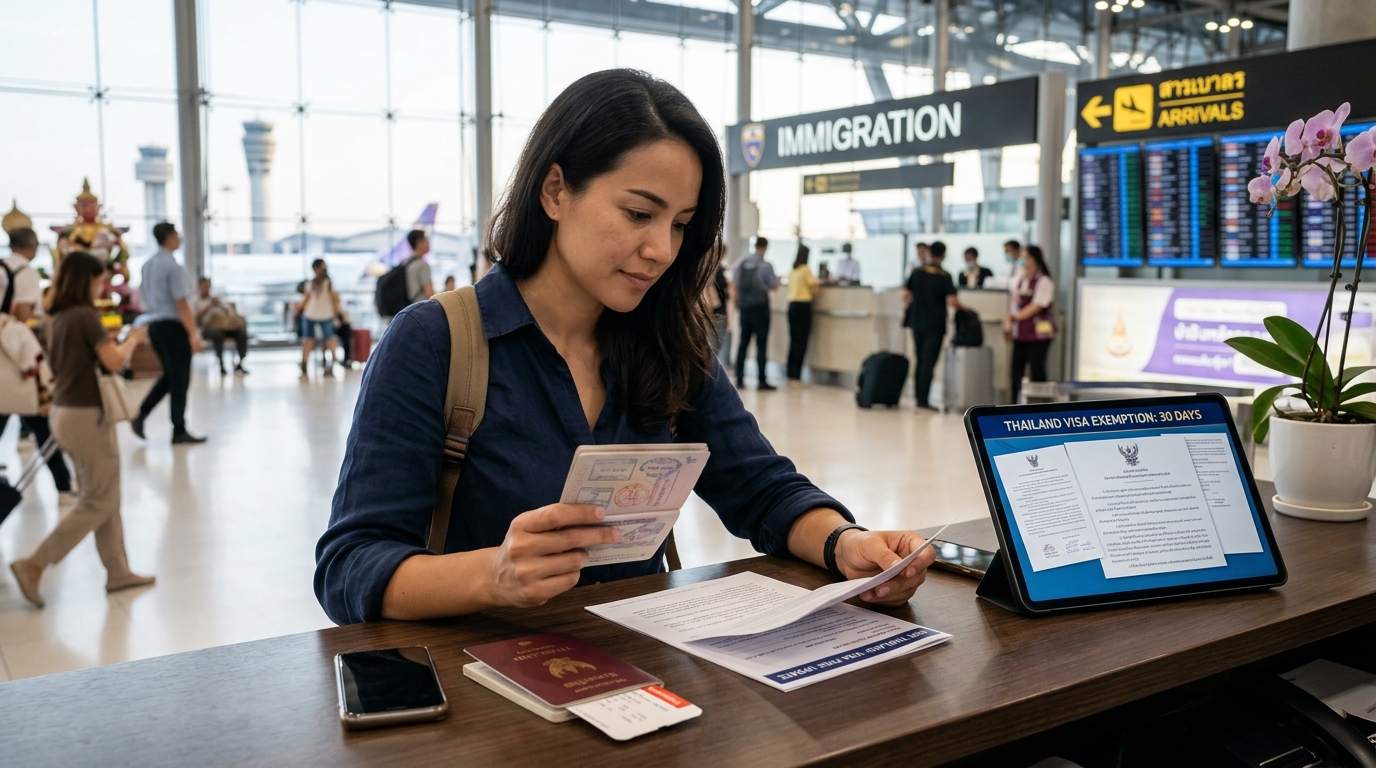
If you are planning a Thailand trip longer than a month, this is the single entry rule worth watching. The 60-day visa exemption that has been in place since July 2024 is being replaced — but as of today it is still the rule in force.
What has actually happened
On 16 July 2026 the Thai Cabinet approved the updated details of Thailand's visa exemption and Visa on Arrival measures, following its earlier decision in May to replace the 60-day scheme. The five related Ministry of Interior announcements have not yet been published in the Royal Gazette, and they only take effect 15 days after that publication.
Until that happens, current entry conditions remain in place. The Tourism Authority of Thailand has also confirmed that anyone who enters Thailand before the new measures take effect keeps the length of stay they were granted on arrival — the change is not applied retroactively to travellers already in the country.
The framework that was approved
The update works on a principle of one country or territory, one entry category, with each nationality assigned to a single category rather than overlapping ones. In total 65 countries and territories are covered:
- 30-day visa exemption — 59 countries and territories, including India, Croatia, Bulgaria, Cyprus, Malta and the Maldives. All 27 EU member states are aligned on the same treatment.
- 15-day visa exemption — Mauritius and Seychelles.
- Visa on Arrival — Azerbaijan, Belarus and Serbia.
- India moves up, from Visa on Arrival to 30-day visa exemption, reflecting an average Indian visitor stay of around 7.17 days.
Separate bilateral agreements and related arrangements are unaffected and will continue to provide visa exemption periods of 90, 30 or 14 days depending on the agreement, so a handful of nationalities will not see the 30-day figure apply to them at all.

What this means for your itinerary
Most trips are unaffected: the average Thailand holiday is well under 30 days. The travellers who need to plan around this are the ones building five-, six- or eight-week routes — the kind of multi-region trip that pairs the north with the Andaman and the Gulf islands.
If your plan runs past 30 days and the new rules land before you fly, the options are a Tourist Visa obtained from a Royal Thai Embassy or Consulate-General before departure, or an extension applied for in Thailand. Both depend on your nationality and neither is automatic, so check with the embassy or consulate responsible for your place of departure rather than relying on a blog — including this one.
The update also notes that the Thailand Digital Arrival Card (TDAC) system will be enhanced to support traveller screening and to verify entry and exit records. TDAC itself is unchanged for now: complete it through the official Immigration Bureau channels before you travel.

Sources
- Thai Cabinet approves updated visa measures pending Royal Gazette publication — TAT Newsroom, 16 July 2026
- Immigration Bureau — Royal Thai Police