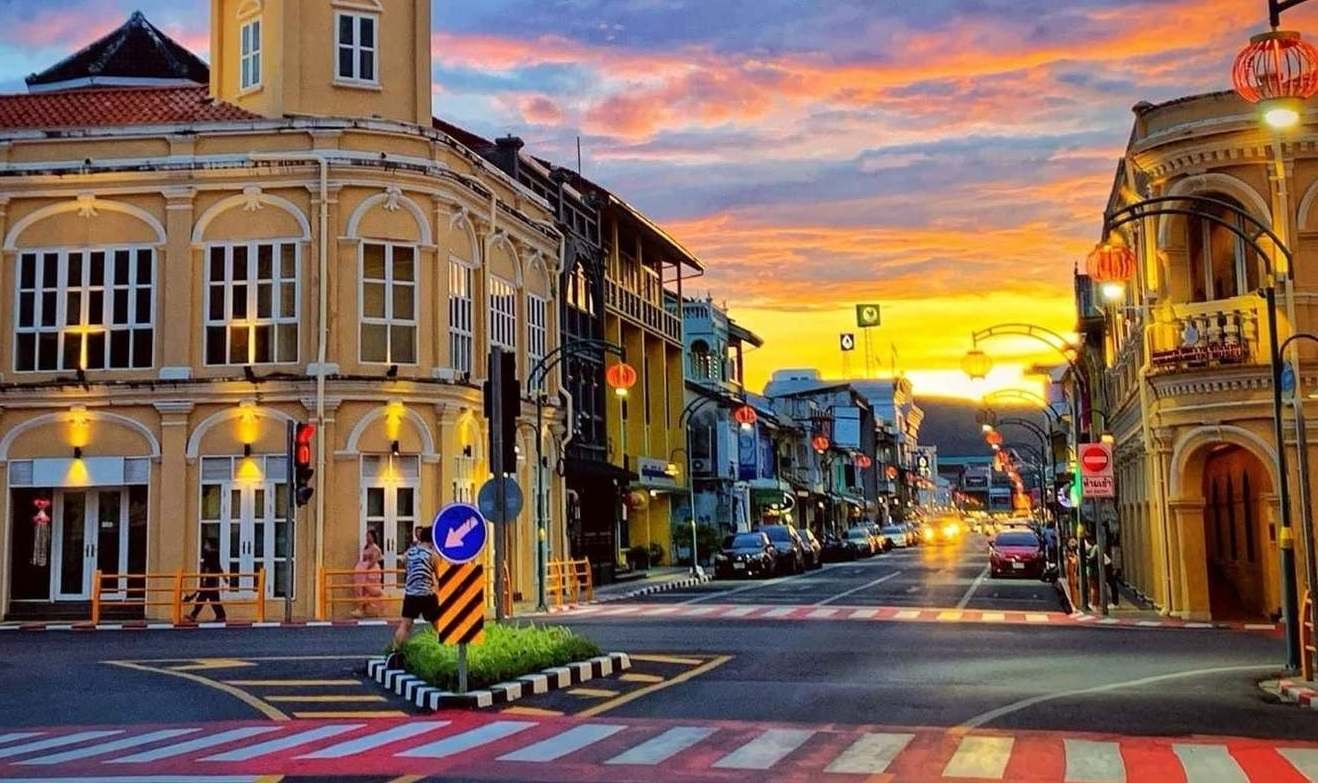
Of all the Thai festivals 2026 has left on the calendar, none is stranger, louder or more genuinely moving than the one that takes over Phuket in October. The Phuket Vegetarian Festival — Ngan Kin Jay, the Nine Emperor Gods Festival — runs 10–18 October 2026, with the pole-raising on the evening of the 9th and the closing rites on the 19th. If you are doing Thailand vacation planning for the autumn, this is the week that should anchor your Thailand itinerary.
It is not a food festival, whatever the name suggests. Among the Thai festivals 2026 has to offer, it is the one that asks the most of the people taking part. It is nine days of Taoist observance carried out in public: shrines lit through the night, streets white with people in white, spirit mediums in trance, and firecrackers by the crate. The vegetarian part is real — the whole island eats jay for the duration — but it is the discipline underneath the diet, not the point of it.
What the Vegetarian Festival actually is
The festival arrived with Phuket's Hokkien Chinese tin-mining community in the nineteenth century and never left. Devotees observe ten precepts for nine days: no meat, no eggs or dairy, no pungent vegetables such as garlic and onion, no alcohol, no sex, clean white clothing, and separate cooking utensils kept only for jay food. It is one of the most demanding expressions of living Thai culture anywhere in the country, and the purpose is purification — of the individual and, by extension, of the community.
What draws visitors is what happens on top of that. The ma song, or "entranced horses", are devotees believed to be possessed by the Nine Emperor Gods. During the daily processions they walk the streets with skewers, blades and household objects pierced through their cheeks, apparently without pain or bleeding, escorted by helpers who steady the piercings and clear the way. Around them, shopkeepers set out altars of fruit, tea and incense, and detonate strings of firecrackers at the medium's feet as a blessing. It is confronting the first time. It is also entirely sincere.
Thai festivals 2026 dates, shrines and the daily rhythm
The dates move with the Chinese lunar calendar — the festival always occupies the first nine days of the ninth lunar month, which in 2026 falls on 10–18 October. Five main shrines drive the programme, and each runs its own street procession on a different morning:
- Jui Tui Shrine, Ranong Road, Phuket Town — the busiest and most visitor-friendly, open roughly 06:00–20:00 through the festival.
- Bang Neow Shrine, Phuket Road — stages one of the largest processions, usually stepping off around 07:00.
- Kathu Shrine, Kathu district — the oldest of the group and where the festival is said to have begun.
- Sui Boon Tong Shrine, west of the Phuket Town market — a regular firewalking venue.
- Sapam and Baan Tha Reua shrines, north of town — smaller, less photographed, often the most atmospheric.
The daily pattern rarely varies. Processions form in the dark and move off between 06:00 and 07:30, winding through the old town for three or four hours. Afternoons are quiet. Evenings bring shrine ceremonies from about 18:00, with firewalking and bladed-ladder climbing starting around 20:00 at whichever shrine is hosting. The final night, 18 October, ends with the send-off of the gods at Saphan Hin and a firecracker barrage that has to be heard to be believed.
Eating jay: the best street food week of the year
For nine days Phuket becomes the easiest place in Thailand to eat vegan, and it happens by accident rather than by trend. Look for the yellow flags with red Chinese characters — every stall, canteen and market vendor flying one is serving jay. Whole streets around Jui Tui Shrine turn into open-air food courts from mid-morning.
Prices sit where Thai street food always sits: 40–70 baht for a plate of noodles or rice, 20–30 baht for snacks. Look out for o-aew, Phuket's shaved-ice and banana-flour dessert; mock-meat versions of moo hong braised pork belly; taro cakes; and black sesame dumplings. The mock meats are made from wheat gluten and soy and are taken seriously here — some are decades-old family recipes rather than supermarket packets.
If Bangkok street food is more your route, the same festival runs in Yaowarat on identical dates, at a fraction of the intensity. Chinatown fills with yellow flags and the food is superb, but there are no processions and no firecracker walls.
Getting there, staying and what it costs
Phuket International Airport takes direct flights from Bangkok in about 80 minutes, with fares often under 1,500 baht one way if booked a few weeks out, plus direct services from most Asian hubs. From the airport, an airport bus to Phuket Town costs around 100 baht and takes an hour; a metered taxi or Grab runs roughly 600–800 baht.
Stay in Phuket Town, not on the beaches. Patong is 45 minutes away by road and you will want to be walking home at 07:00, not queuing for a songthaew. Old town guesthouses run 800–1,500 baht a night outside peak, but festival week is one of the busiest of the year on the island — book by mid-September. Our Phuket destination guide covers which end of town suits which kind of trip.
The festival itself is free. Shrines charge nothing, processions cost nothing to watch, and there is no ticketed viewing. Budget instead for food, a room within walking distance, and a taxi on the nights you misjudge how far you have wandered.
How to watch it respectfully
- Wear white. Not compulsory for visitors, but it is the single clearest way to show you understand what you are attending. Avoid black and red.
- Bring earplugs. This is not a nicety. Sustained firecracker volume at close range is genuinely damaging, and the barrages last for minutes at a time.
- Closed shoes, long sleeves. The streets are carpeted in hot casings and wet from constant hosing down. Sandals are a mistake you make once.
- Do not touch a ma song, or block the route. Photograph from the side, keep the lens out of faces, and never point or laugh — the mediums are understood to be gods, not performers.
- A mask helps. Incense plus gunpowder smoke sits in the old town streets for hours.
- Start early. By 09:00 the morning is over. There is no lie-in version of this festival.
Building it into a wider Thailand itinerary
October is a good month to travel to Thailand, and few weeks give you a deeper read on Thai culture than this one. The Andaman monsoon is easing, the Gulf has not yet turned, and the marine national parks reopen for the season. Phuket sits within easy reach of the Thailand islands on both coasts, so a natural shape is festival week in Phuket Town followed by a slow week down through Krabi, Koh Lanta or the Trang islands as the weather settles.
If you want a second festival on the same trip, the biggest of the Thai festivals 2026 season is six weeks later: Loy Krathong and Yi Peng, on 24–25 November. Our Loy Krathong and Yi Peng 2026 dates guide has the confirmed nights and where to be for each. Between the two, Thai festivals 2026 finishes the year far stronger than it started it.
More Thailand travel news
Sources
- Phuket Vegetarian Festival — official events listing — Tourism Authority of Thailand
- Phuket Vegetarian Festival 2026 schedule and shrine programme — Phuket 101, 2026
- Phuket Vegetarian Festival schedule — The Phuket Blog, 2026