Chiang Rai Travel Guide
Chiang Rai feels like the calmer, slightly cooler cousin of Chiang Mai. It’s smaller, less crowded, and has a more relaxed rhythm. People come here mainly for the famous White Temple, but they often leave talking about the Blue Temple, the strange and wonderful Black House, the easy day trips into the mountains, and the friendly night bazaar. It’s a great place if you want beautiful temples without the big-city intensity, plus easy access to tea plantations, the Golden Triangle, and some of the prettiest countryside in the north.
How to Get There
By air
The fastest and easiest way is to fly into Mae Fah Luang – Chiang Rai Airport (CEI). Direct flights from Bangkok take about 1 hour 20–30 minutes. AirAsia, Thai Lion Air and Nok Air fly from Don Mueang, while Bangkok Airways flies from Suvarnabhumi. One-way fares often sit between 800–2,500 baht if you book ahead. The airport is only 20–30 minutes from the city centre by Grab or taxi.
From Chiang Mai
This is the most common overland route. Buses and minibuses take 3 to 4 hours and cost around 150–300 baht. Private cars or vans take closer to 3 hours and give you the option to stop at viewpoints along the way. Many people combine both cities in one trip.
From Bangkok by bus
Overnight buses leave from Mo Chit and take 11–13 hours. VIP services cost roughly 600–1,000 baht. It’s doable, but most people prefer to fly if their budget allows.
There is no direct train to Chiang Rai, so rail travellers usually go to Chiang Mai first and continue by bus or van.
Climate & Best Time to Visit
Chiang Rai is a little cooler than Chiang Mai because it sits a bit higher. The seasons are clear and easy to plan around.
Best time: November to February
This is the sweet spot. Days are warm and sunny (around 26–30°C), nights can get properly cool (sometimes down to 12–15°C), and the air is usually clear. Perfect for temple hopping, walking around town, and day trips into the hills. Pack a light jacket for the evenings.
Hot and smoky: March and April
Temperatures climb into the mid-to-high 30s and the burning season can bring haze, just like in Chiang Mai. The White Temple still looks dramatic, but the mountain views suffer and the air quality can be poor.
Rainy season: May to October
Expect afternoon showers, especially from July to September. The countryside turns lush and green, there are fewer tourists, and prices drop. Mornings are often dry and usable. Just keep a rain jacket handy.
If you can choose, come between mid-November and mid-February. October and early March can also work if you’re flexible with the weather.
What You’ll Love Doing Here
Most visits revolve around the three “colour” attractions, and they’re all worth your time.
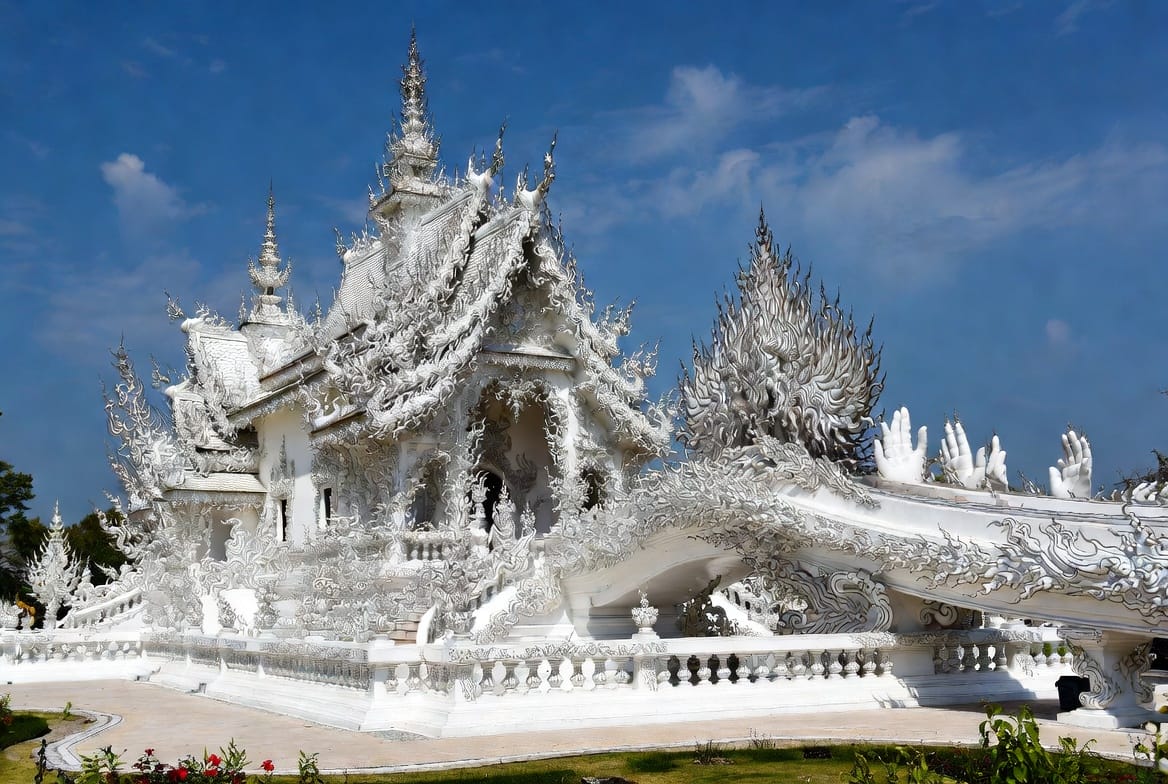
The White Temple (Wat Rong Khun) is the big star. Designed by local artist Chalermchai Kositpipat, it’s pure white, covered in tiny mirrors, and full of surreal details. The bridge of outstretched hands is especially memorable. Go early in the morning if you want fewer people and softer light.
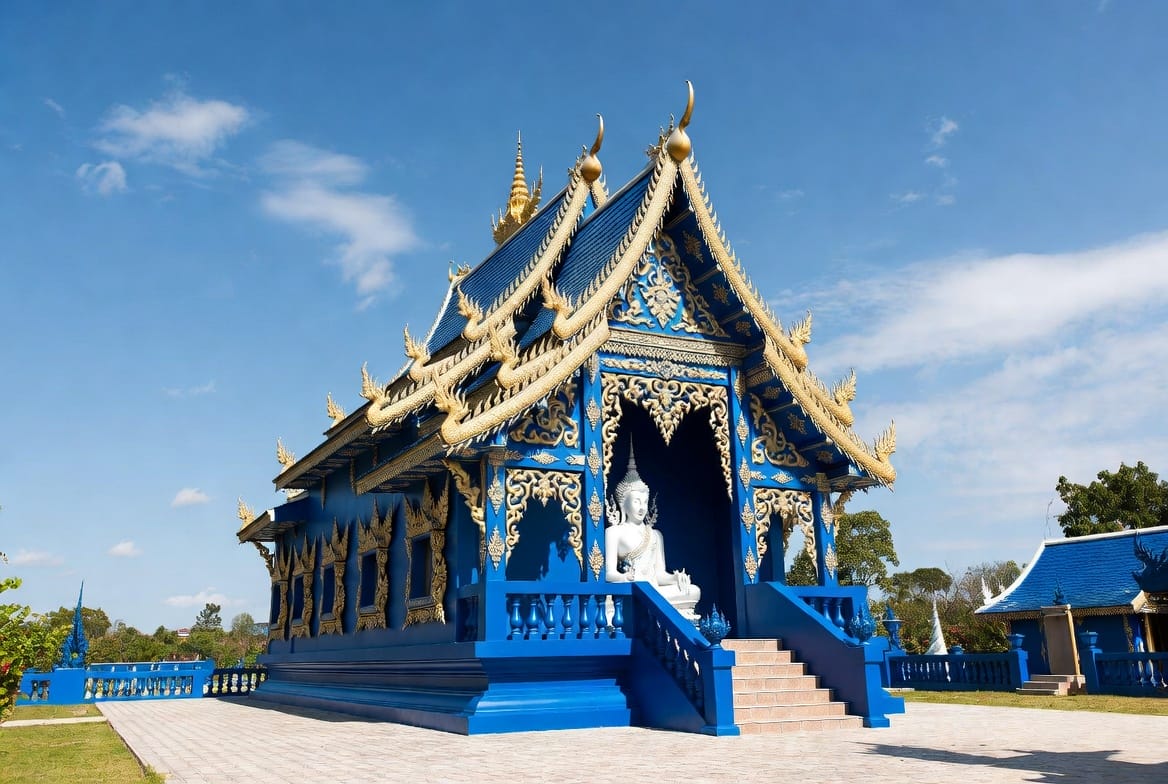
Just a short drive away is the Blue Temple (Wat Rong Suea Ten). The deep sapphire-blue exterior and gold trim make it feel almost otherworldly. Inside, a large white Buddha sits in a calm, glowing hall. Many people prefer the atmosphere here to the busier White Temple.
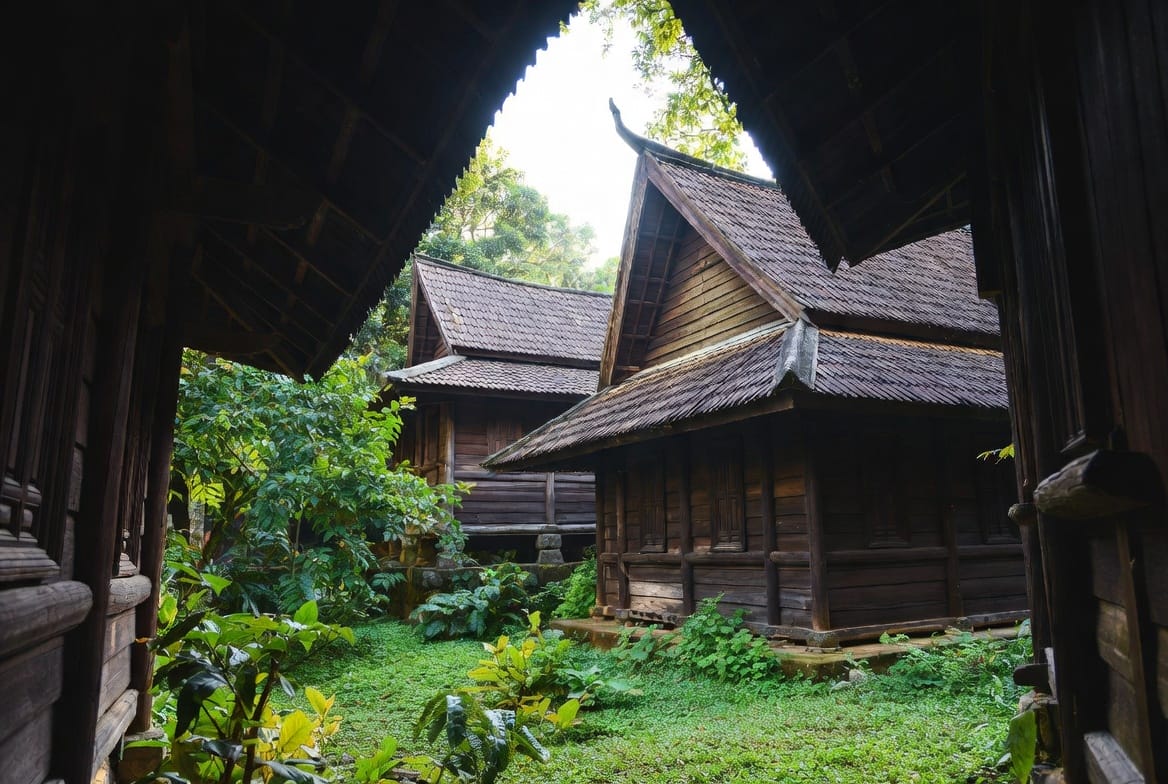
Then there’s the Black House (Baan Dam Museum). This is the dark, artistic opposite of the other two — a collection of traditional-style wooden buildings filled with animal bones, skins, and the provocative work of artist Thawan Duchanee. It’s strange, fascinating, and completely different from a normal temple visit.
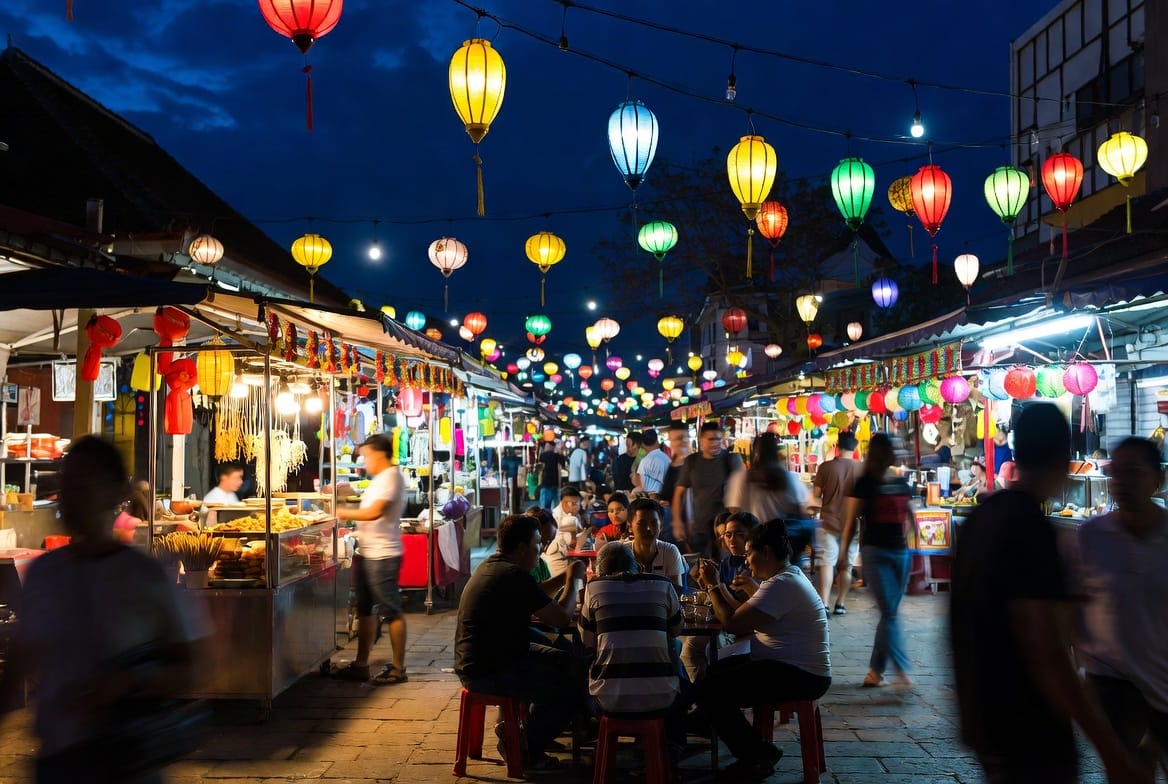
Other worthwhile stops include Wat Huay Pla Kang with its giant white Guan Yin statue (you can take an elevator up for views), the daily Night Bazaar for street food and a relaxed evening, and the small but lively Clock Tower light show in the centre of town.
If you have an extra day, the Golden Triangle (where Thailand, Laos and Myanmar meet) makes an easy and interesting trip. Tea lovers should head up to Choui Fong or the Chinese-influenced village of Doi Mae Salong for beautiful plantations and excellent tea.
Pros and Cons
What people love
- The unique White, Blue and Black attractions that you won’t find anywhere else
- Smaller and more relaxed than Chiang Mai
- Cooler weather and beautiful surrounding countryside
- Easy day trips to tea plantations, the Golden Triangle and mountain viewpoints
- Good food and a pleasant night bazaar without the big crowds
What can frustrate people
- The White Temple gets very busy with tour groups from late morning onwards
- Burning season haze in March–April can spoil mountain views
- Fewer nightlife and dining options than Chiang Mai
- Some attractions feel a bit spread out if you don’t have your own transport
- It can feel quiet (or even a little dull) if you’re looking for a lively party scene
Why Go
Chiang Rai is perfect when you want the beauty of northern Thailand without the bigger crowds of Chiang Mai. The temples alone are worth the trip, but the slower pace, cooler air, and easy access to tea hills and the Mekong make it feel special. Come in the cool season, visit the White Temple early, spend time at the Blue Temple and Black House, and leave room for a day in the countryside. Most people end up glad they added it to their northern Thailand route.