Phrae Travel Guide
Phrae is a low-key provincial capital in northern Thailand that feels like a step back in time. Once an important centre of the teak trade, it still has many beautiful old wooden houses and a compact old town that has largely escaped heavy tourism. The province’s most important temple, Wat Phra That Cho Hae, sits just outside the city and is highly revered. If you enjoy historic architecture, quiet streets and authentic northern atmosphere without the crowds, Phrae makes a worthwhile stop between Lampang, Nan or Chiang Mai.
How to Get There
By train
The nearest station is Den Chai, about 20–25 km south of Phrae on the main Bangkok–Chiang Mai line. All major trains stop there. From Den Chai it is a short songthaew or taxi ride into Phrae (around 30 minutes).
By bus
Regular buses run from Bangkok (Mo Chit, around 8–9 hours) and from Chiang Mai, Lampang and Nan. The bus station is on the northern edge of town.
Phrae’s airport is currently not operating regular flights. Once in town the old centre is compact and easy to explore on foot or by bicycle.
Climate & Best Time to Visit
Phrae follows the classic northern Thai seasonal pattern.
Best time: November to February
Cool, dry and comfortable for walking around the old town and temples. This is the most pleasant period.
Hot season: March and April
Temperatures climb and the heat can be intense by midday.
Rainy season: May to October
More rain and greener scenery. Short showers are common, especially in the afternoon.
What You’ll Love Doing Here
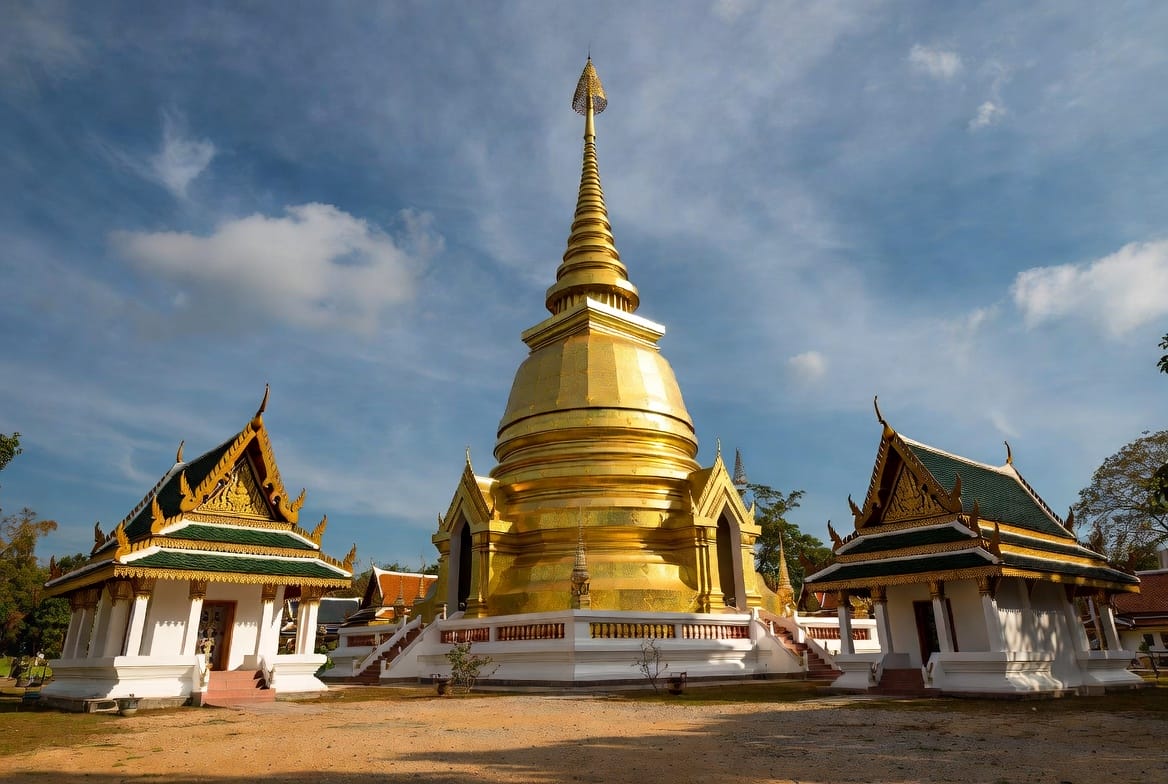
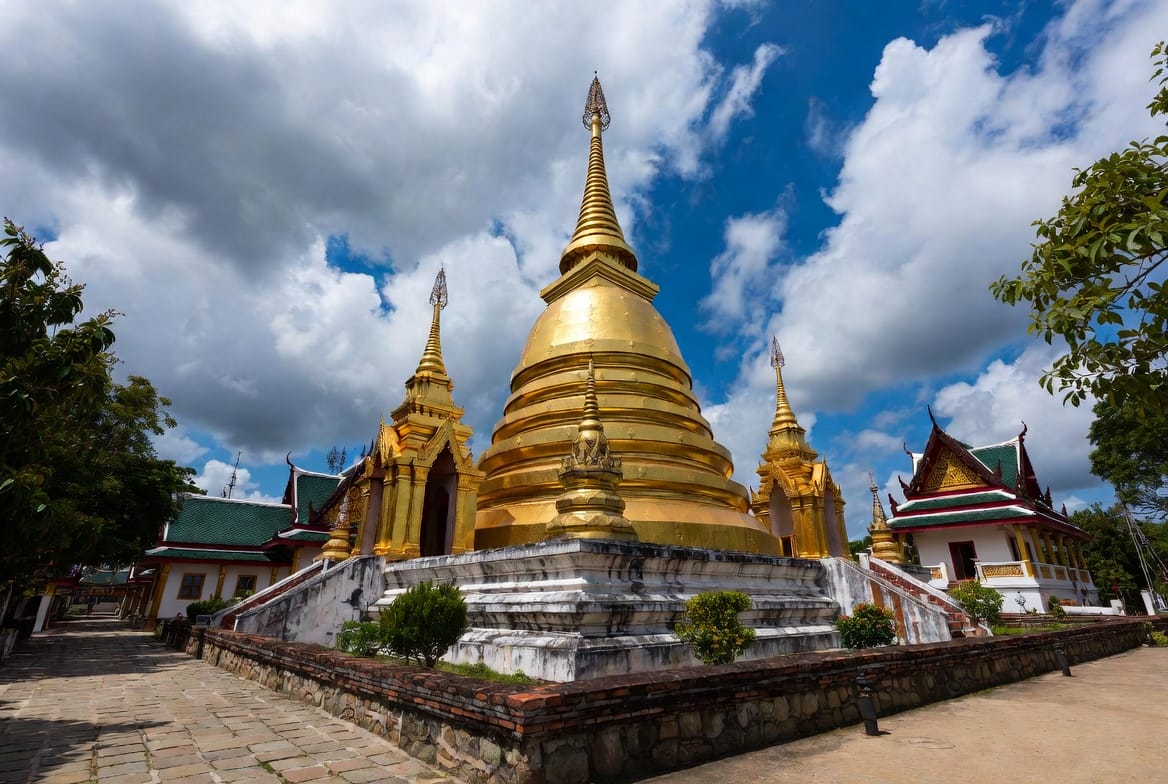
The main religious site is Wat Phra That Cho Hae, a few kilometres east of town. The temple has a distinctive golden chedi and is one of the most important pilgrimage sites in the north. Nearby viewpoints and smaller temples make it an easy half-day outing.
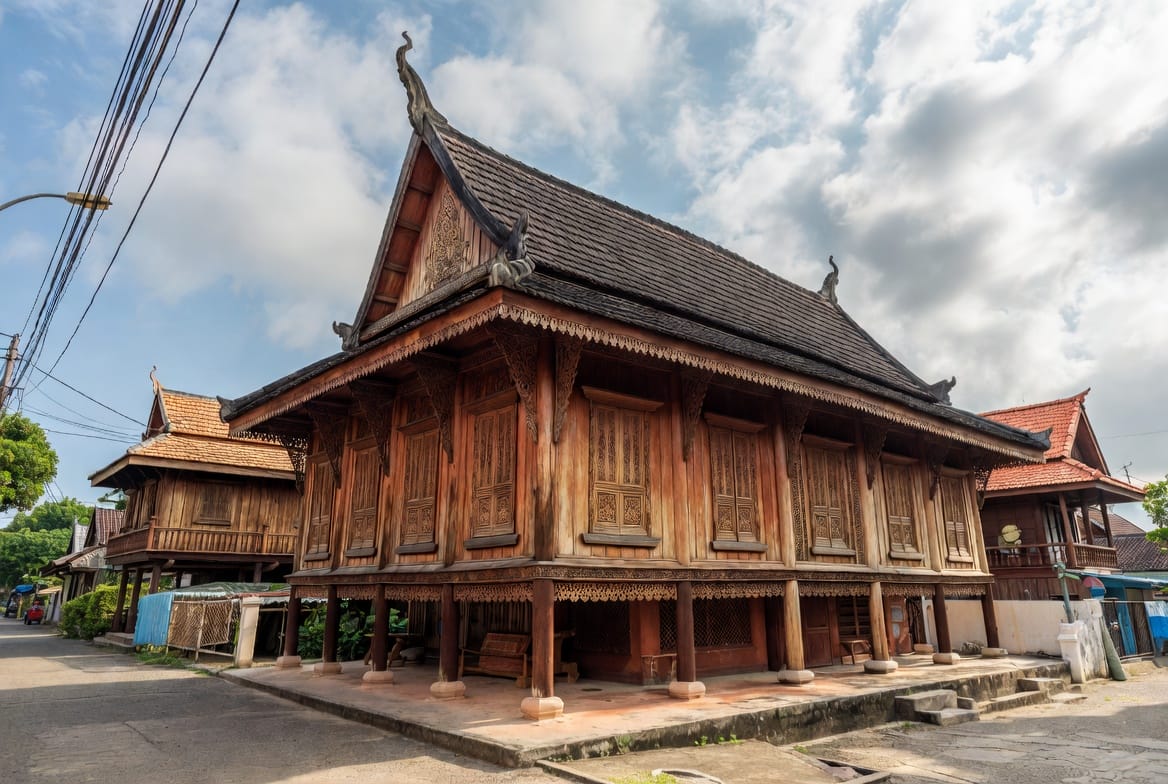
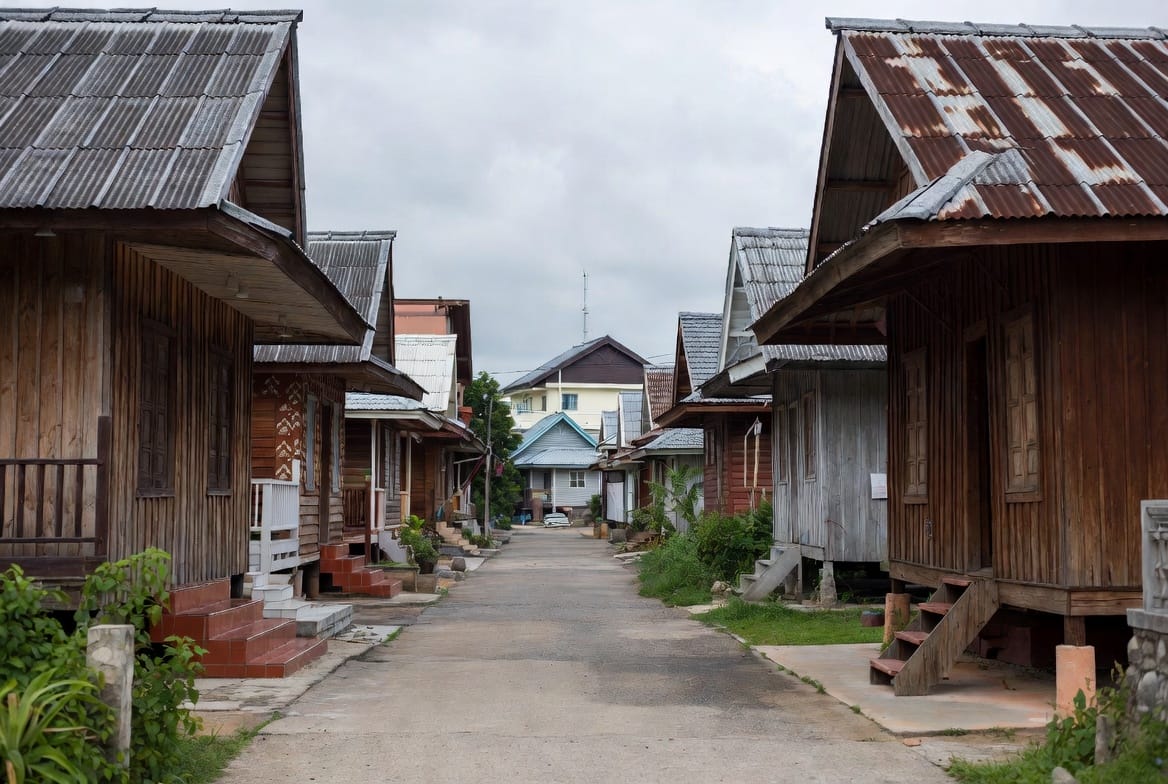
In the old town itself, start with the historic teak houses. Wongburi House and Khum Chao Luang are two of the best-preserved examples and give a real sense of Phrae’s former wealth from the teak industry. Walking the quiet streets around them is one of the simple pleasures of a visit.
Wat Luang, inside the old city area, is the town’s oldest temple and has a fine Chiang Saen-style chedi plus a small museum of local antiquities. Wat Chom Sawan, just outside the old walls, is a beautiful Burmese-style temple built by Shan teak workers and is worth a short visit for its architecture.
If you have extra time, the unusual rock formations at Phae Mueang Phi (sometimes called the “Ghost City”) make an interesting short trip, though they are best combined with private transport.
Evenings are very quiet. Eat local northern food, stroll the old streets, and enjoy the slower pace.
Pros and Cons
What people love
- Well-preserved teak architecture and historic houses
- Important and beautiful temple at Wat Phra That Cho Hae
- Genuine, low-tourist atmosphere
- Compact and walkable old town
- Easy stop between other northern destinations
What can frustrate people
- Limited major attractions beyond the temples and wooden houses
- Very quiet — little nightlife or entertainment
- Hot season is uncomfortable for daytime exploration
- Less English and tourist infrastructure than bigger towns
- Getting to outlying sights requires private transport
Why Go
Phrae is for travellers who appreciate historic architecture and a slower northern rhythm. Spend a night or two wandering the old town, visit Wat Phra That Cho Hae, look inside a couple of the fine teak houses, and enjoy the feeling of being somewhere that has not been shaped by mass tourism. It works well as a quiet stop between Lampang and Nan or as a detour from the main Chiang Mai route. Come for the wooden houses, the temples and the authentic small-town atmosphere, and you will leave with a sense of a different side of the north.