Sukhothai Travel Guide
Sukhothai is one of those places that feels different the moment you arrive. The pace is slower, the air feels calmer, and the main attraction — the vast Historical Park — is best explored on two wheels. This was Thailand’s first capital, and the ruins still have a gentle, open beauty that many people prefer to the more crowded sites further north or south. It’s ideal if you like history, photography, early mornings, and the simple pleasure of cycling between temples under big skies.
How to Get There
By bus
This is the most practical option for most travellers. Direct buses run from Bangkok’s Mo Chit (Northern) Bus Terminal and take about 6–8 hours. Fares are usually 350–500 baht depending on the class. From Chiang Mai the journey is around 5–6 hours. Buses are frequent and straightforward.
By plane
Bangkok Airways flies direct from Bangkok’s Suvarnabhumi Airport to Sukhothai Airport (THS). The flight is short (about 1 hour 20 minutes), but tickets are more expensive than the bus. The airport is small and a short transfer from both Old and New Sukhothai.
By train
There is no train station in Sukhothai itself. The nearest is Phitsanulok (about 60 km away). From there you continue by bus or minivan (roughly 1 hour). This combination works well if you’re already travelling by rail through central Thailand.
Once you arrive, most people stay either in Old Sukhothai (right next to the Historical Park) or in the newer town a few kilometres away. Old Sukhothai is more convenient if your main goal is the ruins.
Climate & Best Time to Visit
Sukhothai is hot for much of the year, so timing matters if you plan to spend long days outside on a bicycle.
Best time: November to February
These months offer the most comfortable weather. Days are warm but not extreme, nights are pleasant, and rainfall is low. Early mornings are especially lovely for cycling through the park before the heat builds.
Hot season: March to May
Temperatures regularly climb into the high 30s and can feel intense by midday. If you visit then, start very early, take long breaks in the shade, and carry plenty of water.
Rainy season: June to October
Expect afternoon showers and higher humidity. The park is quieter and the surrounding countryside is greener, but paths can be muddy and some outdoor exploration is less enjoyable.
November through early February is the sweet spot for most visitors.
What You’ll Love Doing Here
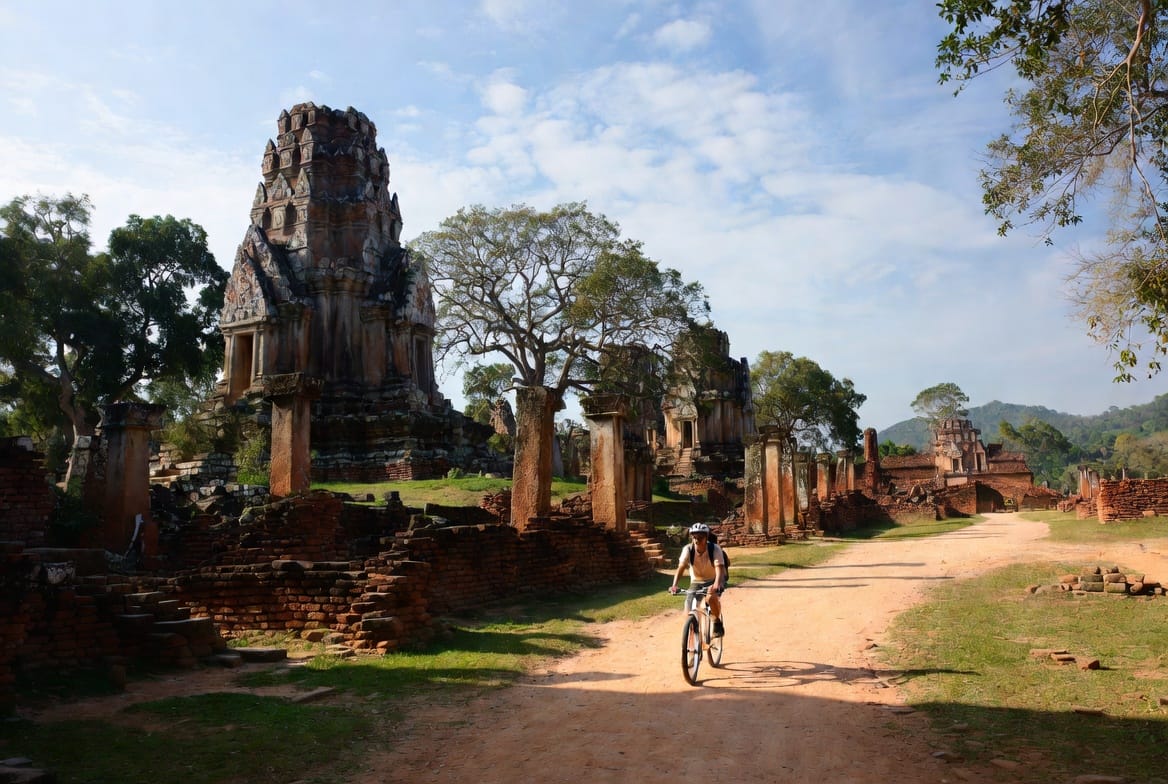
The star of the show is the Sukhothai Historical Park, a UNESCO World Heritage site spread across several zones. The best way to experience it is by bicycle. Rentals are cheap and available right outside the main entrance (and at many guesthouses). The paths are flat and the distances between major temples are manageable.
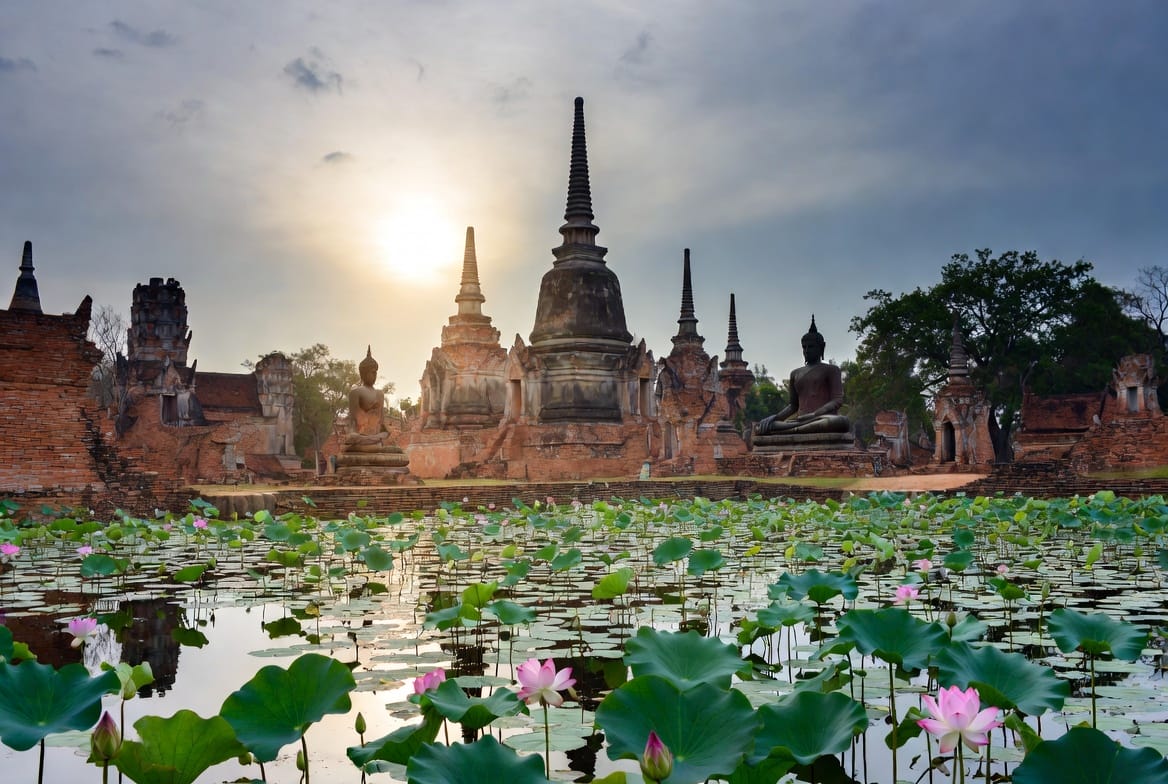
Start in the Central Zone. Wat Mahathat is the largest and most important temple complex — elegant chedis, seated Buddhas, and reflecting ponds that look especially beautiful in the early morning or late afternoon light. Nearby you’ll find Wat Sa Si (set on an island in a lotus pond) and Wat Si Sawai with its distinctive Khmer-style prangs.
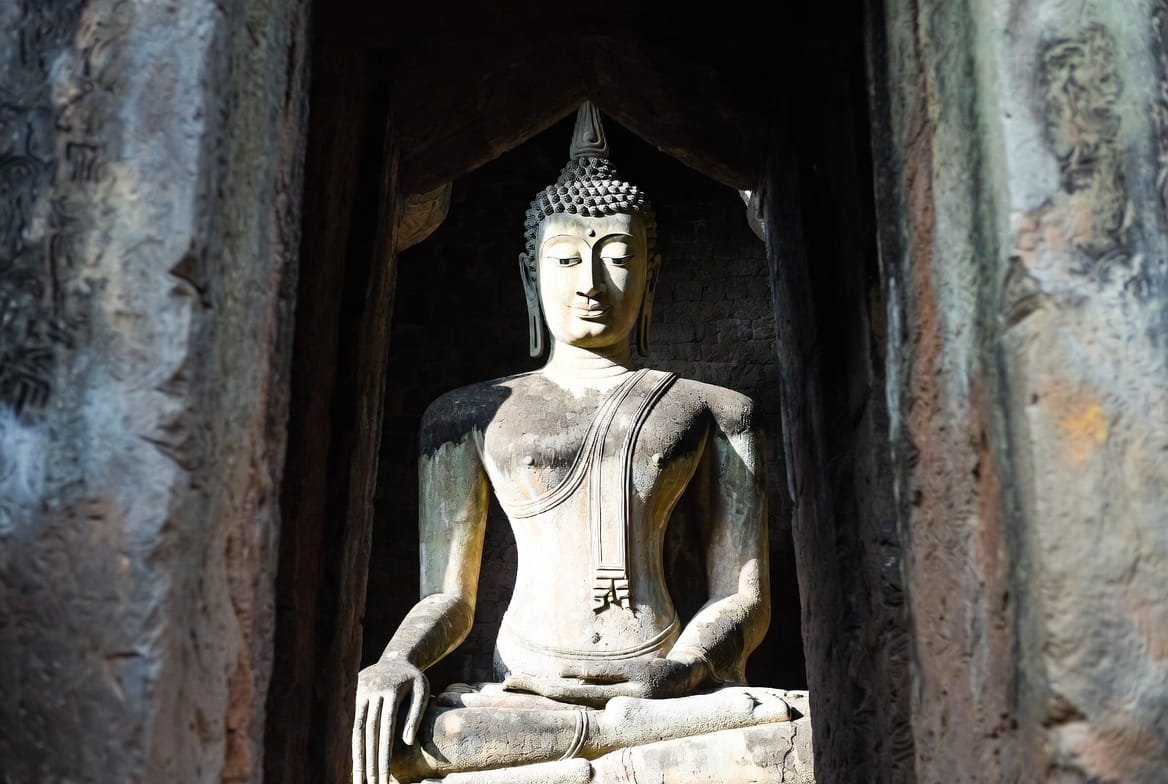
Don’t miss the Northern Zone and Wat Si Chum. Inside a simple mondop sits an enormous seated Buddha whose serene face fills the narrow entrance. It’s one of those places that stops people in their tracks. The Western Zone is quieter and more spread out — good if you have extra time and energy.
Many visitors also make the short trip to Si Satchanalai Historical Park, about an hour north, which feels even more peaceful and less visited.
Evenings in Old Sukhothai are low-key. There are simple restaurants, a small night market, and a pleasant atmosphere for a slow dinner after a day among the ruins.
Pros and Cons
What people love
- Beautiful, spacious historical park that is perfect for exploring by bicycle
- Quieter and less crowded than many other major Thai historical sites
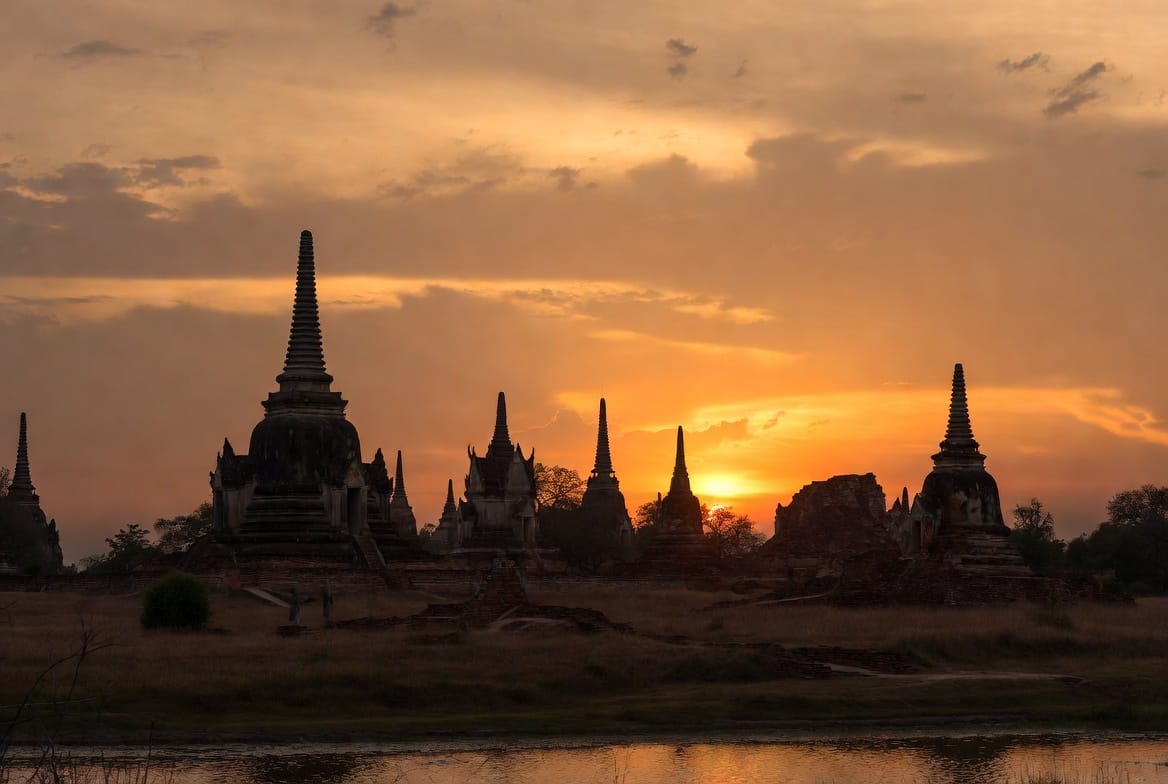
- Photogenic temples, especially at sunrise and sunset
- Relaxed atmosphere and easy pace
- Good base if you’re travelling between Bangkok and Chiang Mai
What can frustrate people
- It can get very hot, especially from March to May
- The town itself is small and quiet — limited nightlife or dining variety
- You need at least one full day (ideally two) to do the park justice
- Public transport options are more limited than in bigger cities
- Some visitors find it too slow if they’re looking for more activity
Why Go
Sukhothai rewards people who like to slow down and look closely. Rent a bicycle, start early, and give yourself time to sit by the ponds and walk around the ruins without rushing. The combination of history, open space and gentle beauty is hard to match. Visit in the cooler months if you can, stay near the park, and let the place work at its own quiet pace. Most people leave glad they made the stop.