Thai festivals 2026 saves its quietest spectacle until last. On the evening of Tuesday 24 November the full moon of the twelfth lunar month rises over Thailand — at 21.54 Bangkok time, as it happens — and the whole country carries candles down to the water for Loy Krathong. Most visitors head for Bangkok's riverbanks or Chiang Mai's lantern sky. The place that rewards the detour is Sukhothai.
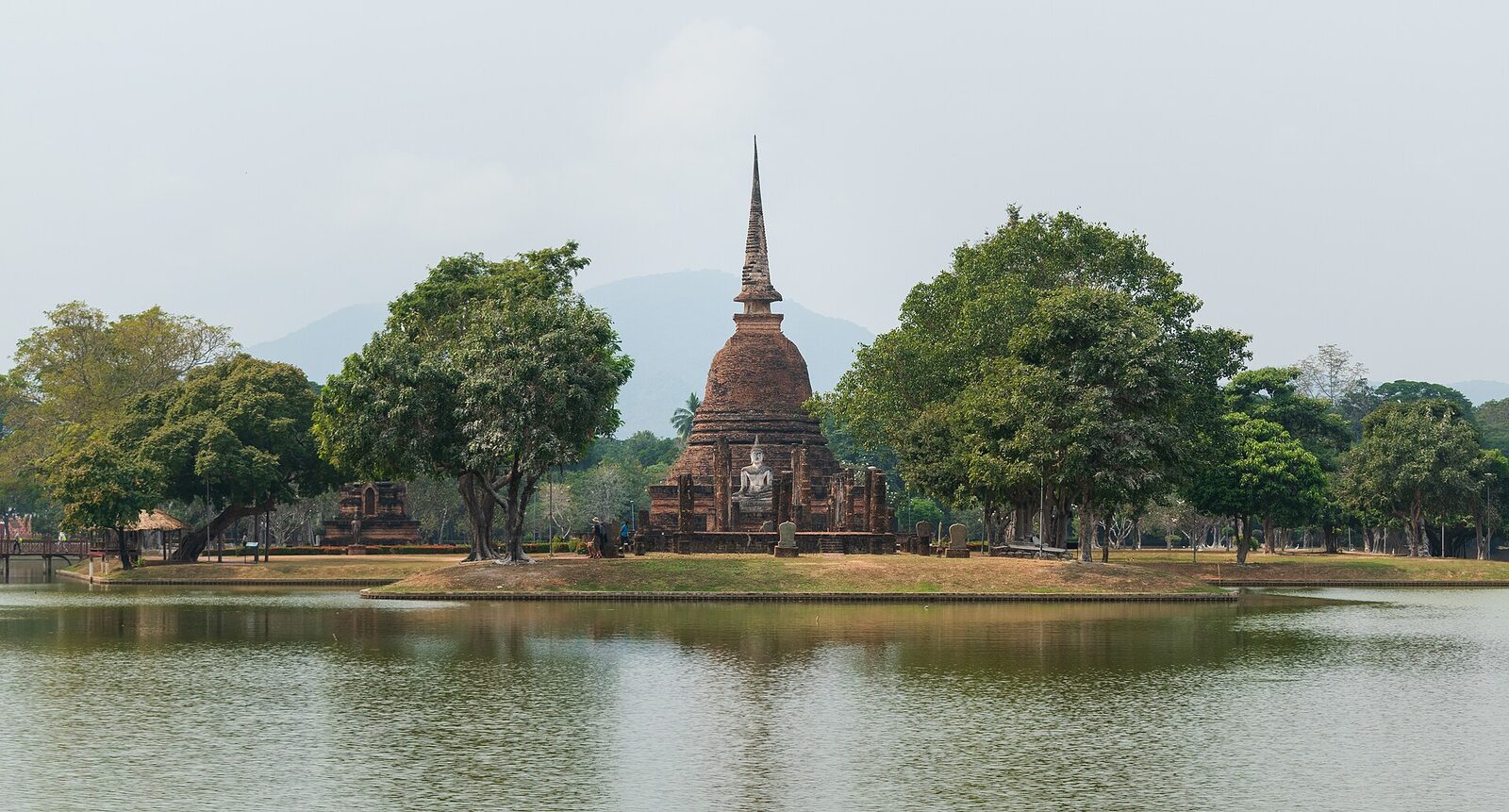
Sukhothai was Thailand's first capital, and tradition holds that the festival began here in the thirteenth century. The province does not settle for one night. The 2026 programme runs for ten, from 15 to 24 November, staged among seventy-odd ruined temples, laterite walls and lotus ponds inside a park that UNESCO inscribed in 1991. Floodlit chedis reflected in still black water, with candles drifting between them, is the single most photogenic hour in the Thai calendar.
Where it sits in the Thai festivals 2026 calendar
The national festival night is 24 November 2026. Chiang Mai's Yi Peng lantern celebrations run alongside it on 24–25 November, and Bangkok, Ayutthaya and the coast all float on the 24th alone. Sukhothai is the outlier, and that is the point: arrive on 18 or 19 November and you get the same illuminated ruins, the same performances and a fraction of the crowd. Among Thai festivals 2026 offers, few give you that much room to breathe.
If your dates are fixed and you cannot reach Sukhothai, our Loy Krathong guide and Yi Peng guide cover the alternatives.
The Light and Sound Show at Wat Mahathat
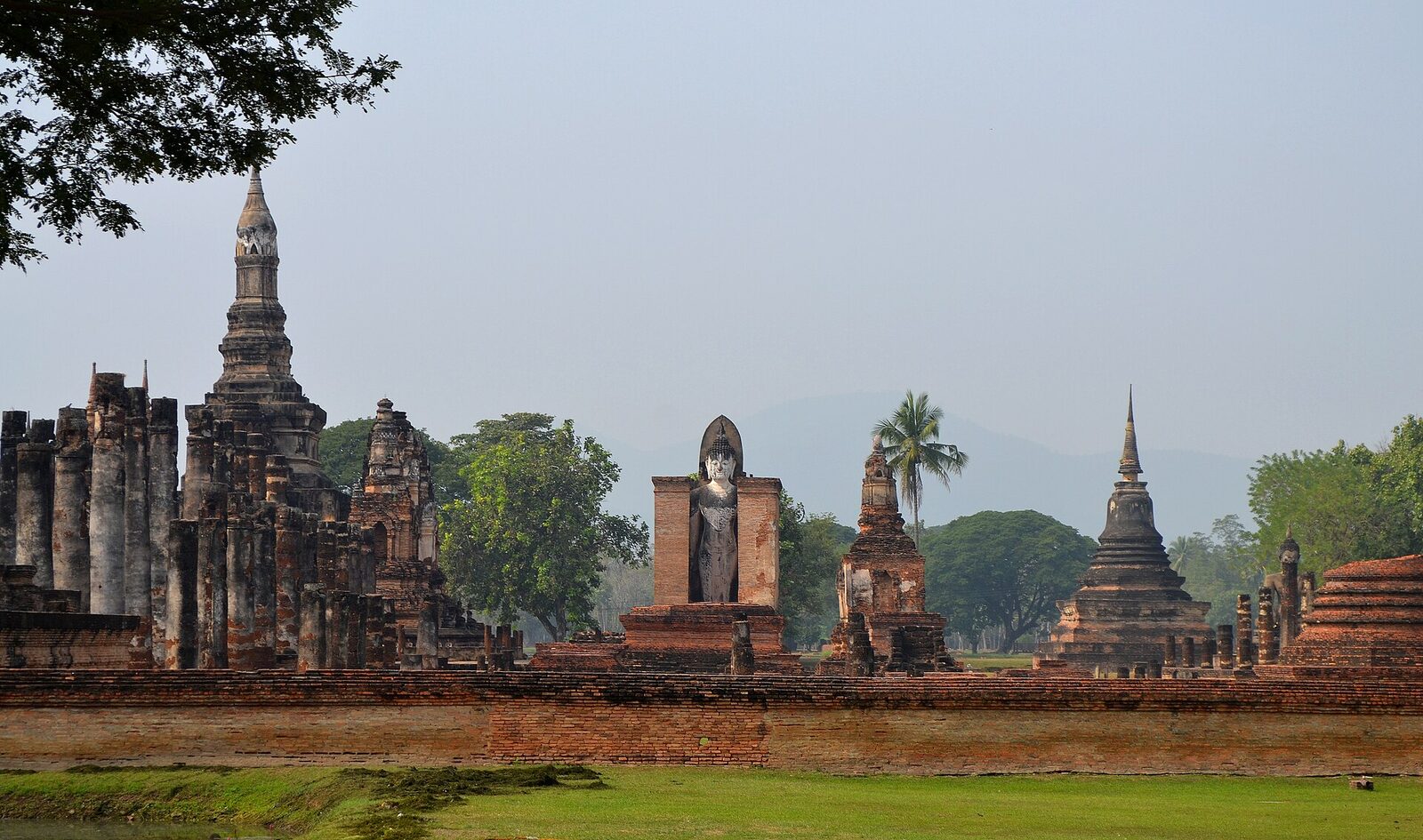
The centrepiece, and the reason Sukhothai tops most shortlists of Thai festivals 2026, is a 45-minute Light and Sound production staged against the ruins of Wat Mahathat, the old royal temple at the heart of the central zone. It tells the story of the Sukhothai Kingdom with several hundred performers, processions, historical reenactment and a lighting rig thrown across nine-hundred-year-old brick.
Performances run nightly at 19.00 across the full 15–24 November window, with an extra show at 20.30 on the final night. Seats are tiered at 500, 900 and 1,200 baht, the higher bands sitting closer to the central performance area. Tickets go through ThaiTicketMajor, the organisers' LINE account (@ST2026) or the booth at the main entrance on the night — though the good seats for the full-moon evening sell out well in advance. Be wary of tour operators reselling them at a markup.
What happens across the ten nights
The show is only the anchor. The opening days bring dawn almsgiving beside Traphang Ngoen pond, traditional dance and music at Wat Chana Songkhram, and a daytime cultural fair with krathong-making workshops where you can build your own float for nothing more than the cost of the materials. The closing days bring the barge procession, fireworks and the mass floating on the park's moats and ponds.
Around all of it runs a night market of northern food, handicraft stalls and the Sangkhalok ceramics the region has made for seven centuries. Monuments stay floodlit until late. This is Thai culture presented at home rather than staged for a stadium, and it is worth two evenings rather than one.
Floating a krathong
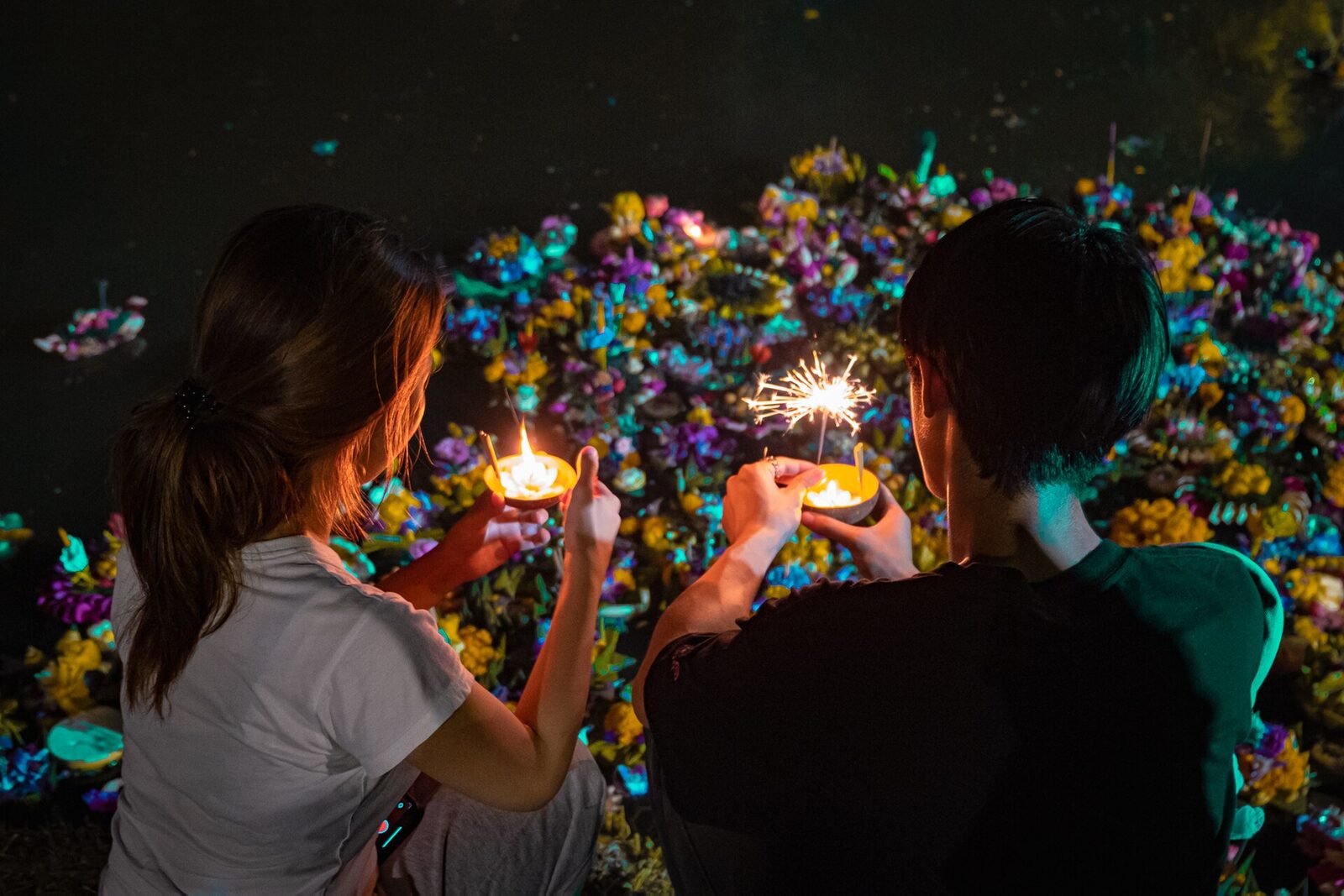
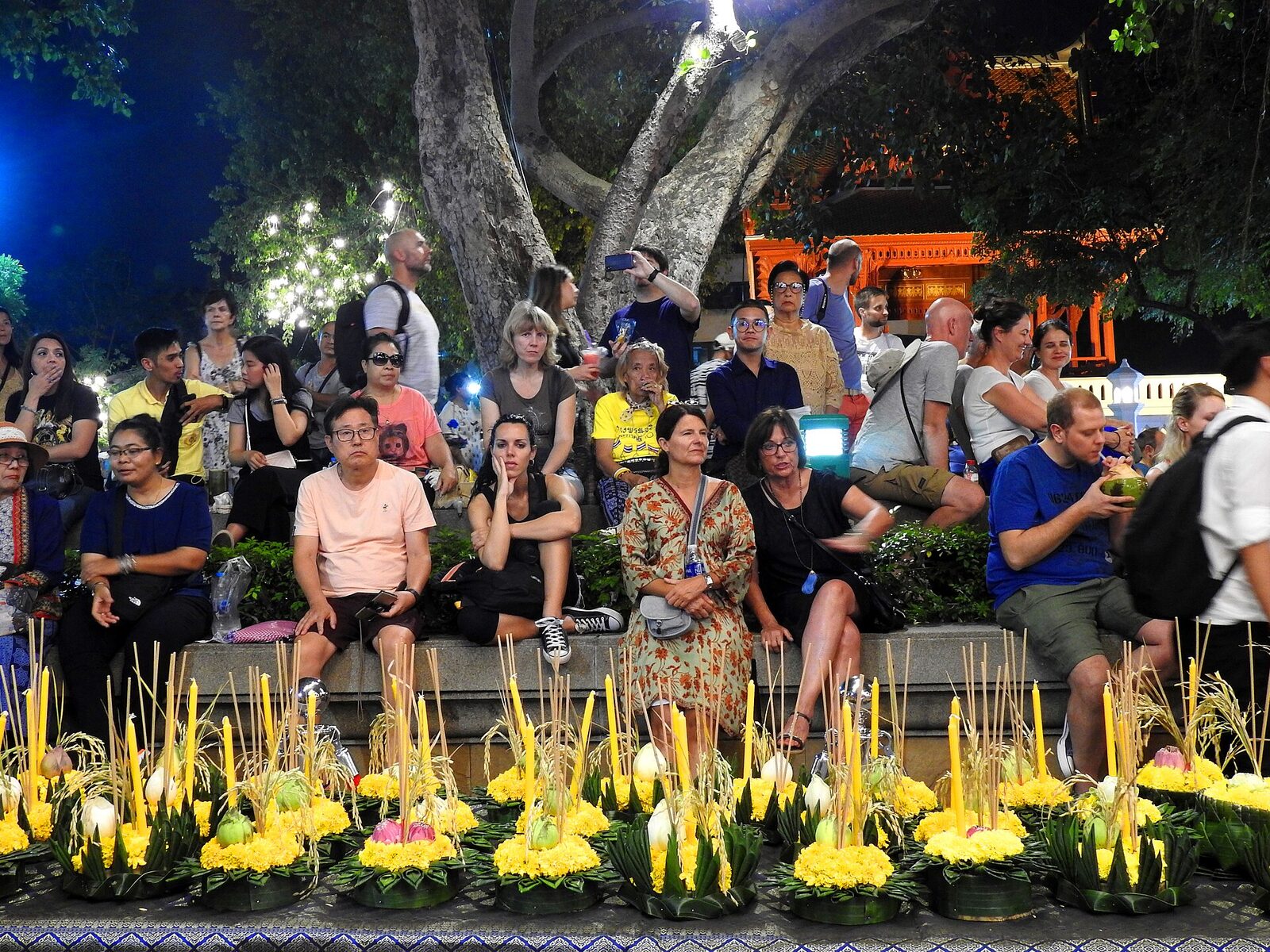
A krathong is a small float, traditionally a slice of banana trunk dressed with folded banana leaf, marigolds, incense and a candle. You light it, make a wish, and set it on the water to carry away the past year's bad luck. Vendors around the ponds sell them for 20 to 100 baht depending on size. Buy the natural ones: Sukhothai actively discourages polystyrene, and bread-based floats are increasingly common because the fish eat them.
Getting to Sukhothai and what it costs
Bangkok Airways flies direct from Suvarnabhumi to Sukhothai Airport in about an hour and twenty minutes; the airport sits roughly 27 km north of town and is the quick option, though not the cheap one. Direct buses from Bangkok's Mo Chit terminal take six to eight hours for 350–500 baht. The third route is a flight or train to Phitsanulok and a bus or minivan on for about an hour, which is often the best-value combination.
New Sukhothai, where almost all the hotels are, sits about 12 km east of the park. Blue songthaews shuttle between the two for 30 baht and run later than usual during the festival; a private tuk-tuk back after the show is around 500 baht, and Grab operates in town. Inside the park a bicycle is the only sensible way to get about — rentals are 30–50 baht a day from the shops by the entrance.
Ordinary park admission for foreign visitors is 200 baht for the central zone and 120 baht each for the northern and western zones, plus 10 baht for a bicycle or 20 for a motorbike; the southern and eastern zones are free. Tickets last all day and allow re-entry. Entry is normally waived on festival evenings, when the park opens late. The Ramkhamhaeng National Museum is a separate 200 baht and worth an hour.
The real cost of attending one of the bigger Thai festivals 2026 has to offer is the bed. Sukhothai has a few hundred rooms and ten nights of demand, so accommodation books out weeks ahead and prices roughly double. Anyone doing serious Thailand vacation planning for November should sort the room before the show ticket.
Fitting Sukhothai into a wider Thailand itinerary
Unlike most Thai festivals 2026 visitors plan around, Sukhothai is not a destination you fly in for alone, and it slots neatly into the classic northern Thailand itinerary. Bangkok to Sukhothai to Chiang Mai is the natural run — the bus north takes about five hours — and two full days here is enough: one for the central and northern zones by bicycle, one for Si Satchanalai, the quieter sister park 55 km up the road. Our Sukhothai travel guide has the detail on both.
Pair it with a night of Bangkok street food in Yaowarat on the way through, where the stalls open around 18.00, and you have the cultural half of a trip. For the beach half, the eastern seaboard is the easy answer: the Koh Larn beaches are a 45-minute ferry from Pattaya and there is no shortage of things to do in Pattaya on a wet afternoon — see our Pattaya and Jomtien guide. Further east, Koh Kood travel out in Trat is the quietest island week in the country. On the other coast the Andaman marine parks reopened this month, so the Thailand islands are back in play for anyone who would rather travel to Thailand for the sea than the ruins.
Practical tips for Loy Krathong in Sukhothai
A few things learned the hard way by people who have done the November run. None of them cost anything, and together they are the difference between a good night at one of the best Thai festivals 2026 has left and a frustrating one.
- Book the room first, the ticket second. Rooms in New Sukhothai sell out weeks ahead for the festival window and prices roughly double.
- Go on a weekday, not the full moon. Nights of 16–19 November carry the same programme with a fraction of the crowd, and tickets are easier to get.
- Arrive at the park before sunset. You want an hour of daylight to find the ruins before the lights go up, and the queues build after 18.00.
- Rent a bicycle. The central zone alone is 1.8 km square and the ponds worth floating on are spread across it.
- Buy a banana-leaf krathong, not polystyrene. 20 to 100 baht at the ponds, and the natural ones are what the park asks for.
- Carry cash. Stalls, songthaews, krathong vendors and the gate booth are all cash; the nearest reliable ATMs are in New Sukhothai.
- Plan the ride home. Songthaews thin out late. Agree a tuk-tuk fare before the show or check Grab prices while you still have a signal.
Source: Thailand Center, Public Relations Department — Loy Krathong, Burning Candles and Playing with Fire Festival in Sukhothai (publication date not stated); TAGTHAi — Loy Krathong Sukhothai (15-24 November 2026) (publication date not stated); The Longest Way Home — Sukhothai Historical Park: fees, zones and opening hours (publication date not stated); Tourism Authority of Thailand — TAT Newsroom (publication date not stated).
More Thailand travel news
Plan around a festival
Festival guides for the events named in this article — dates, how to get there and what to expect.
- Loy Krathong — Nationwide · November
On the full moon of the twelfth lunar month, Thailand sets millions of candle-lit baskets adrift on its rivers, canals a - Yi Peng Lantern Festival — Chiang Mai · November
The Lanna sky lantern festival in Chiang Mai — the source of Thailand's most famous photograph, and the one most often m
Check festivals against your travel dates · All Thai festivals by month
Sources
- Loy Krathong, Burning Candles and Playing with Fire Festival in Sukhothai — Thailand Center, Public Relations Department
- Loy Krathong Sukhothai (15-24 November 2026) — TAGTHAi
- Sukhothai Historical Park: fees, zones and opening hours — The Longest Way Home
- TAT Newsroom — Tourism Authority of Thailand