Yi Peng Lantern Festival
- 🏮 Sky lanterns
- 📸 The famous shot
- 🎭 Lanna tradition
- 🏮 Temple ceremonies
Yi Peng is the reason people book flights to Thailand in November. It is the Lanna festival of khom loi — rice-paper lanterns lifted by a flame and released into the night — and it produces the single most reproduced image in Thai tourism. It is also the festival most likely to disappoint, because almost nothing about it works the way the photographs suggest.
What Yi Peng actually is
Yi Peng is northern, not national. It belongs to the old Lanna kingdom and is centred on Chiang Mai, where it coincides with Loy Krathong, the nationwide floating-basket festival. The two have merged in practice: over the same two or three nights, Chiang Mai floats krathongs on the Ping river and sends lanterns into the sky.
The lantern carries away bad luck and the year's misfortune. Watching one go is genuinely moving in a way that is hard to explain from a photograph — the flame catches, the paper swells, and the thing lifts out of your hands with surprising urgency.
When it happens
Yi Peng follows the Lanna lunar calendar and lands on the same full moon as Loy Krathong, which means November and a date that moves by up to three weeks year to year.
| Year | Dates | Notes |
|---|---|---|
| 2024 | 15–16 November | — |
| 2025 | 5–6 November | — |
| 2026 | 24–25 November | City programme runs 24–26 November |
| 2027 | 13–14 November | — |
Chiang Mai's official programme usually runs across three days, with the main lantern night on the second. The 2026 city events run 24–26 November.
Read this before you book a lantern release
<strong>The mass lantern releases you have seen photographed are ticketed private events</strong> held outside the city, not something happening in the street. Tickets run to serious money per person and sell out months ahead. The free celebrations in the old city are beautiful, but they are parades, temple ceremonies and krathongs — not a thousand lanterns rising at once.
Sky lanterns and aircraft do not mix. Releases are restricted around flight paths and Chiang Mai airport cancels or reschedules flights during the festival window every year. If you are flying in or out on those nights, check your booking carefully.
Accommodation in Chiang Mai is the most expensive it will be all year and the old city sells out months ahead. If you decide late, look at Nimman or the Ping riverside rather than giving up on the city.
The ticketed releases, explained honestly
The photograph you have in mind — a dense sky of hundreds of lanterns rising in unison over a temple — is almost always taken at an organised mass release held on private land outside Chiang Mai. These are commercial events. They are ticketed, they are expensive, they sell out months ahead, and they are the only reliable way to see that specific sight.
What you get for the money is a managed event: a seat, a ceremony, a set of lanterns, and a few hundred other people releasing at the same moment on cue. Plenty of people find that worth it. Others find it stage-managed, and prefer the free city.
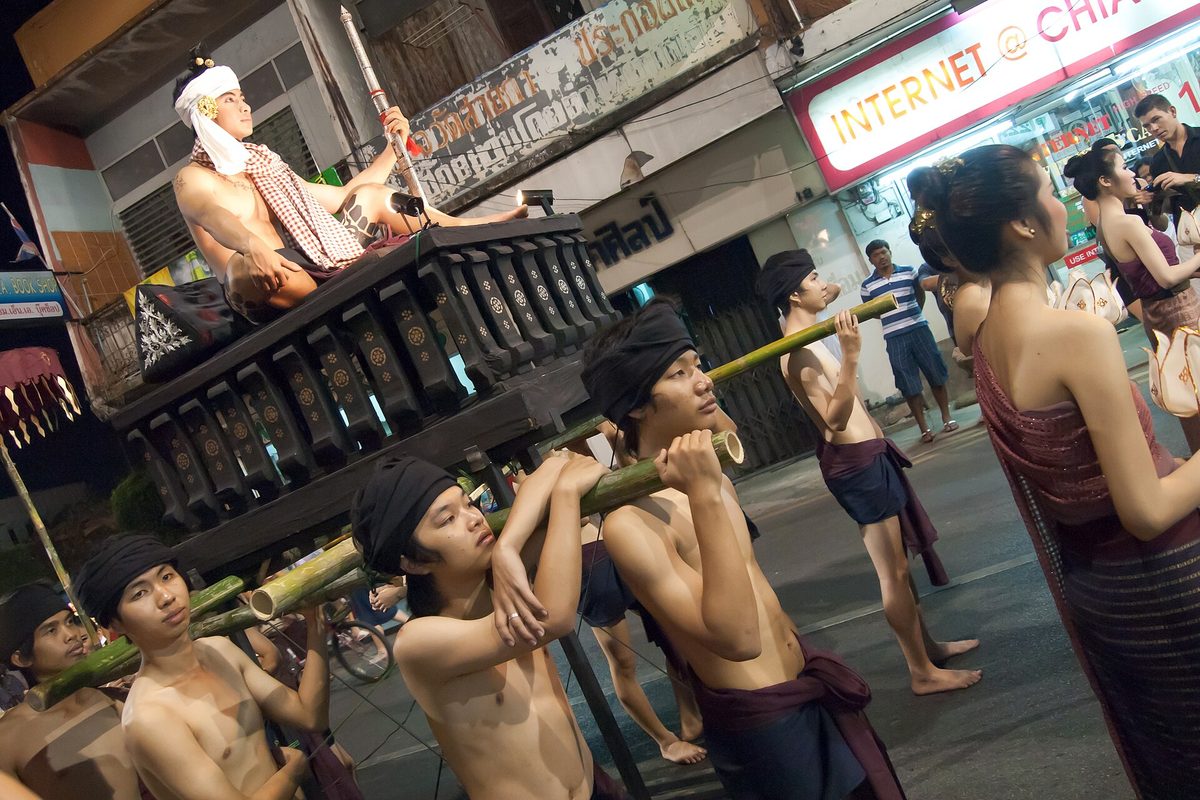
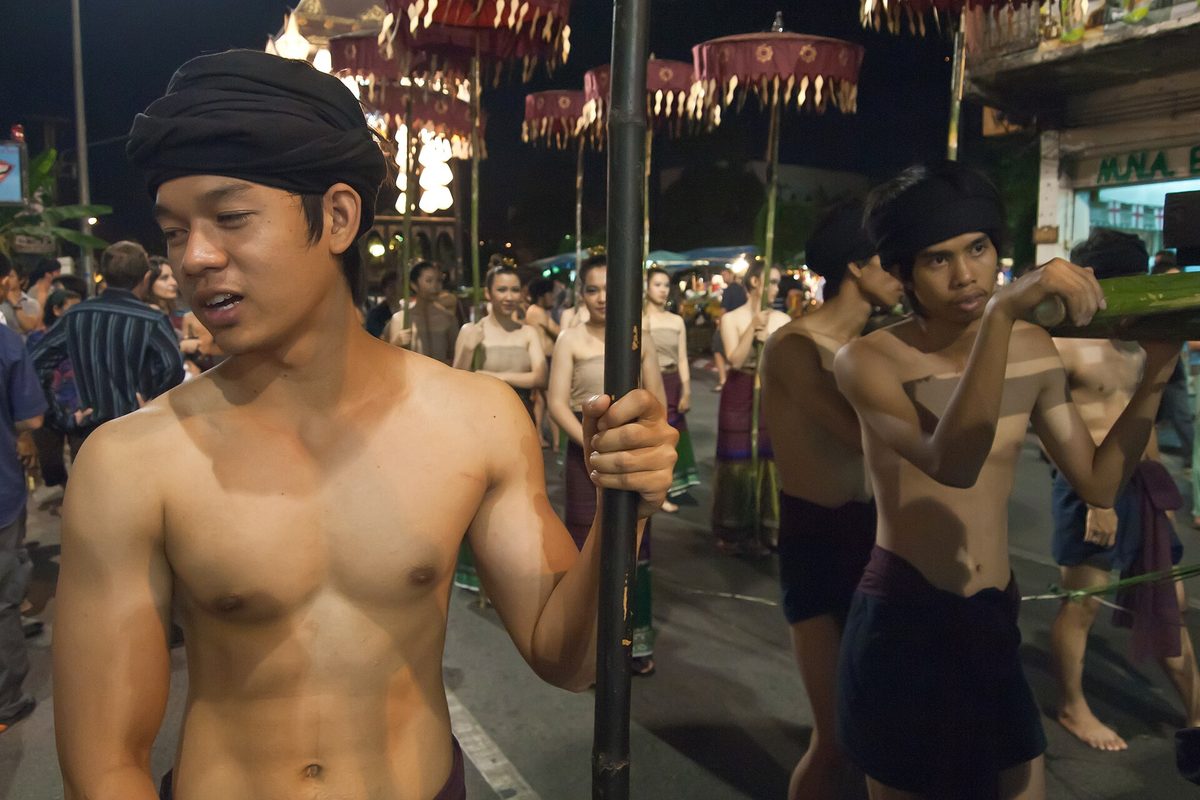
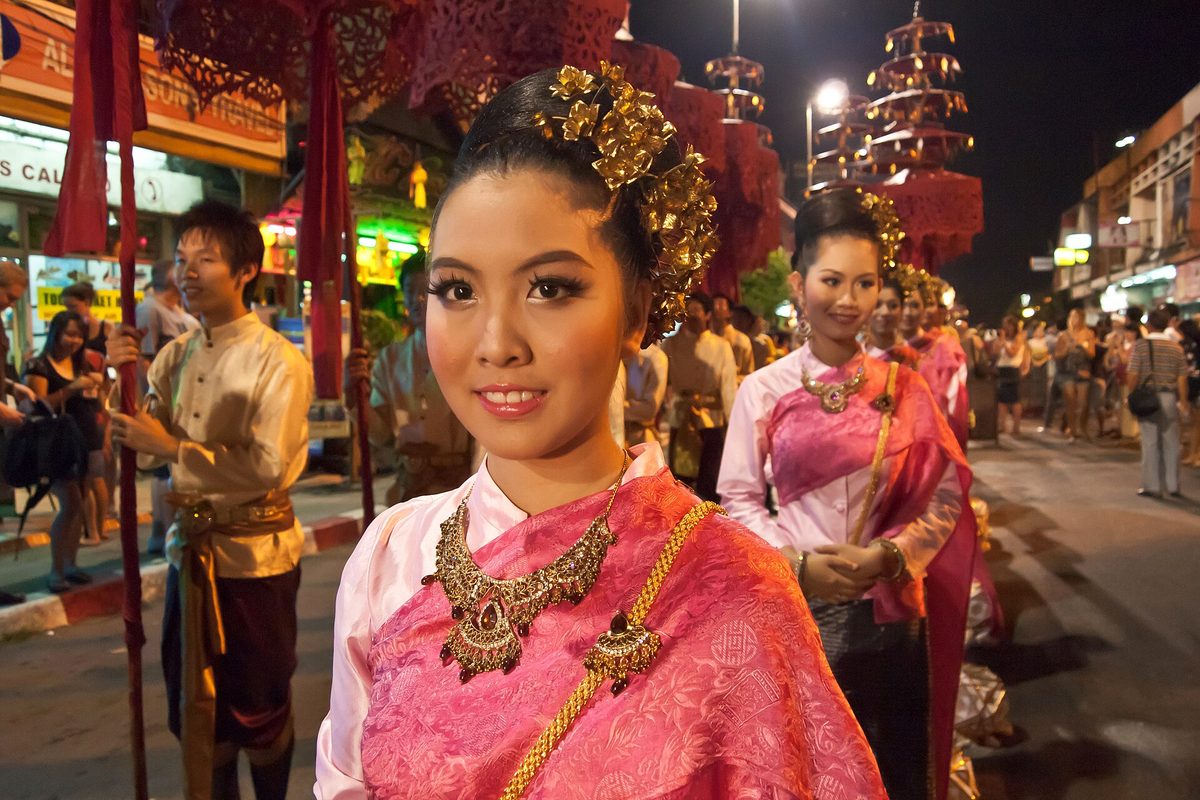
What happens in the old city for nothing is different in kind, not just in scale. Lanterns go up steadily rather than all at once, from bridges and riverbanks and street corners, over several hours. Temples such as Wat Phan Tao light hundreds of candles in their grounds. There are processions through Tha Pae Gate, Lanna dancing, and the moat ringed with candle trays.
It is less photogenic and more atmospheric. If you only have one night and a normal budget, the free version is not a consolation prize.
Where to be
Tha Pae Gate is the centre of the public festivities — processions, the Yi Peng opening ceremony and the biggest crowds.
Wat Phan Tao and Wat Chedi Luang are the two temples worth prioritising. Phan Tao's candlelit grounds are the most photographed interior of the festival for good reason.
Nawarat Bridge and the Ping riverside is where krathongs and lanterns happen in the same frame, which is the combination most people actually came for.
The old city moat carries candle trays and smaller crowds, and is the easiest place to find space on a packed night.
Getting there
From Bangkok: Hourly flights to Chiang Mai (CNX) from both Suvarnabhumi and Don Mueang. Book months ahead for these dates — this is the busiest travel week of the Chiang Mai year. 1 hr 20 min.
From Bangkok: Overnight sleeper from Krung Thep Aphiwat to Chiang Mai. Slower, far cheaper than a last-minute flight, and berths also sell out early. 12–13 hrs.
From Chiang Mai Airport: Grab or a red songthaew into the old city. Expect heavy traffic and road closures around Tha Pae Gate on festival nights. 20–40 min.
What it costs
The free version costs nothing beyond a lantern, which the stalls around the old city sell cheaply on the night.
The ticketed mass releases are a different proposition entirely — a significant per-person price, sold months ahead, and the only reliable way to see hundreds of lanterns rise at once.
Accommodation is where the real money goes. Chiang Mai is at its most expensive of the year for these dates, the old city sells out months in advance, and minimum stays are common. Booking early is the single biggest thing you can do to control what this trip costs.
If your dates are flexible, note that the same city is far cheaper and almost as pleasant for the Flower Festival in February.
Why go
Because when it works, it is the most beautiful night in Southeast Asia, and because the city commits to it completely — temples, bridges, moat and river all lit at once.
Go with the right expectations. Book early, decide deliberately whether the ticketed release is worth it to you, check your flights, and give yourself three nights rather than one. Arrive expecting a thousand lanterns to rise over the street for free and you will spend the evening disappointed in one of the loveliest places in the country.