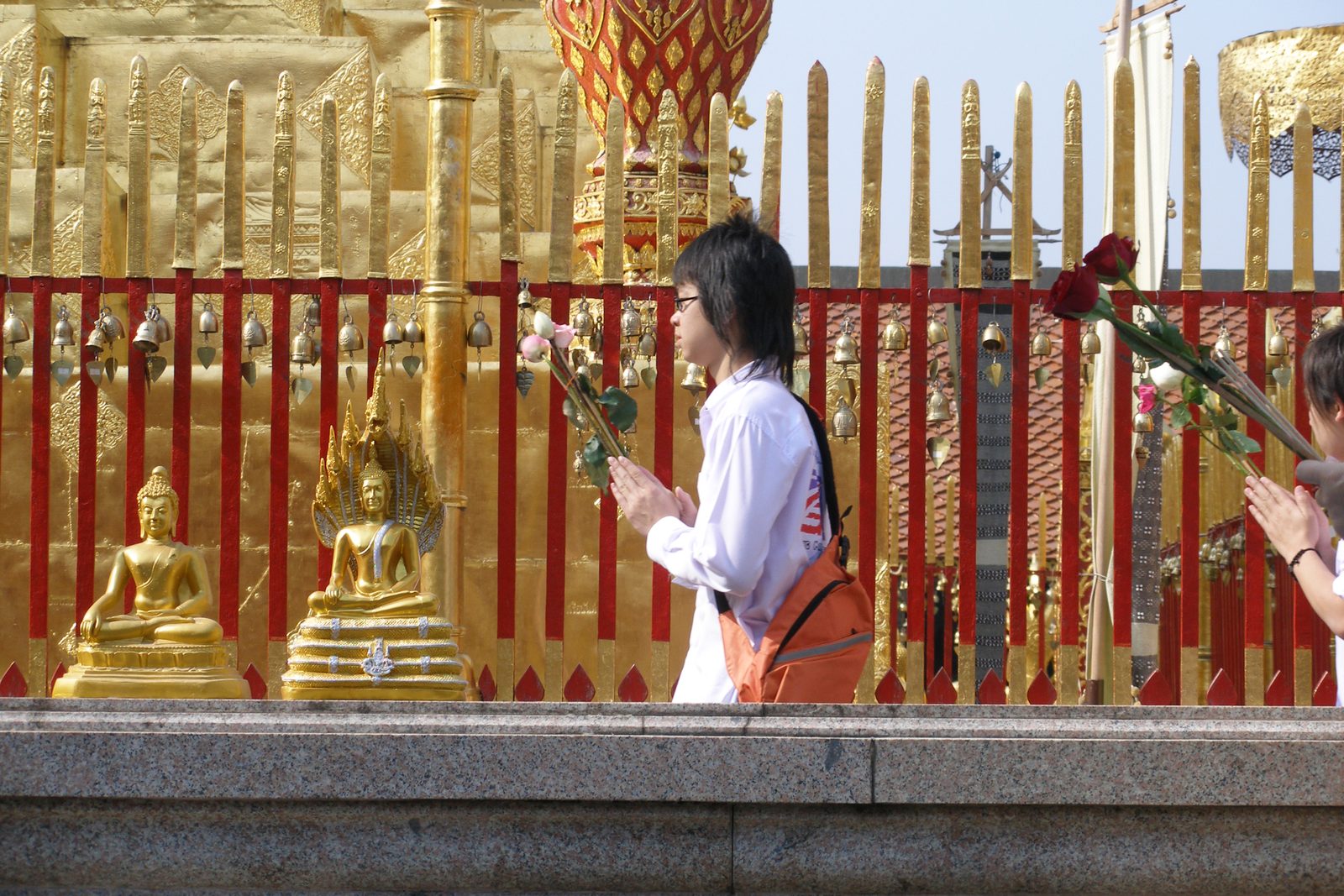
Anyone drawing up a shortlist of the best places to visit in Thailand has a fresh data point to work with. The Tourism Authority of Thailand confirmed on 10 November that Chiang Mai has been ranked the safest city in Southeast Asia for 2026 in Numbeo's Safety Index by City, with a score of 77.9 and nineteenth place worldwide. It is the second consecutive year the northern capital has topped the regional table, and it finished narrowly ahead of Singapore on 77.5.
The timing is useful. The cool season has just settled over the north, which gives anyone doing Thailand vacation planning a clear three-month window — and one month to steer around. Here is what the ranking measures, what a few days actually cost, and how Chiang Mai slots into a longer Thailand itinerary.
What the 77.9 score actually measures
Numbeo is a crowdsourced database of quality-of-life data, and its Safety Index is built from contributors' perceptions and experiences rather than recorded police statistics. That is worth saying plainly, because it changes how you should read the number: it tells you how safe people in the city feel, not how many offences were logged last year.
On the underlying measures, Chiang Mai scores 92.82 for confidence walking alone during the day and 80.95 for walking alone at night — both in Numbeo's "very high" band. Concern about being attacked sits at 13.52 and concern about being mugged or robbed at 14.83, with an overall crime index around 22. For context, the highest-scoring city in the global 2026 table is Qingdao in China on 89.2, so Chiang Mai's distinction is a regional one rather than a claim to be the safest city on earth. Taken on its own terms, though, it is a strong signal for anyone comparing the best places to visit in Thailand ahead of a first trip.
Why Chiang Mai ranks among the best places to visit in Thailand
The safety score is only the newest line on a long list. Chiang Mai was placed tenth in the Best Cities category of the Travel + Leisure Luxury Awards Asia Pacific 2026, and Doi Inthanon National Park — the country's highest peak, ninety minutes southwest of the city — was selected for the Green Destinations Top 100 Stories 2026. TAT also runs its "Chiang Mai Prototype" sustainable-destination model here, which is why so much of the region's tourism now points at community villages, craft workshops and national parks rather than big-ticket attractions.
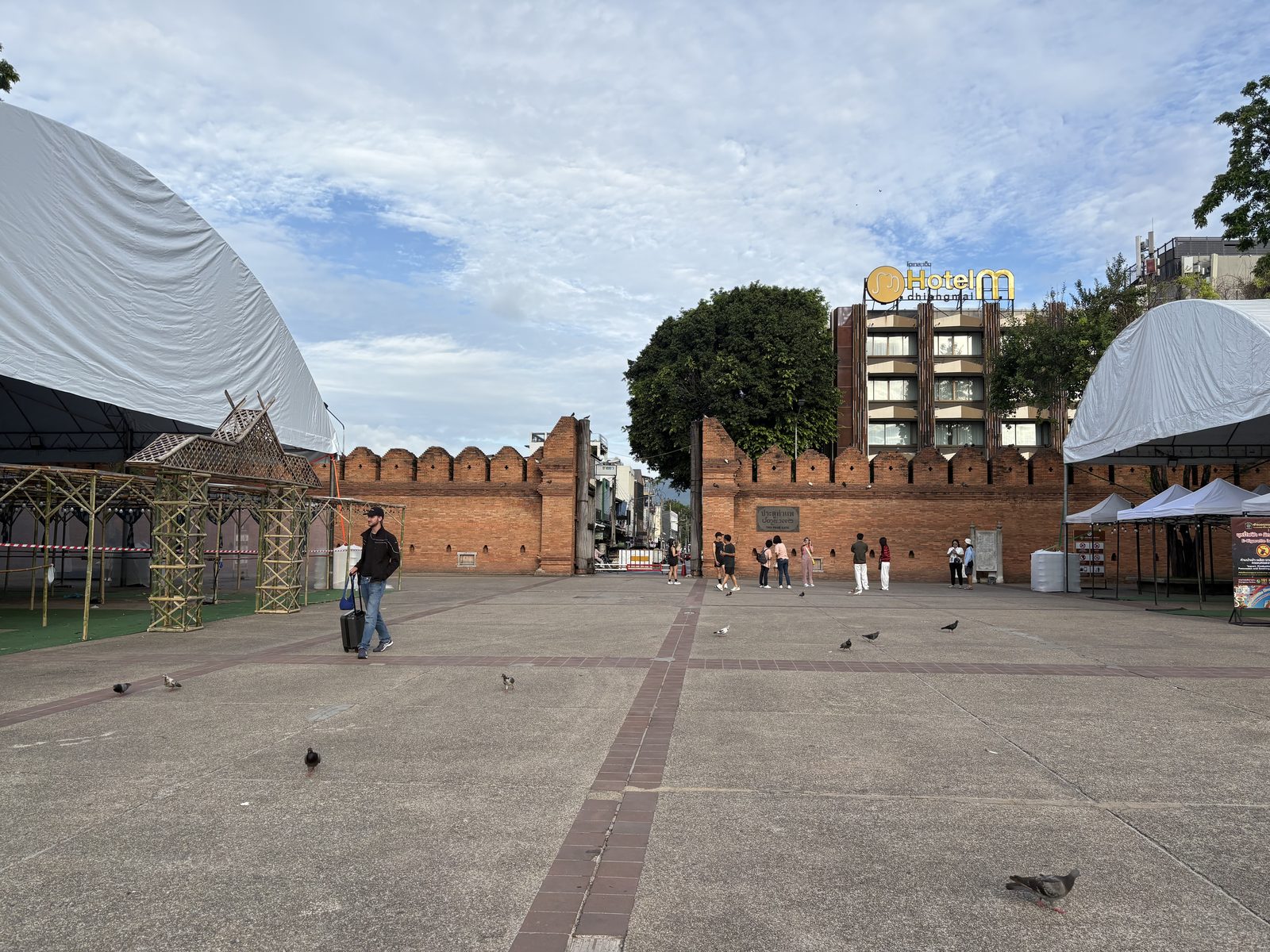
What visitors actually find is a compact, walkable grid. The old city is a square kilometre and a half inside a moat and a line of 13th-century brick walls, with roughly thirty working temples inside it. Wat Phra Singh, Wat Chedi Luang and Wat Phan Tao sit within ten minutes of each other on foot, which makes Chiang Mai one of the few places in the country where a serious day of Thai culture needs no transport at all. Numbeo's healthcare index for the city, 84.69, is another quiet reason the north has held onto its long-stay visitors.
Cool season dates, and the month to avoid
November to February is the season. Daytime highs sit around 28 to 30°C, nights in the city drop to roughly 14 to 18°C, and the mountains are genuinely cold — the summit area of Doi Inthanon can approach freezing before dawn, which is why Thai visitors drive up in fleeces to photograph frost on the grass.
The caveat is air. Numbeo's pollution index for Chiang Mai is 77.82, rated high, and the reason is the agricultural burning season that typically runs from late February through April, when smoke settles in the valley. If the choice is open, aim for travel to Thailand's north between November and January. Those are also the months carrying the best events: Loy Krathong and Yi Peng fall on 24 and 25 November this year, the Bo Sang Umbrella Festival lands in January, and the Chiang Mai Flower Festival takes the first weekend of February.
What a few days in Chiang Mai costs
Chiang Mai remains one of the cheapest major destinations in the country, and almost nothing here needs to be booked through an agency.
- Getting there. Bangkok to Chiang Mai is about an hour and twenty minutes in the air, with low-cost fares often in the region of 1,000 to 1,500 baht one way when booked ahead. The overnight sleeper train from Krung Thep Aphiwat is the slower, better-looking alternative.
- Around town. Shared red songthaew trucks run fixed routes inside and around the moat for roughly 30 to 40 baht a person. Grab and Bolt both operate in Chiang Mai, which makes metered-price transport straightforward after dark.
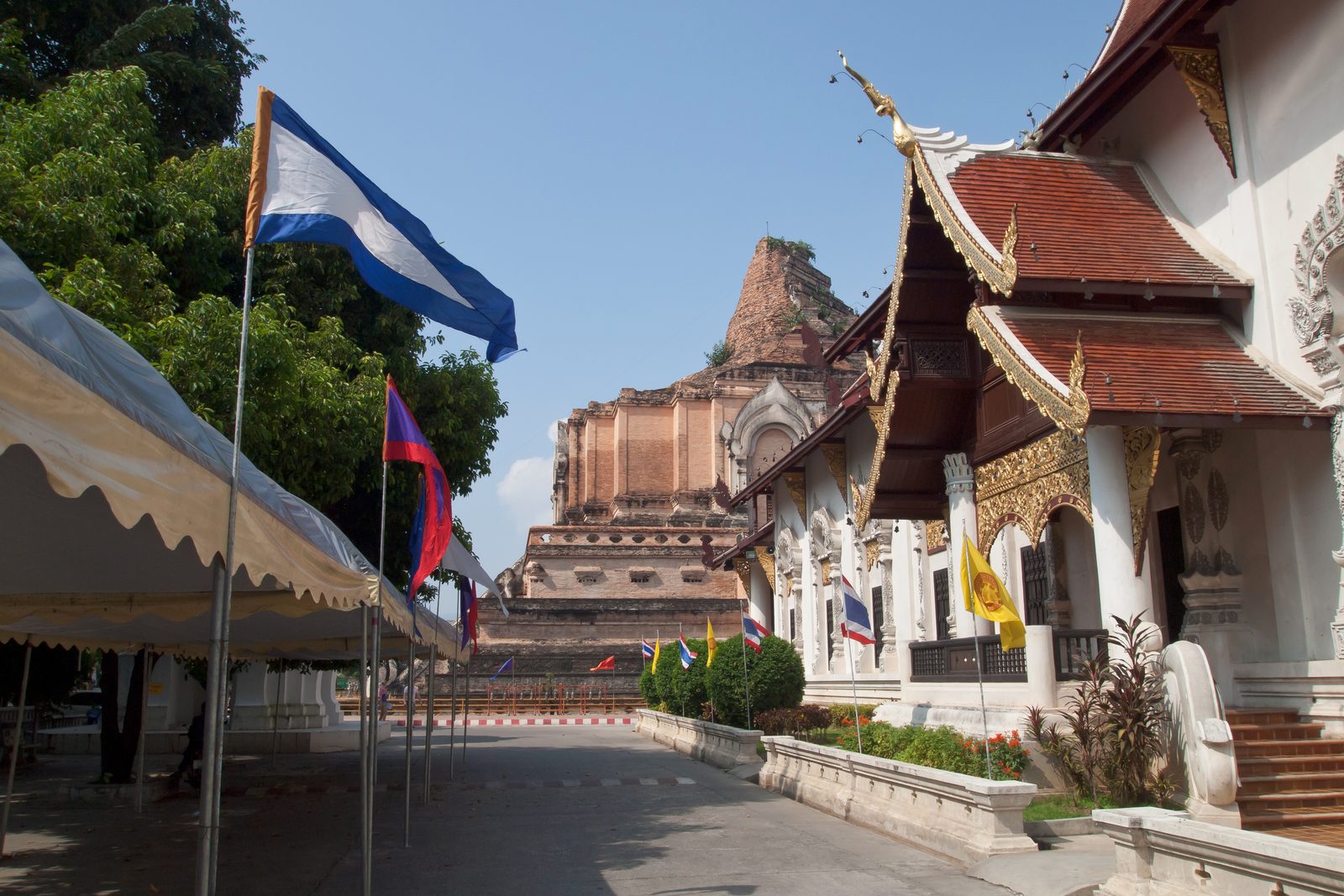
- Temples. Wat Chedi Luang charges about 50 baht for foreign visitors and Wat Phra That Doi Suthep a similar amount at the summit. Most old-city temples are free.
- Doi Suthep–Pui National Park. Since October 2025 the park charges foreign visitors 100 baht for adults and 50 baht for children (20 and 10 baht for Thai nationals) at the Pha Lat nature trail, Huai Kaew waterfall, Wang Bua Ban, Doi Pui and Suan Son. Reaching Wat Doi Suthep or Wat Pha Lat by the main road carries no park fee.
- Doi Inthanon. 300 baht for foreign adults and 150 for children, plus transport or a day tour.
- Eating. A bowl of khao soi at a neighbourhood shop runs roughly 50 to 80 baht. Market dinners rarely pass 200 baht a head.
Northern Thai food is a cuisine of its own
Travellers who arrive via the capital tend to assume they have already met Thai food on a Bangkok street food crawl through Yaowarat. The north is a different kitchen: less sugar, less coconut in the savoury dishes, more herbs, more bitter greens and a lot of grilling.
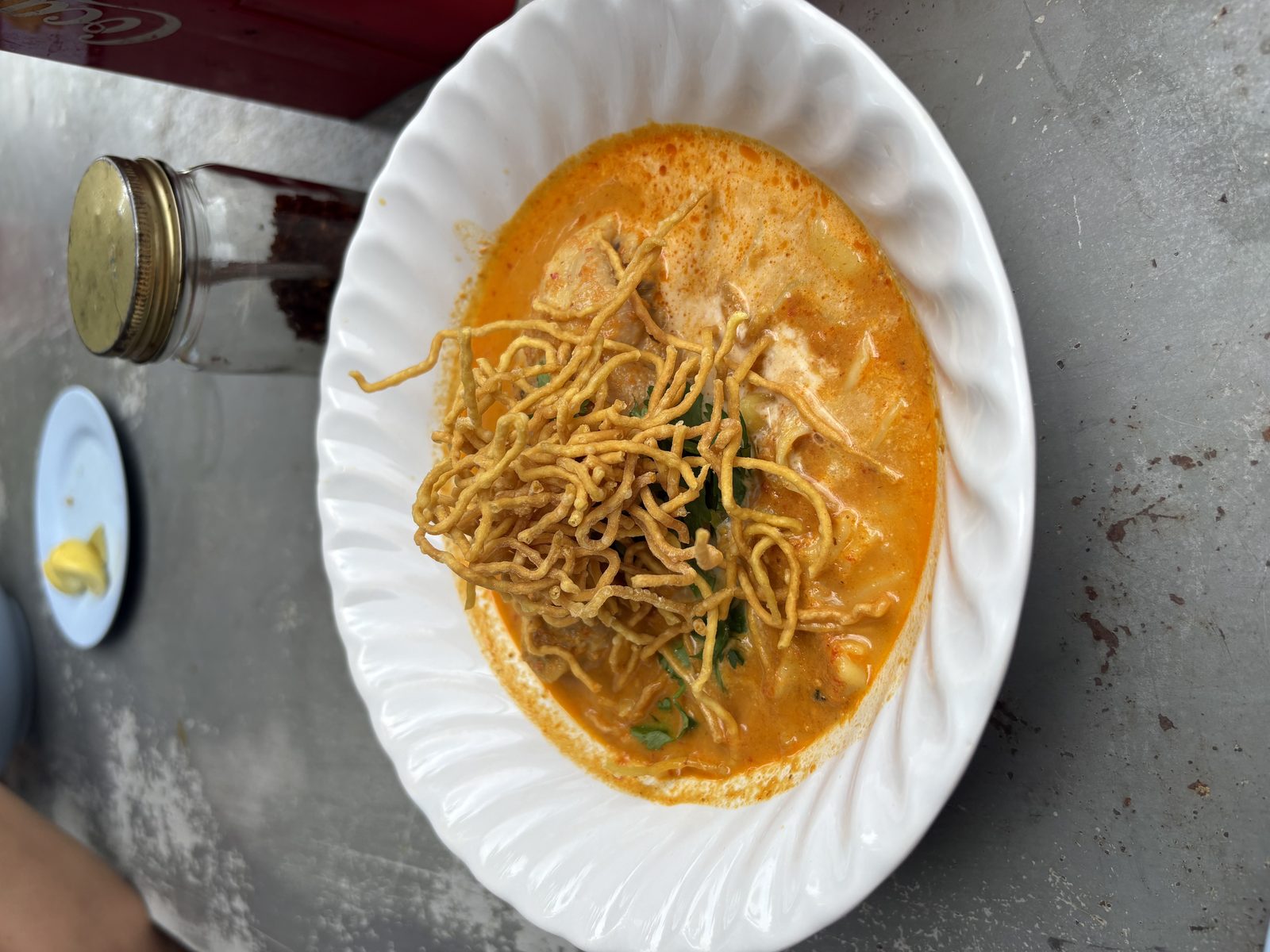
The signature is khao soi, a curried noodle soup with soft egg noodles below and a crisp fried nest on top, served with pickled mustard greens, shallots and lime. Alongside it, look for sai ua — the lemongrass and kaffir-lime sausage sold by weight at every market — nam prik noom, a roasted green chilli dip eaten with sticky rice and pork crackling, and kaeng hang lei, a slow Burmese-influenced pork curry. The Sunday Walking Street along Ratchadamnoen Road and the Saturday market on Wualai Road are the easiest places to try all four in one evening; the Night Bazaar on Chang Khlan Road runs every night of the week.
Fitting Chiang Mai into a wider Thailand itinerary
Three nights is the honest minimum: one for the old city and its temples, one for Doi Suthep and the Pha Lat forest trail, and one for an elephant sanctuary, a cooking class or the drive up Doi Inthanon. Five nights lets you add Lampang or the mountain road to Pai. Few of the best places to visit in Thailand reward an unhurried pace as readily as the north does.
From there, most two-week trips split the country in three. Bangkok takes the first two or three nights, Chiang Mai the middle, and the coast the rest. If the beach leg is the Gulf side, things to do in Pattaya make an easy pivot — it is a two-hour drive from Suvarnabhumi, and the Koh Larn beaches are forty minutes offshore by ferry. If you would rather end on quieter Thailand islands, Koh Kood travel through Trat is the long way round but the better payoff: one of the least developed large islands left in the Gulf.
Practical tips for Thailand's safest city
- Book November and December flights early. This is domestic high season and the Bangkok–Chiang Mai route fills around long weekends and Loy Krathong.
- Stay inside or just outside the moat. The old city puts the temples, the walking streets and most cafes within fifteen minutes on foot; Nimmanhaemin, west of the moat, is the modern alternative.
- Rent a bicycle before a scooter. A safe city is not the same as safe roads, and traffic remains the real risk in any Thai town. Helmets are mandatory and international licence rules are enforced.
- Carry a light layer in December and January. Sunrise on any mountain here is genuinely cold, and tour vans leave at 5am.
- Check the air quality index if travelling after mid-February. It changes daily and decides whether the viewpoints are worth the drive.
- Dress for temples. Shoulders and knees covered at Wat Phra Singh, Wat Chedi Luang and Doi Suthep; sarongs are lent at the gate.
A safety ranking is never the whole reason to choose a destination, and a perception survey is not a crime report. But for first-time visitors weighing the best places to visit in Thailand against a short holiday and a limited budget, Chiang Mai's combination of walkability, low prices, serious food and an unhurried pace has always been the argument. A second year at the top of the regional table is simply the number catching up with the reputation.
Plan the detail with our Chiang Mai travel guide, add the mountain with our Doi Inthanon guide, time the visit around our Yi Peng lantern festival guide, and see the Pattaya and Jomtien guide if the coast is the second half of your trip.
Source: TAT Newsroom, 10 November 2026 — Chiang Mai ranked safest city in Southeast Asia and 19th worldwide in 2026 (publication date not stated); The Nation Thailand, 21 October 2026 — Chiang Mai tops 2026 Southeast Asia safety index at 77.9 points (publication date not stated); The Thaiger, October 2026 — Chiang Mai ranked safest city in Southeast Asia for 2026 in public survey (publication date not stated); Chiang Mai Citylife, 22 September 2025 — Entrance fees required at Doi Suthep – Pui starting October 2025 (publication date not stated).
More Thailand travel news
Plan around a festival
Festival guides for the events named in this article — dates, how to get there and what to expect.
- Bo Sang Umbrella Festival — Chiang Mai · January
The umbrella-making village of Bo Sang hangs itself with hand-painted parasols for one weekend each January. - Chiang Mai Flower Festival — Chiang Mai · February
Enormous floats built entirely from flowers parade through Chiang Mai on the first weekend of February. - Loy Krathong — Nationwide · November
On the full moon of the twelfth lunar month, Thailand sets millions of candle-lit baskets adrift on its rivers, canals a
Check festivals against your travel dates · All Thai festivals by month
Sources
- Chiang Mai ranked safest city in Southeast Asia and 19th worldwide in 2026 — TAT Newsroom, 10 November 2026
- Chiang Mai tops 2026 Southeast Asia safety index at 77.9 points — The Nation Thailand, 21 October 2026
- Chiang Mai ranked safest city in Southeast Asia for 2026 in public survey — The Thaiger, October 2026
- Entrance fees required at Doi Suthep – Pui starting October 2025 — Chiang Mai Citylife, 22 September 2025