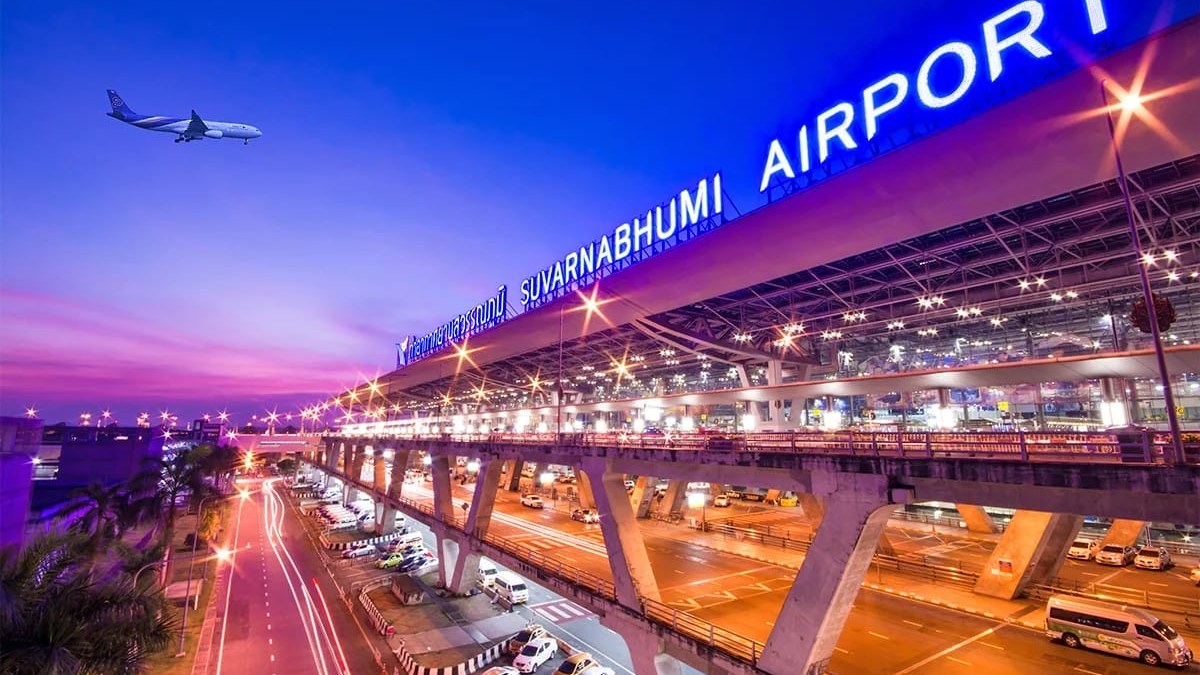
The most useful piece of Thailand travel news this week is not a new beach or a new flight route — it is a change to what happens to your suitcase after you hand it over. The Civil Aviation Authority of Thailand (CAAT) has confirmed revised checked-baggage screening procedures at all airports in Thailand, effective 16 October 2026, and the Tourism Authority of Thailand published the traveller guidance on 11 August.
It is a small procedural change with a practical edge, and it lands three weeks before high season begins. If you are in the middle of Thailand vacation planning for the winter, this is worth five minutes now rather than a surprise at the airport later.
Thailand travel news: what the new rules say
The change applies to baggage checked into the aircraft hold on flights departing from airports in Thailand. Cabin baggage rules are unchanged, and existing procedures stay in force until 16 October.
- Bags may be opened without you present — if screening officers identify something suspicious, prohibited or potentially unsafe, they can open the bag rather than page you to unlock it.
- Not a routine search — CAAT has been explicit that checked bags will not be opened as a matter of course.
- Controlled and recorded — inspections happen in a designated area, are video recorded, and the recordings are retained for review.
- You will be told afterwards — passengers are notified if their bag was opened and inspected.
- Not unusual internationally — CAAT notes similar procedures operate in Singapore, Japan, South Korea and the United States, among others.
The logic is queue management as much as security. Under the old approach, an unresolved scan meant finding the passenger somewhere in a terminal handling tens of millions of people a year. The new approach resolves it in minutes.
What it means if you travel to Thailand this season
The scope of this Thailand travel news is narrower than the headline suggests. For almost everyone, nothing changes on the day: you will not queue for longer and you will not be searched. The practical consequences are about what you pack and how you lock it.
CAAT recommends an internationally recognised lock — a TSA-compatible padlock or built-in combination lock — so an inspection does not require cutting anything. It also repeats the advice every airline gives and most travellers ignore: keep valuables, fragile items, important documents and anything you cannot replace out of the hold.
A packing checklist for Thai airports
- Carry on — passport, cash and cards, medication and prescriptions, camera bodies and lenses, laptops, jewellery, and anything you would be upset to lose.
- Power banks stay in the cabin — airlines operating in Thailand require lithium power banks in hand luggage, never in checked bags.
- Use a real lock — TSA-compatible, not a cable tie or a novelty padlock.
- Check the prohibited list before you pack — aerosols, lighters, certain souvenirs such as coral or sand, and any agricultural produce are the usual culprits.
- Photograph your packed bag — a phone snapshot of the contents takes ten seconds and settles most claims.
- Duty-free liquids — if you are connecting onward, keep them sealed in the tamper-evident bag with the receipt visible.
Navigating Bangkok's two airports
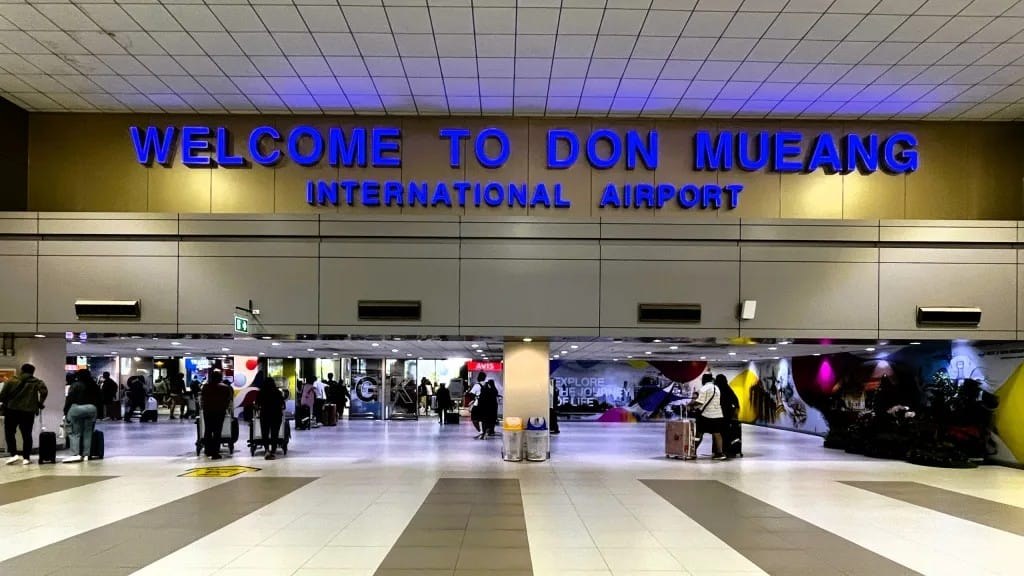
Bangkok tourism runs through two very different gateways, and knowing which one you are using matters more than any rule change. Suvarnabhumi (BKK) handles most full-service and long-haul flights. Don Mueang (DMK) handles most low-cost carriers, including a large share of domestic hops to the islands.
There is no rail link between them. Connecting passengers on a same-day itinerary can use the free inter-airport shuttle, but a self-transfer means a road journey of roughly an hour, longer in traffic. Allow three hours minimum between separate bookings, and treat four as comfortable.
- Airport Rail Link (Suvarnabhumi) — to Phaya Thai in about 26 minutes for roughly 15 to 45 baht, with BTS and MRT connections at the city end. The fastest option in rush hour.
- Public taxi (Suvarnabhumi) — from the queue on Level 1: meter, plus a 50 baht airport surcharge, plus expressway tolls. Central Bangkok usually lands between 350 and 450 baht.
- Grab and Bolt — both operate at both airports with signed pickup points. Prices are fixed up front and are typically a little above a metered taxi, which many travellers consider worth it after a night flight.
- Don Mueang to the city — the A1 and A2 buses run to Mo Chit BTS for about 30 to 50 baht, or the SRT Red Line commuter train connects to Krung Thep Aphiwat station.
- Timing — three hours before an international departure, two before a domestic one. Suvarnabhumi immigration on a Sunday evening is not the place to be optimistic.
Fitting the airport into your Thailand itinerary
Timing this well shapes the whole trip, and it is the part of any Thailand travel news round-up that people act on. A late-evening arrival at Suvarnabhumi followed by a 7am domestic flight from Don Mueang looks efficient on a spreadsheet and feels dreadful at 4am. Give the capital a night either side.
From Bangkok, the sensible next moves split three ways. The eastern seaboard is closest — two hours by road to the coast, where the ferry to Koh Larn's beaches takes 45 minutes and there is no shortage of things to do in Pattaya between boat trips. Our Pattaya and Jomtien guide covers the logistics.
If you are heading for the Thailand islands proper, factor the airport into the plan: Koh Kood travel means a flight or bus to Trat plus a ferry, while Samui, Phuket and Krabi are direct from either Bangkok airport. And if your interest is Thai culture rather than sand, the northern temple towns are an hour's flight away — and Loy Krathong and Yi Peng fall inside the same high season these new rules open.
Our Bangkok guide is the place to start if the capital is your first stop.
Practical tips before you fly
- Do the arrival card early — the Thailand Digital Arrival Card is completed online before you land, and it is free. Use the official government portal, not a paid lookalike site.
- Carry evidence of funds — immigration can ask; see our note on proof of funds at the border.
- Screenshot everything — onward ticket, hotel booking and arrival card, saved offline. Airport wifi is fine until it isn't.
- Get baht at the airport, not before — the exchange counters in the arrivals hall beat almost any rate you will find at home, and the ATMs charge a fixed fee of around 220 baht per withdrawal, so take out more, less often.
- Book high season early — the same week these rules start, hotel rates begin their climb toward Christmas.
None of this is dramatic, which is rather the point. The best Thailand travel news is usually the kind that saves you twenty minutes and a small argument at a check-in desk — and this one is worth reading before you pack rather than after.
More Thailand travel news
Sources
- Thailand introduces enhanced baggage screening procedures: information for air travellers — TAT Newsroom, 11 August 2026
- CAAT complaint portal — Civil Aviation Authority of Thailand