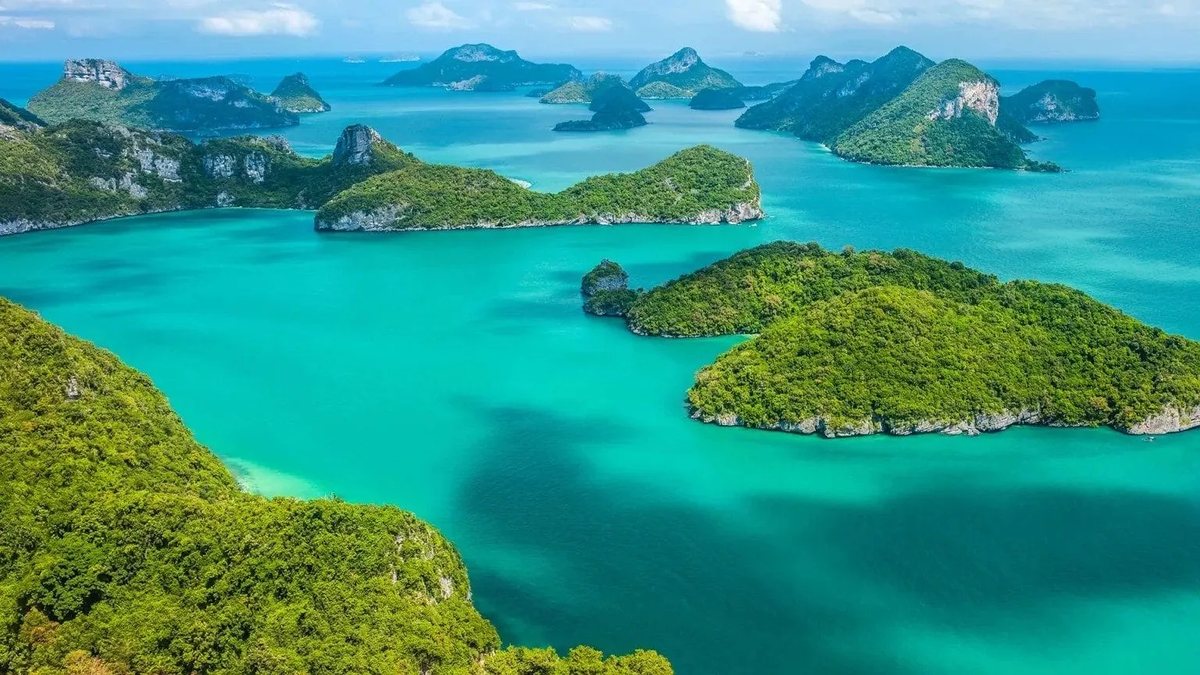
Ask most people to name the best places to visit in Thailand and you get a list of beaches. The Tourism Authority of Thailand (TAT) published something on 21 August that quietly argues for a different route through the same provinces: a month-by-month fruit calendar for the South's 14 provinces, and four ready-made itineraries that string orchards together with rainforest, limestone bays and a UNESCO World Heritage temple.
The campaign is called Southern MUST TASTE Thai Fruits. It is not a festival with a date on it — it is a planning tool. Each province is mapped to the fruit it is known for, several of them protected Geographical Indication (GI) products, and the calendar tells you which month to turn up if you want to eat it within sight of the tree. For anyone doing Thailand vacation planning around the shoulder months, that is a genuinely useful thing to have.
What the fruit calendar actually gives you
The calendar covers Chumphon down to Narathiwat and reads like a map of southern Thai culture through what grows there: Nasan Rambutan in Surat Thani, Nai Wong Mangosteen in Ranong, Talay Hoi Durian in Krabi, Ko Sukon Watermelon in Trang, Tanyougmat Longkong in Narathiwat. Choice is widest mid-year, and harvest windows move with the weather, so TAT's own advice is to confirm with the orchard before you build a day around one variety.
TAT frames this under its Value over Volume strategy, sending visitors to growers and inland districts rather than concentrating everyone on the same three beaches. The practical effect is a set of routes through parts of the South that rarely make a first-timer's shortlist.
Surat Thani: orchards, Khao Sok and Cheow Lan Lake
Best time: July to August. Three days and two nights.
The route starts in Nasan with the rambutan and salak harvest, then moves into Khao Sok National Park for rainforest walks before a long-tail boat morning on Cheow Lan Lake, where limestone cliffs rise straight out of jade-green water. It finishes at Khlong Noi Community for santol, and a canoe through the Bang Bai Mai nipa palm tunnel.
Costs, approximate for 2026 and worth confirming on the day: Khao Sok headquarters entry is around 200 baht for adult foreign visitors, while Cheow Lan Lake is charged separately at about 300 baht plus a 40 baht pier fee. A shared two to three hour lake boat runs roughly 1,500 to 3,000 baht per boat for six to eight people, and a private full-day charter with lunch is 3,500 to 5,000 baht. Surat Thani is reachable by air from Bangkok in about 80 minutes, or overnight by train, with road transfers onward. Our Surat Thani travel guide covers the wider province.

Nakhon Si Thammarat: a UNESCO temple and mountain mangosteens
Best time: July to September. Two nights.
This is the campaign's strongest argument for widening your idea of the best places to visit in Thailand. It begins at Wat Phra Mahathat Woramahawihan, inscribed by UNESCO in 2026, then works through the old town with a plate of mangkhut khat — young mangosteen peeled and served as a local speciality.
Day two climbs to Khiriwong, a village at the foot of Khao Luang known for Khao Khiriwong Mangosteen, streamside lunches, small cafes and craft workshops. Day three is bamboo rafting at Ban Wang Hon and its preserved durian paste. Fly into Nakhon Si Thammarat, spend a night in town and a night in Khiriwong to keep the driving short.
Krabi: durian country to the Andaman coast
Best time: July to August. Three days.
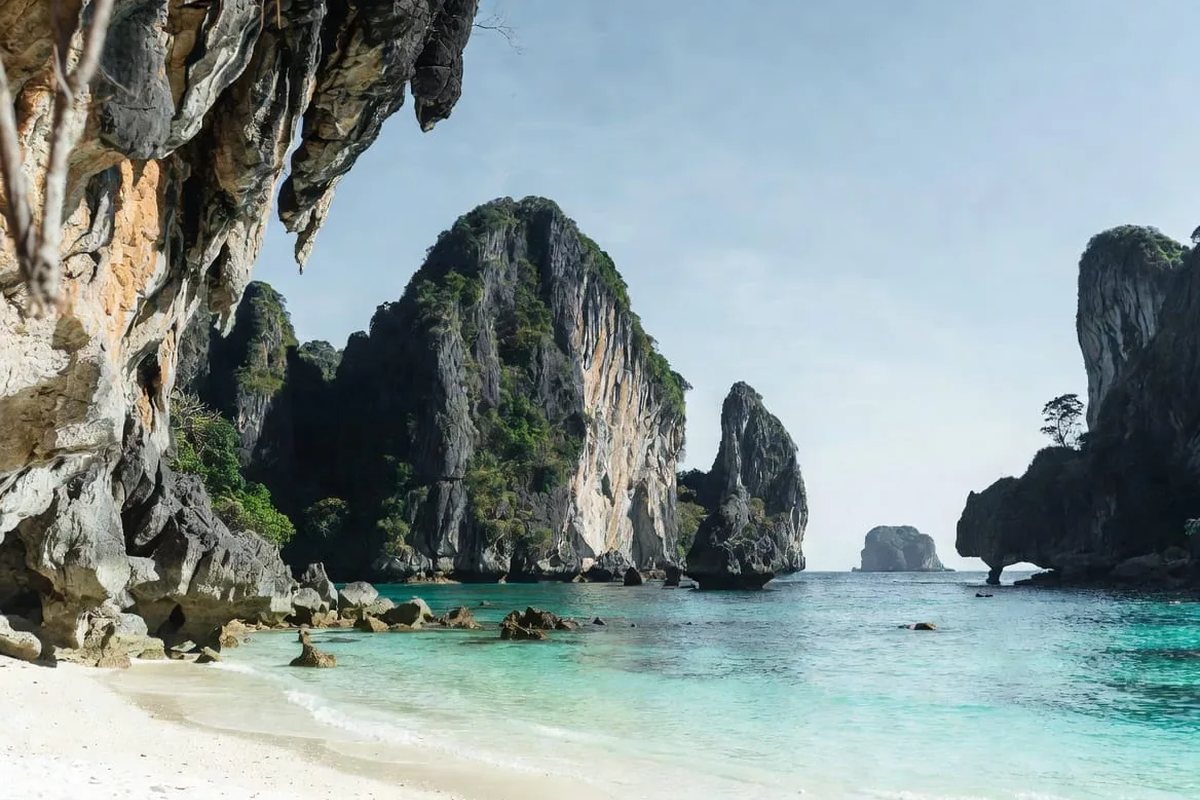
Krabi's route starts inland with Talay Hoi Durian GI, smooth-fleshed and creamy rather than aggressive, alongside Wat Tham Prasat Nala Kiring and Phu Tawan robusta coffee. Day two is kayaking at Khlong Root, a long-tail trip to Ban Nai Nang, then sunset at Ao Nang. Day three heads offshore into Hat Noppharat Thara–Mu Ko Phi Phi National Park for island hopping.
Krabi International Airport takes direct flights from Bangkok in about 90 minutes. Marine national park entry for foreign visitors is typically 400 baht for adults, on top of the boat fare. Base yourself in Krabi town first, then Ao Nang. The Krabi travel guide has the beach-by-beach detail.
Phang Nga: Salika durian, hot springs and Khao Lak
Best time: July to August. Three days.
Start at a Kapong orchard with Salika Durian GI, soak at Plai Phu Hot Spring, then take in Tamnang Waterfall and a farm-to-table southern lunch before driving to Khao Lak. The last day is a choice between Phang Nga Bay by long-tail boat and the coastal nature trail in Khao Lak–Lam Ru National Park, with Thip Phang Nga Mangosteen GI to look for locally. Phuket International Airport is the practical gateway, with a hire car or private transfer strongly advised for the Kapong leg. See our Phang Nga guide for the bay itself.
What it costs, and how to get around
None of these routes is expensive by the standards of the best places to visit in Thailand. Rough 2026 figures:
- Domestic flights — Bangkok to Surat Thani, Nakhon Si Thammarat, Krabi or Phuket typically 1,200 to 3,000 baht one way if booked a few weeks out.
- Trains — Bangkok to Surat Thani overnight, roughly 10 to 12 hours, from about 800 baht in a second-class sleeper.
- Hire car — 1,000 to 1,500 baht a day, the single best investment on the Phang Nga and Nakhon Si Thammarat routes.
- Grab and Bolt — reliable in Krabi town, Phuket and Surat Thani; thin to non-existent in Kapong, Khiriwong and Nasan, so arrange a driver locally.
- Orchard visits — usually a small fee or simply the cost of what you eat; most community enterprises prefer a day's notice.
- Rooms — 800 to 2,000 baht a night in town, more on the Khao Lak and Ao Nang beachfronts.
Fitting the South into a wider Thailand itinerary
These routes slot neatly into a longer trip. Two days of Bangkok street food and temples, a short flight south, then three days on one of the fruit routes gives you a Thailand itinerary with more texture than a straight beach run. If you want the Thailand islands as well, Surat Thani is the gateway to Samui, Koh Phangan and Koh Tao, and Krabi is a ferry ride from Koh Lanta and Koh Phi Phi.
On the other coast the arithmetic is different. Koh Kood travel means Trat by bus or plane and then a ferry, while Koh Larn beaches sit 45 minutes off Pattaya's Bali Hai Pier and pair with the usual things to do in Pattaya — our Pattaya and Jomtien guide has the ferry times. Either makes a workable second week for anyone who wants to travel to Thailand once and see two coasts.
Practical tips before you go
- Book orchards ahead — these are working farms and community groups, not attractions with turnstiles.
- Go early — harvest mornings start at first light and the heat builds fast by ten.
- Carry cash — card readers are rare in Kapong, Khiriwong and Nasan.
- Mind the durian rules — hotels, taxis and airlines routinely ban it, so eat it where you buy it.
- Pack for rain — August and September are wet on both coasts; a poncho beats an umbrella.
- Ask what is ripe today — the calendar is a guide, the grower is the authority.
What makes this campaign worth reading is not the fruit. It is the reminder that the best places to visit in Thailand include a mountain village outside Nakhon Si Thammarat and an orchard road in Kapong, and that both are two hours from an airport you were already flying into. Pick a province, check what is ripe, and let the route do the rest.
More Thailand travel news
Sources
- Taste Thailand's South by Season with Southern MUST TASTE Thai Fruits — TAT Newsroom, 21 August 2026
- Khao Sok National Park — fees and visitor information — Thai National Parks
- TAT Contact Centre 1672 — Tourism Authority of Thailand