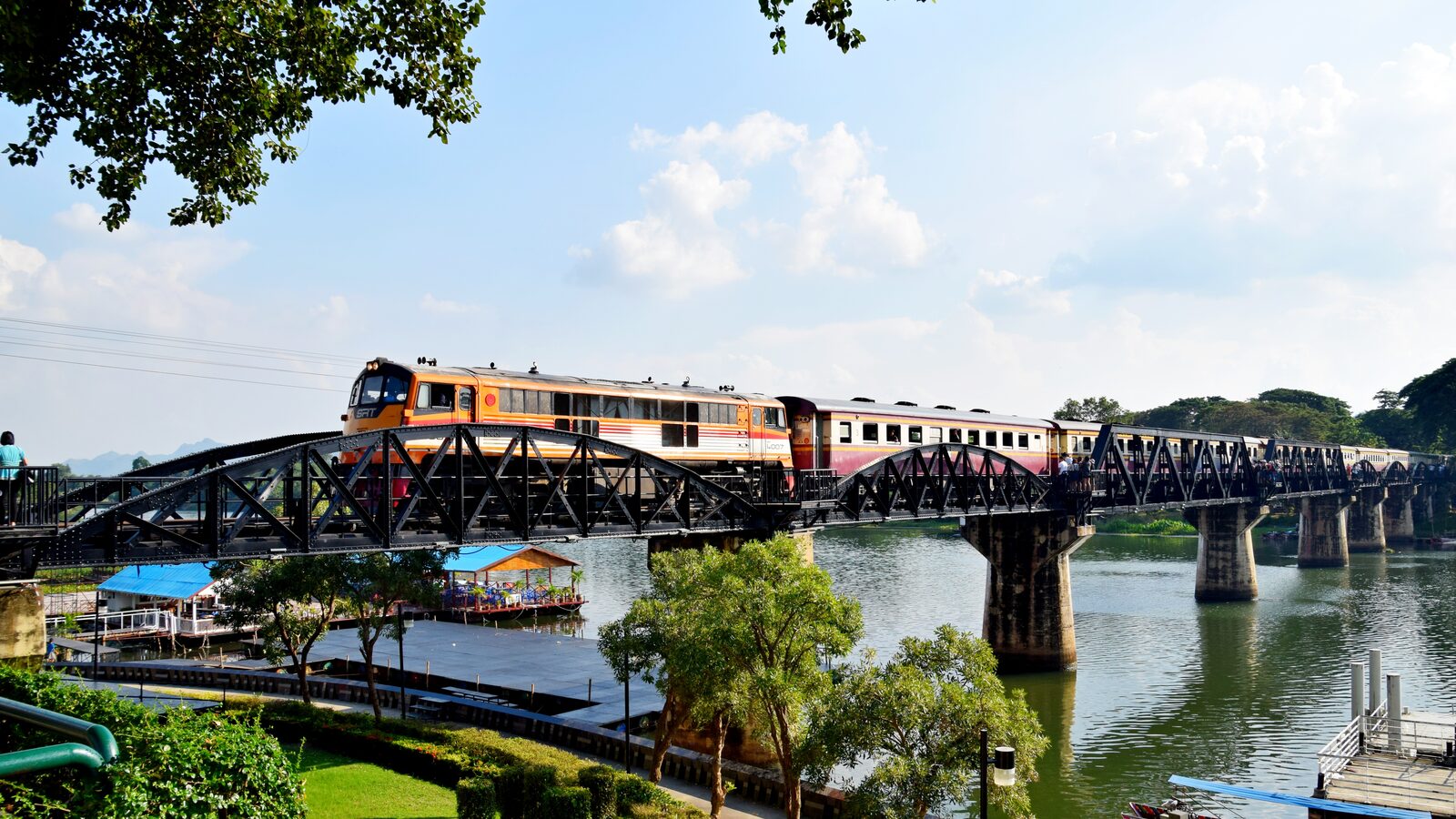
Of all the Thai festivals 2026 has left on the calendar, the one that is easiest to reach from the capital is also the one most first-time visitors have never heard of. River Kwai Bridge Week returns to Kanchanaburi from 27 November to 7 December 2026 — eleven nights of light and sound staged against the black steel bridge itself. Entry is free, the town is two hours from Bangkok, and it drops into a Thailand itinerary without costing you a domestic flight.
What actually happens during River Kwai Bridge Week
Unlike most of the Thai festivals 2026 has on offer, this one has a wartime subject. It marks the Allied bombing raids that finally broke the Thailand–Burma railway bridge in 1945, and it runs jointly with the Kanchanaburi Red Cross Fair, so the proceeds go to charity. The centrepiece is a nightly light and sound production that recreates the building of the line and the air raids that destroyed it, using pyrotechnics, smoke, recorded gunfire and a steam locomotive, with fireworks over the water at the close.
Around it, the riverbank turns into a provincial fair: historical exhibitions, cultural performances, an OTOP market of Kanchanaburi products, rows of food stalls, a funfair, live concerts most nights and the Little Miss Kanchanaburi pageants. Organisers have said the 2026 edition adds a drone show of more than 500 units, a first for the event. The 2025 edition was deliberately scaled back during the national mourning period for Queen Sirikit, the Queen Mother, which makes this the first full-size festival in two years.
The light and sound show, and when to turn up
The show is scheduled nightly at about 19:00 and runs roughly forty minutes. Seating has been free in recent years, first-come, with somewhere near 1,200 places per performance, and narration alternates between Thai and English across the run. Arrive by 18:00 on a weeknight and earlier at the weekend, or watch from one of the riverside restaurants on the far bank, which is a calmer way to see the fireworks.
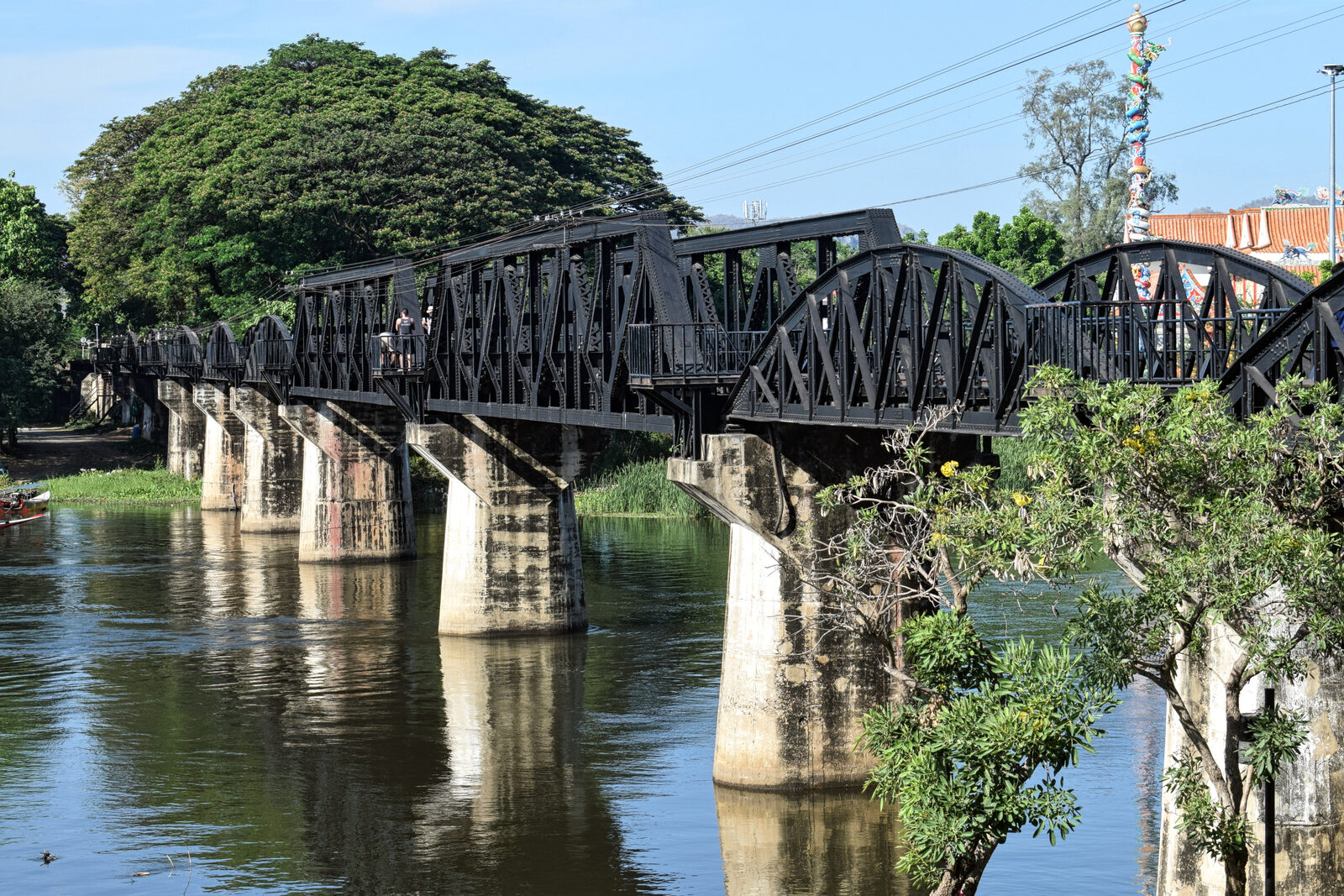
One festival-only bonus: during the week the State Railway of Thailand opens the bridge to people on foot more freely than usual. The rest of the year you cross on the central steel walkway between trains, and the guardrails are incomplete, so keep hold of children.
Ride the Death Railway to Tham Krasae
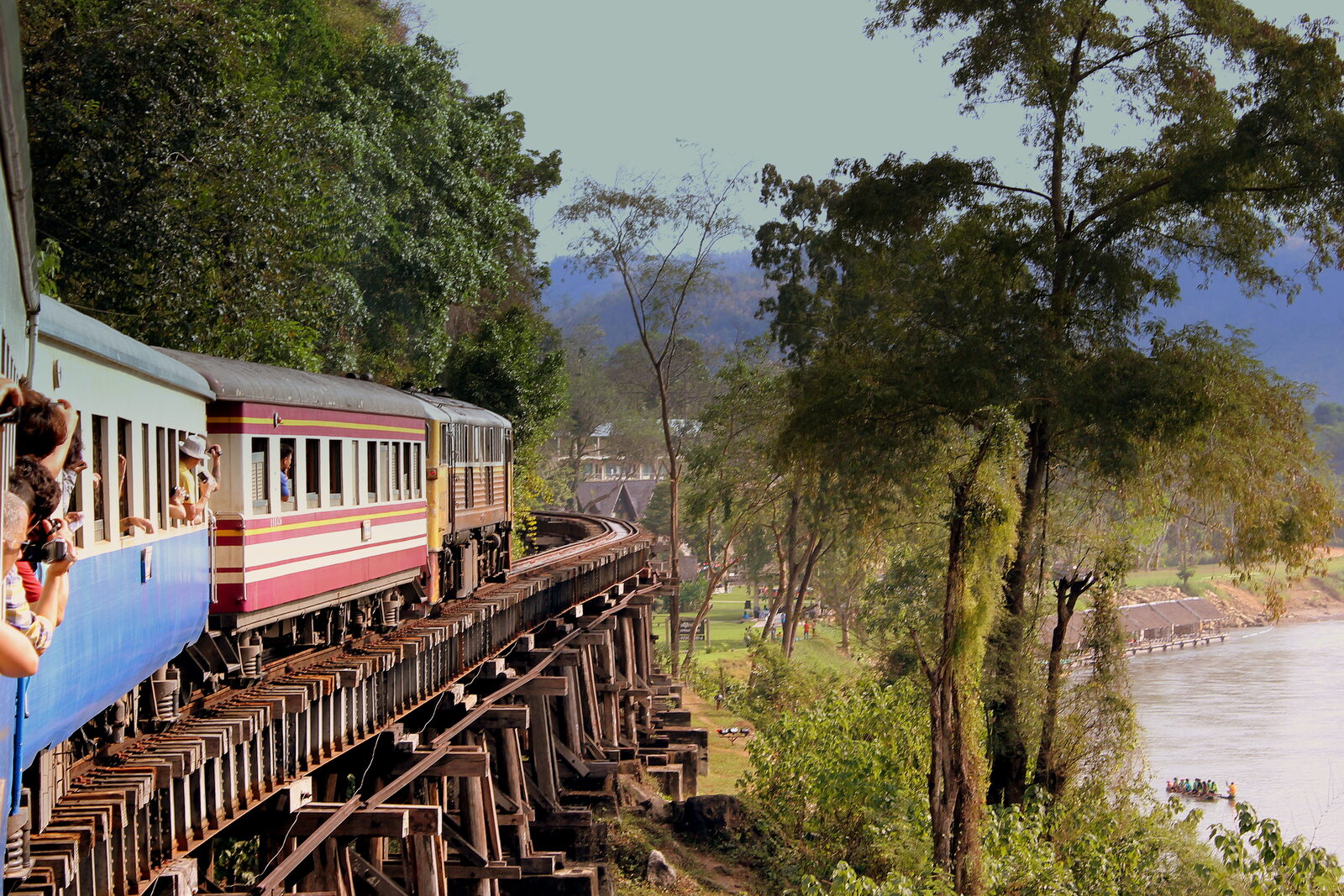
Do not stop at the bridge. The surviving stretch of line carries on north-west to Nam Tok, and the ride is the best two and a half hours of railway in the country. Foreigners pay a flat 100 baht each way between Kanchanaburi and the far end, and one morning departure carries a tourist car at 300 baht with air conditioning, a soft drink and a souvenir certificate.
The reason to go is the Wang Pho viaduct at Tham Krasae, a curving wooden trestle bolted to a limestone cliff with the river directly below and a small cave shrine at the far end. Sit on the left-hand side heading away from Kanchanaburi and have the camera out well before the train slows. It is the single most photographed piece of Thai culture and wartime history in the province, and it still carries scheduled passenger trains rather than a tourist mock-up.
Getting to Kanchanaburi from Bangkok
Kanchanaburi is about 130 km west of the capital and the options are cheap and frequent. Anyone planning to travel to Thailand for the Thai festivals 2026 season can treat this as a day trip from the capital, though an overnight is better.
- Train from Thonburi: departures at 07:45 arriving 10:20, and 13:45 arriving 16:35. Buy through to the River Kwai Bridge halt — about 100 baht for foreigners. Return services leave Kanchanaburi at 07:25 and 14:48, six minutes earlier from the bridge.
- Bus from the Southern Terminal (Sai Tai): line 81 first class every 15 minutes from 05:00 to 22:30, about two hours, 110 baht including a bottle of water.
- From Mo Chit 2: first-class coaches around 122 baht and roughly three hours; minivans about 120 baht and two hours.
- The budget hack: train from Thonburi to Ban Pong for 14 baht, then an air-conditioned bus into Kanchanaburi for 40 baht. Fifty-four baht in total.
- Private car and driver: the flexible choice if you want the show and a late return to Bangkok. Agree the price and the waiting time before you set off.
Beds go quickly during the festival. Riverside guesthouses start around 400–600 baht a night and the floating raft rooms on the Khwae Yai, which are the local speciality, sit a little above that. Book at least a few weeks out if your dates fall on a festival weekend, and be aware the raft rooms vibrate pleasantly when the party boats pass.
Beyond the bridge: Erawan, Hellfire Pass and the cemeteries
Give Kanchanaburi two or three days and the province opens up. Plenty of visitors come for one of the Thai festivals 2026 has scheduled here and end up staying for the waterfalls, which is why the province keeps appearing on lists of the best places to visit in Thailand for travellers who want history and water in the same week.
Erawan National Park
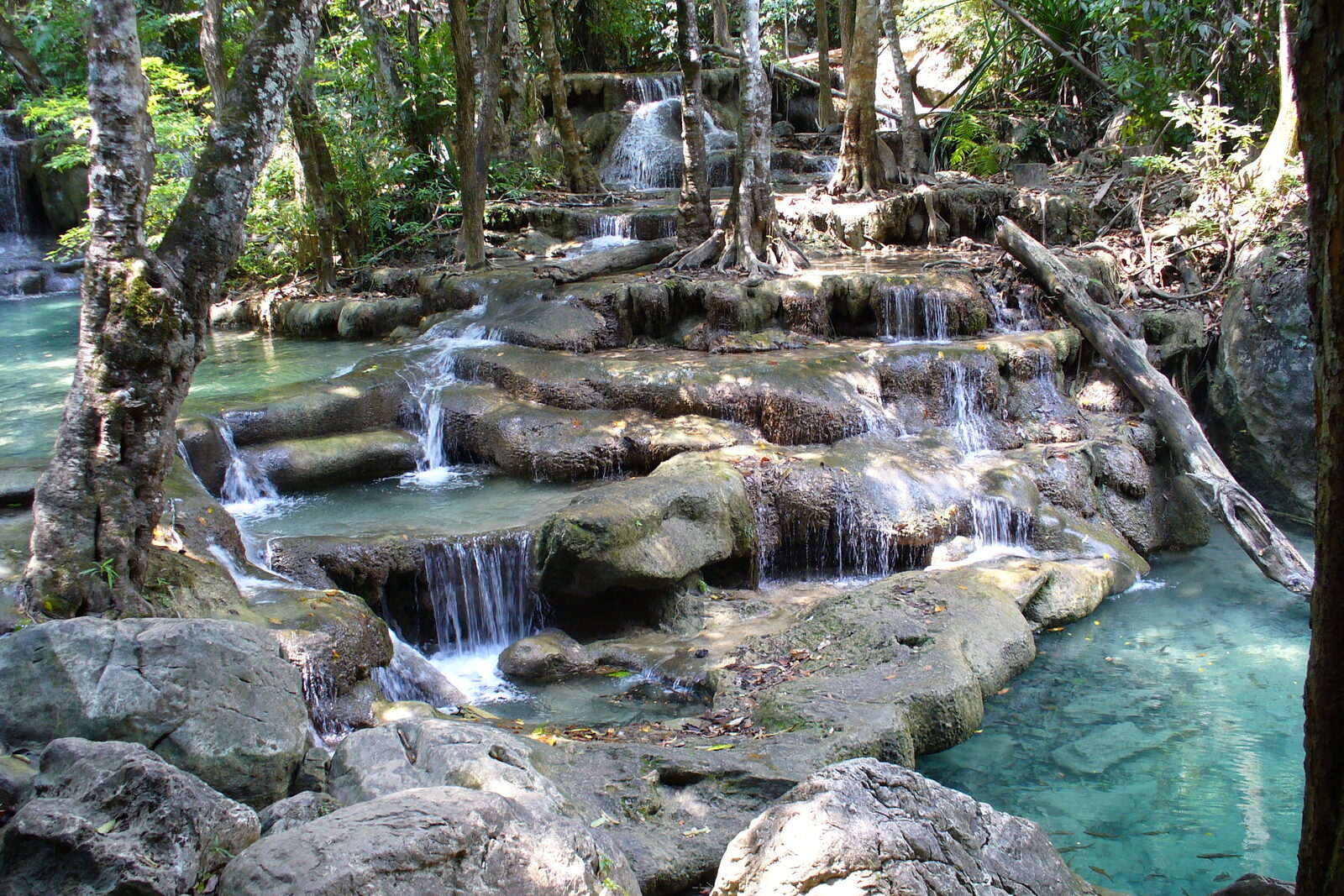
Seven tiers of emerald pools about 90 minutes north of town. Entry is 300 baht for foreign adults and 150 baht for children under fourteen. Public bus 8170 leaves the Kanchanaburi bus terminal every 50 to 60 minutes between 08:00 and 17:50 and costs 60 baht; the last bus back leaves the park around 16:30, so start early and do not count on the upper tiers if you arrive after lunch.
Hellfire Pass
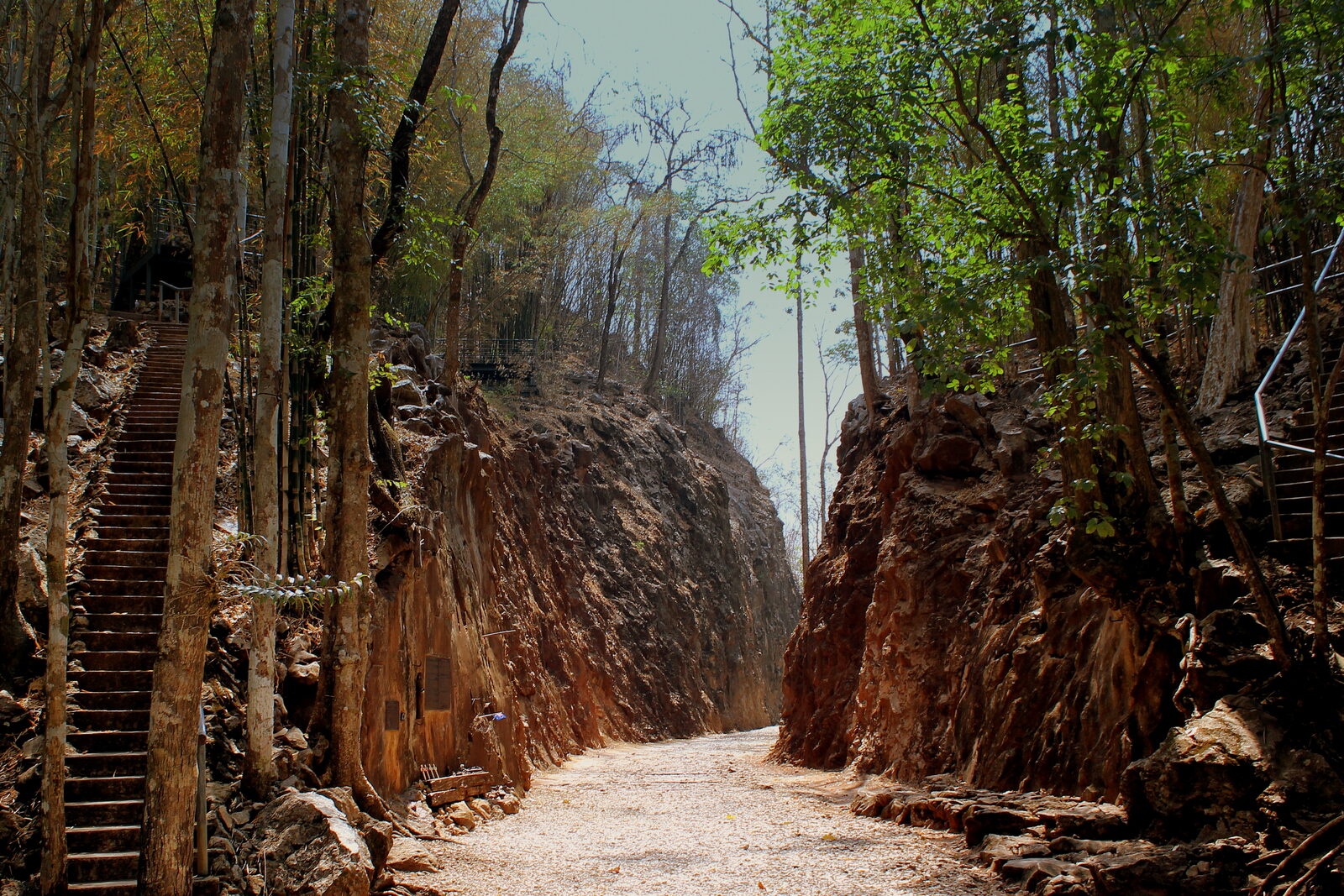
The Konyu Cutting, 80 km out on the road to the Burmese border, is the most affecting thing in the province. The Interpretive Centre is funded by the Australian government and entry is free, 09:00 to 16:00 daily, with a free audio guide in Thai, English and Dutch in exchange for an ID card left at the desk. The Blue Walk runs about 500 metres down to the memorial and takes 45 minutes to an hour; the Green Walk continues 2.6 km to Hintok Road and needs a radio and reasonable fitness. A red bus from the Kanchanaburi terminal costs around 60 baht and takes about 90 minutes — be back at the roadside stop by 17:00.
The cemeteries and museums in town
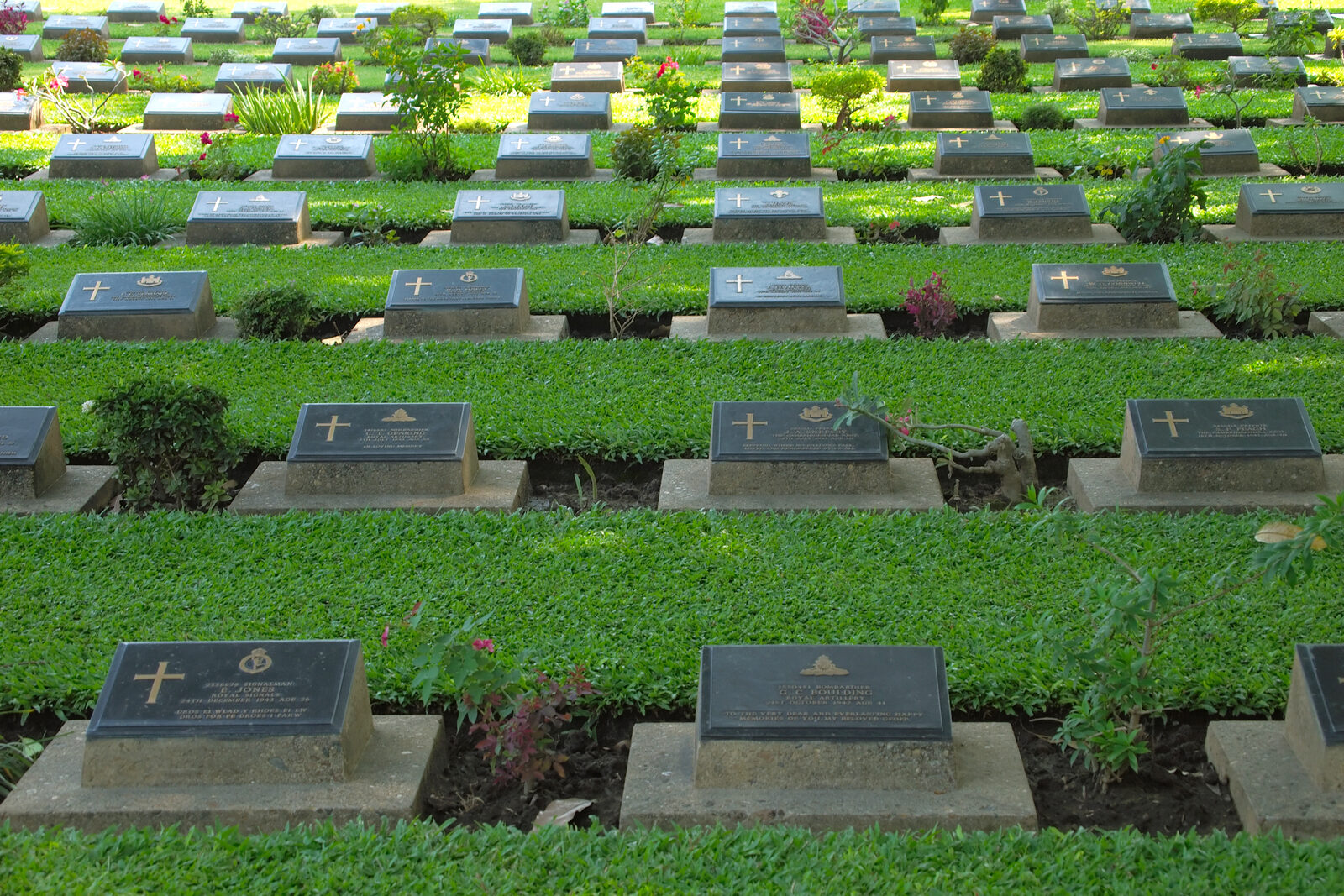
Kanchanaburi War Cemetery on Saengchuto Road holds 6,982 Allied war graves and is free to enter. Directly opposite, the Thailand–Burma Railway Centre charges 140 baht and opens 09:00 to 17:00; it is far better curated than the JEATH War Museum near the river, which costs 40 baht and opens 08:30 to 18:00. Chungkai cemetery, two kilometres across the water, holds a further 1,693 graves and is usually empty.
Where it fits in a Thailand itinerary
The dates are kind this year. The back half of the month is the densest stretch of Thai festivals 2026 anywhere in the country: Loy Krathong falls on 24 November, three days before the bridge festival opens, so a fortnight that starts with floating krathongs and ends on the Khwae Yai is entirely doable. Our River Kwai Bridge Week guide has the event background, and the Kanchanaburi travel guide covers where to stay and eat.
A fortnight that works: three days in Bangkok for temples and Bangkok street food, two in Kanchanaburi around the festival, then east for the Pattaya and Jomtien beaches — there are more things to do in Pattaya in November than the reputation suggests, and the Koh Larn beaches are a 45-minute ferry away. If you would rather finish on proper Thailand islands, keep going to Trat for Koh Chang, with Koh Kood travel a further two hours by speedboat and worth every minute. Late November is the sweet spot for all of it: the rain has stopped, the heat has not yet returned, and Thailand vacation planning is easier when nothing is closed for the monsoon.
Practical tips before you go
- Book the raft rooms early. Festival weekends fill the riverside first; weekday nights are easier and quieter.
- Carry cash. The fairground, the market stalls, the train fares and the park gates are all cash-only, and ATMs thin out fast once you leave town.
- Take the train one way. Rail in, bus back — the bus is an hour faster and runs far later into the evening.
- Check the show time locally. Start times shift with the programme; the fair office and your guesthouse will have the current night's schedule.
- Dress respectfully at the cemeteries and at Hellfire Pass. These are war graves, not attractions. Shoulders covered, no music.
- Start Erawan before 10:00 if you want all seven tiers. The upper trail closes well before the park does.
- Bring repellent. The riverbank at dusk, eleven nights running, is exactly what you would expect.
Among the Thai festivals 2026 still to come, this is the one that asks least of you: no flight, no advance ticket, no booking fee. Turn up on the riverbank at dusk with 110 baht of bus fare behind you, and the bridge does the rest.
Source: Thailand NOW — River Kwai Bridge Week Festival (2026-10-26); Greetings from Thailand — River Kwai Bridge Week: when, where and tips (2026-10-19); Thai Holiday Guide — River Kwai Bridge Week 2026: Kanchanaburi Light & Sound (2026-10-19); Australian Department of Veterans' Affairs — Hellfire Pass Interpretive Centre: frequently asked questions (2026-03-31); Wikivoyage — Kanchanaburi travel guide (2026-09-01); Wikipedia — Burma Railway (2026-10-01).
More Thailand travel news
Plan around a festival
Festival guides for the events named in this article — dates, how to get there and what to expect.
- River Kwai Bridge Week — Kanchanaburi · November
Eleven nights of light, sound and pyrotechnics at the Death Railway bridge, telling the story of its construction and de - Loy Krathong — Nationwide · November
On the full moon of the twelfth lunar month, Thailand sets millions of candle-lit baskets adrift on its rivers, canals a
Check festivals against your travel dates · All Thai festivals by month
Sources
- River Kwai Bridge Week Festival — Thailand NOW
- River Kwai Bridge Week: when, where and tips — Greetings from Thailand
- River Kwai Bridge Week 2026: Kanchanaburi Light & Sound — Thai Holiday Guide
- Hellfire Pass Interpretive Centre: frequently asked questions — Australian Department of Veterans' Affairs
- Kanchanaburi travel guide — Wikivoyage
- Burma Railway — Wikipedia