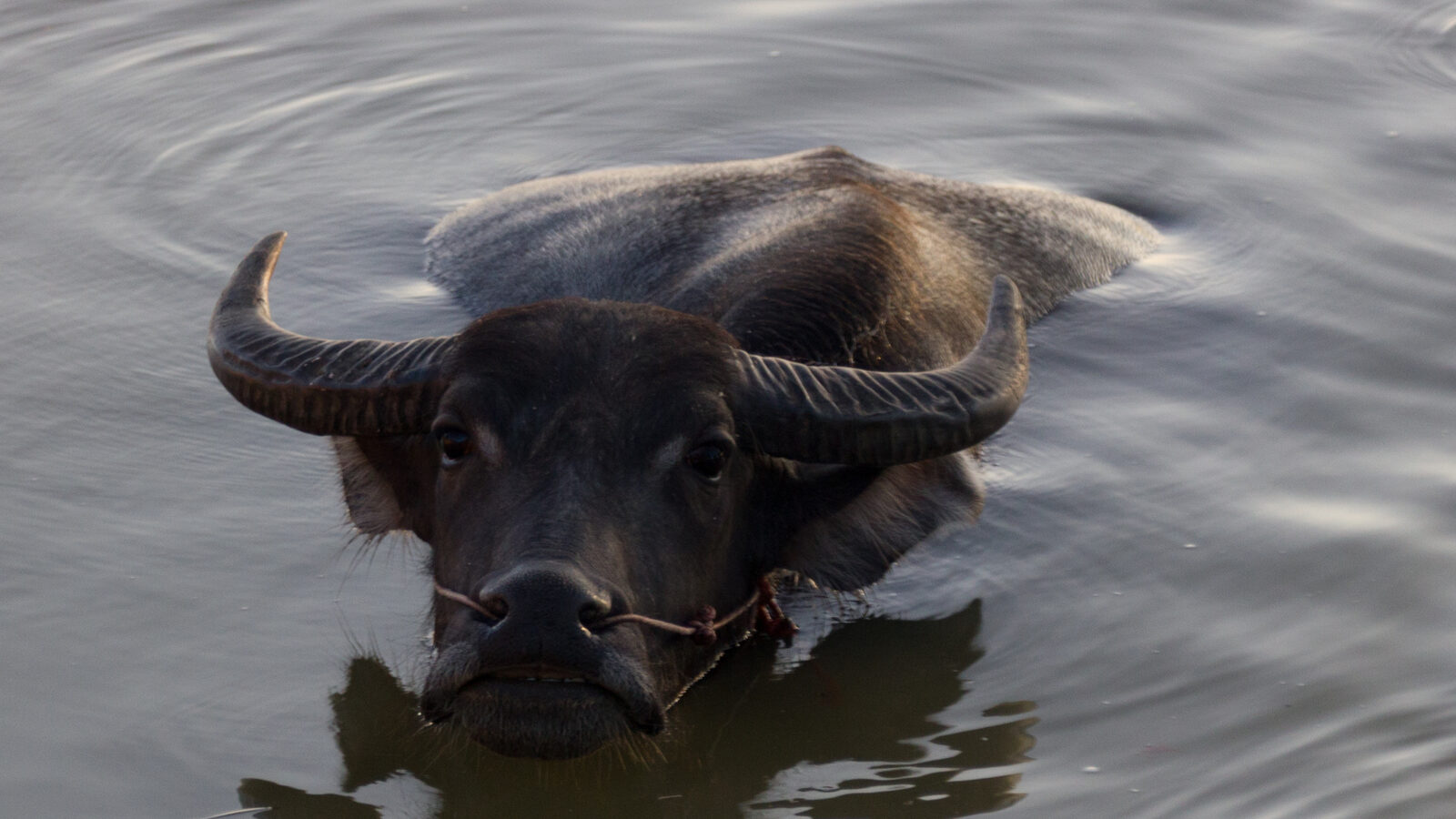
The most useful piece of Pattaya travel guide advice for the last fortnight of October is this: get out of Pattaya for a morning. Forty-five minutes up the coast, in the provincial capital most visitors only ever see as a motorway sign, water buffalo weighing up to 900 kilograms thunder down a 100-metre dirt track in front of the provincial hall while a few thousand people shout at them. The Chonburi Buffalo Racing Festival — Wing Kwai — runs as a nine-day fair from 17 to 25 October 2026, and race day is Sunday 25 October. Entry is free.
It is the oldest and strangest fixture on the Eastern Seaboard's calendar, run by and for Chonburi people rather than staged for visitors, and it is the easiest serious slice of Thai culture you can reach from a Jomtien hotel before lunch.
What happens on race day
The fair opens on 17 October: a provincial funfair of food stalls, Muay Thai bouts, concerts and contests filling the streets around Chonburi's municipal offices for over a week. The racing is the finale. On the morning of 25 October, decorated ox-carts process in from the districts — Pattaya and Si Racha among them — and monks at Wat Yai Intharam bless the animals before anything moves.
Heats start around 9am. Buffalo are grouped by size, up to the jumbo class of 800 to 900 kilograms, and each is ridden bareback down roughly 100 metres of churned dirt by a farmer holding nothing but a rope. Riders fall off constantly, and falling off is a disqualification, which is the whole comedy of it. The championship runs in the early afternoon and the winner is paraded through town.
Between heats come the contests that make the day: a buffalo beauty pageant, a best-dressed class with painted horns and flower garlands, a healthiest-buffalo award for animals with no interest in running, and the Nong Nang Ban Na or Miss Homestead pageant for the farming families themselves.
Why Wing Kwai is more than a novelty
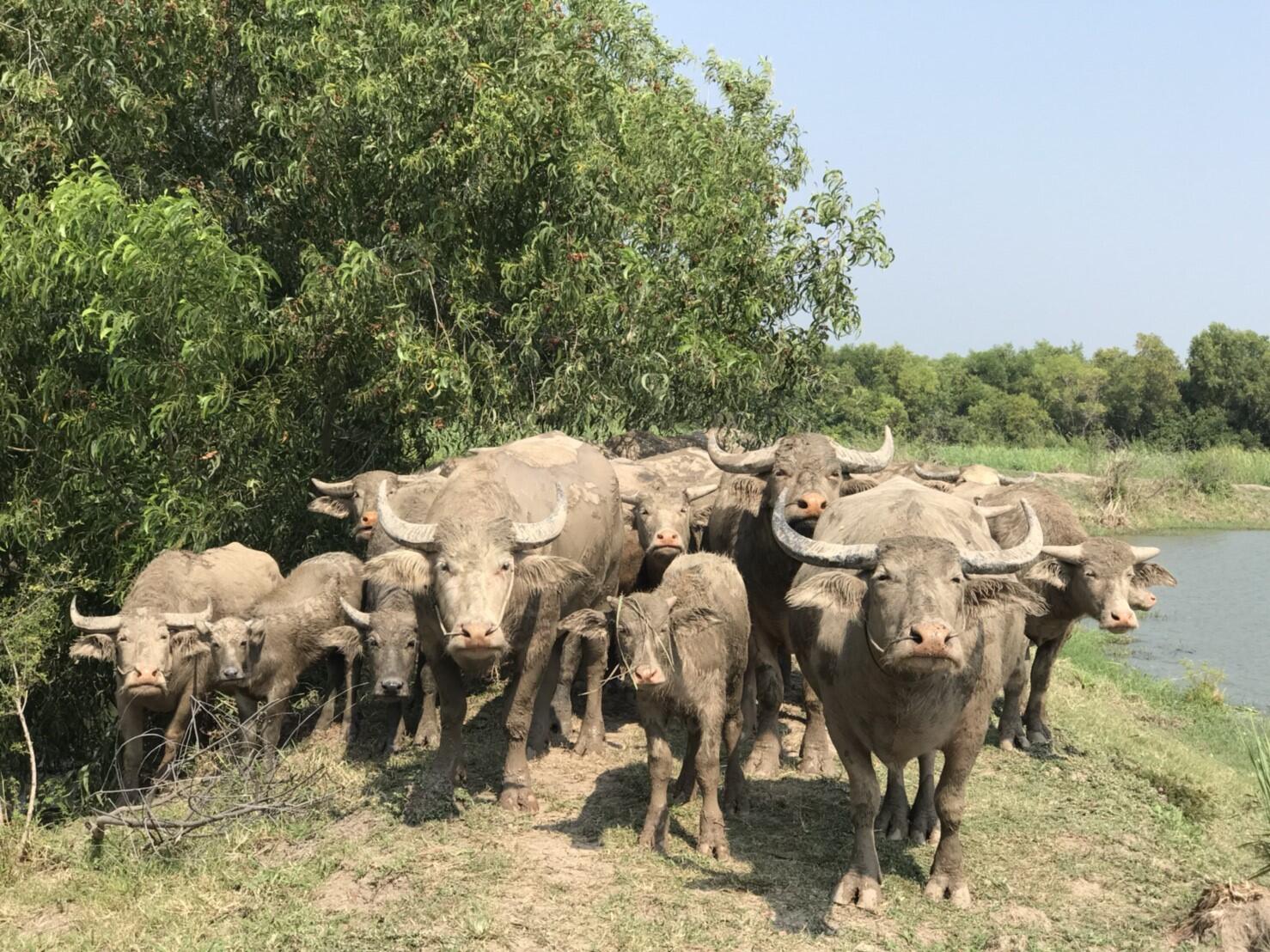
The races are said to date back more than 140 years, and 2026 is counted as the 155th edition. The origin story is pure market town: farmers came into Chonburi to trade their rice at the end of the harvest, argued over whose buffalo was quicker, and settled it in the street. The timing is not arbitrary. The festival lands at the end of Buddhist Lent — Ok Phansa falls on Monday 26 October 2026 — when the harvest is in and the working animals are finally idle.
That is the part worth knowing before you go. A buffalo is not a pet in rural Thailand; it is the machine that pulled the plough for a generation, and the races are a thank-you. The animals are also getting rarer: Thailand's buffalo population fell from more than three million in the mid-1990s to under 1.24 million by 2011 as tractors took over, which is why buffalo banks and festivals like this one now carry a conservation argument alongside the fun.
Getting there: the Pattaya travel guide bit
This is where a Pattaya travel guide earns its keep, because the journey is simpler than it looks.
- From Pattaya: about 45 km north, 40 to 55 minutes by road. A Grab or Bolt runs roughly 500 to 700 baht one way. Cheaper: an inter-town bus or minivan up Sukhumvit Road for 40 to 60 baht, then a 20-baht songthaew to the provincial hall.
- From Bangkok: about 80 km, roughly 90 minutes via Motorway 7. Minivans leave Ekkamai Eastern Bus Terminal through the day for 100 to 130 baht.
- From Suvarnabhumi: direct buses and minivans to Chonburi and Pattaya cost 130 to 250 baht — a plausible first-morning stop if you land early.
- Entry: free, for the fair and the racing both. Park well out and walk in; central Chonburi gridlocks on race morning.
Arrive by 9am. The heats are most frequent in the morning and the temperature is still bearable — expect 30 to 33°C with high humidity by midday. Stand midway down the track rather than at the finish, because the falls happen in the middle, and wear shoes you do not mind ruining.
What to eat, and where to go afterwards
The fair food is why half of Chonburi turns up: grilled squid and prawns off the charcoal, khanom jeen fermented rice noodles with southern curries, and khao lam, sticky rice and coconut steamed in a bamboo tube, which is a Chonburi speciality. Nothing costs more than about 80 baht. It is the same pleasure as Bangkok street food without the queue of foreigners filming it.
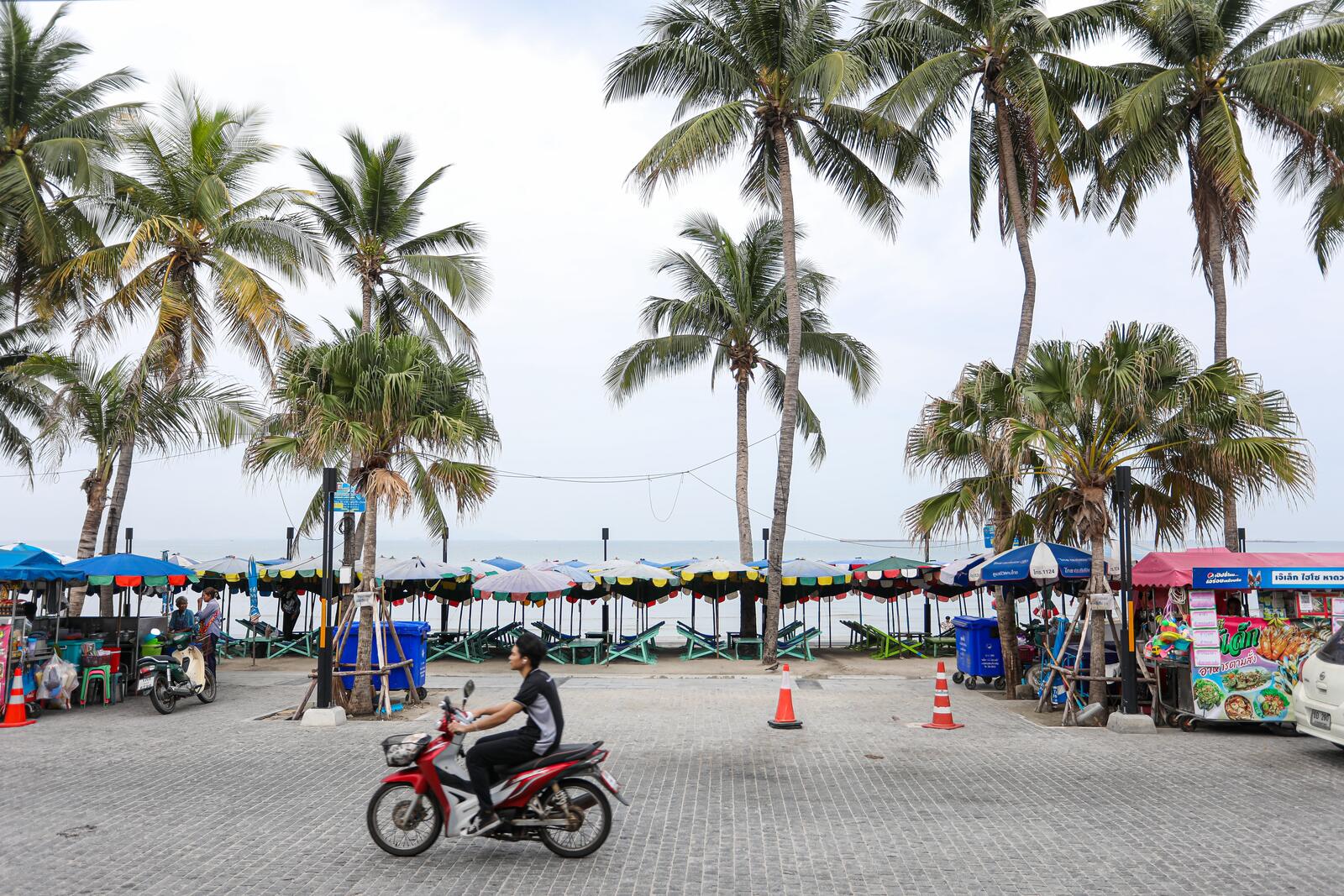
Ten minutes west is Bang Saen, the beach Thais use when they are not going to Phuket: three kilometres of 50-baht deckchairs, inner tubes and squid vendors, and almost no Western tourists. Above it, Khao Sam Muk is a free headland shrine with a monkey troop and a long view down the coast. No Pattaya travel guide sends you there, which is rather the point.
Fitting it into a Thailand itinerary
A buffalo race is not a reason to travel to Thailand on its own. It is an excellent reason to give the Eastern Seaboard four days instead of two. A sensible late-October Thailand itinerary: land in Bangkok, two nights for the Grand Palace and Yaowarat, then down to the coast, with the race on the Sunday morning and the beach that afternoon.
The rest of the week, the list of things to do in Pattaya runs longer than the city's reputation suggests. The Koh Larn beaches are a 30-baht, 45-minute public ferry from Bali Hai Pier, with Samae and Tien the quiet ones; our Pattaya and Jomtien guide has the timetable and the beach-by-beach differences, and the Koh Larn guide covers the island itself. For the quiet end of the Thailand islands, keep going east: Koh Samet is two hours on, while Koh Kood travel means five to six hours to Trat plus a ferry and almost nobody at the other end.
Late October is the pivot of the season. The rains are ending, the cool season starts in November, and the Thai festivals 2026 calendar is about to get busy — Ok Phansa and the Naga fireballs on the Mekong on 26 October, then Loy Krathong and Yi Peng on 24 and 25 November. Our guide to the Loy Krathong and Yi Peng dates has those. For Thailand vacation planning, and for anyone working through a Pattaya travel guide in advance, this is the best-value fortnight of the year: dry enough, and not yet peak pricing.
Practical tips for the Chonburi buffalo races
- Confirm the date locally. The festival follows the lunar calendar and the province sets the programme; the TAT Contact Centre on 1672 will confirm race-day timings a few days ahead.
- Go early, leave early. In by 9am, out by 2pm, back in Pattaya for a swim. Traffic out of Chonburi after the championship is grim.
- Carry cash. Fair stalls, songthaews and deckchairs are cash-only, and foreign-card ATM withdrawals carry a 220-baht fee.
- Hat, sunscreen, water. There is almost no shade along the track.
- Keep behind the barriers. A 900-kilogram buffalo that has just lost its rider does not stop at the rope.
- Mind the alcohol rules. A nationwide sales ban applies on Ok Phansa itself, 26 October, with limited exemptions.
Thailand exports a handful of festivals — lanterns, water fights, full moons on a beach. Wing Kwai is not one of them, and that is the appeal. Nobody is performing: the buffalo are working animals, the riders are the farmers who own them, and the crowd is almost entirely Thai. For the price of a songthaew fare, it is the most interesting morning in this Pattaya travel guide all year.
More Thailand travel news
Sources
- Wing Khwai: Thailand's Buffalo Racing Festival — Thailand Foundation
- Chonburi Buffalo Racing Festival 2026 — Thai Holiday Guide
- Buffalo Racing Festival (Wing Kwai), Chonburi — Thailand NOW, Tourism Authority of Thailand
- Ok Phansa 2026: End of Buddhist Lent — Thai Holiday Guide