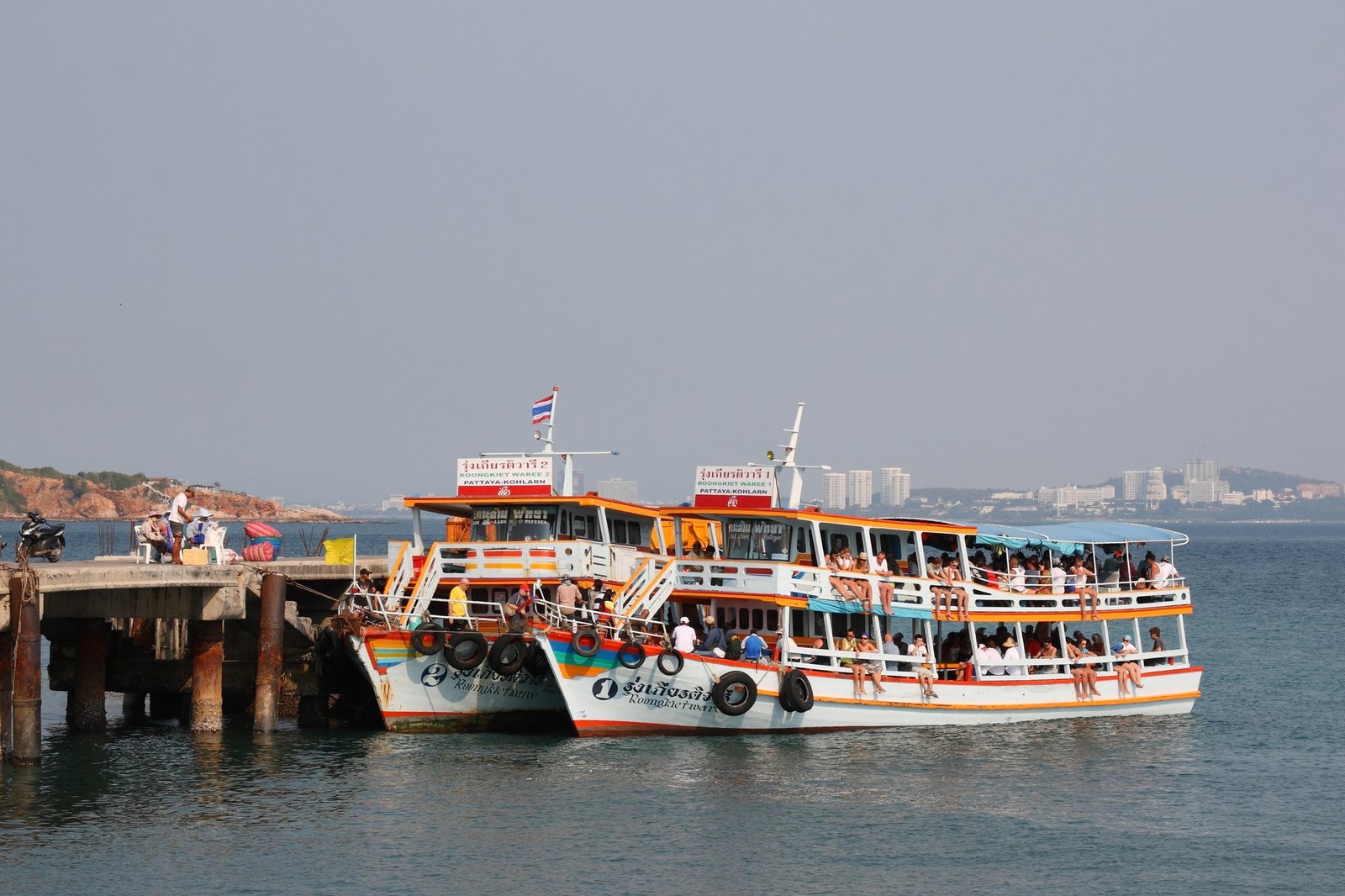
If you are writing a Pattaya travel guide in your head for a trip this high season, one address matters more than any other: Bali Hai Pier, the concrete finger at the southern end of Beach Road where every boat to Koh Larn leaves. On 30 September 2026 the city council agreed to spend the end of the rainy season fixing it — and to rebuild the pontoon at the other end of the crossing. For once, a piece of Thailand travel news is about something travellers actually stand on.
The headline numbers are small and the effect is not. Deputy Mayor Manoch Nongyai told the council that storm-damaged berths and mooring areas at Bali Hai would be repaired now the weather is turning, and that the Koh Larn pontoon — patched up temporarily after being battered this monsoon — will be rebuilt properly under a 3-million-baht contract issued after 1 October, a job of roughly seven working days once the sea allows. Here is what that means for your boat, your morning and your budget.
What Pattaya's council agreed on 30 September
The council session covered city boundaries, traffic and public services, but the pier items are the ones that change a day trip — and the ones worth adding to any Pattaya travel guide written this month. Three decisions are worth knowing before you turn up at the pier with a beach bag.
- Bali Hai Pier berths — the roof and walkway were rebuilt two years ago and remain in use. The outstanding work is on the berths and mooring areas damaged by this year's storms, scheduled for after the rains.
- The Koh Larn pontoon — currently running on temporary repairs. A permanent rebuild to Bali Hai's standard follows under a 3-million-baht budget, taking about a week of workable weather.
- The Waterfront site — on 28 September the city ordered boats, vehicles and equipment cleared from public land beside the stalled Waterfront building by 1 October, freeing the space for public use.
- Landscaping ambitions — the deputy mayor argued the pier could become a city landmark in its own right if the surrounds were improved, a hint at what comes after the structural work.
None of this closes the pier. Thailand's island piers are repaired in sections, around a working ferry timetable, and Bali Hai handles thousands of passengers a day even in the wet months. Expect hoardings, a narrowed walkway and occasional changes to which berth your boat uses — not a cancelled crossing.
The Wave Bridge: Bali Hai's 310-metre upgrade
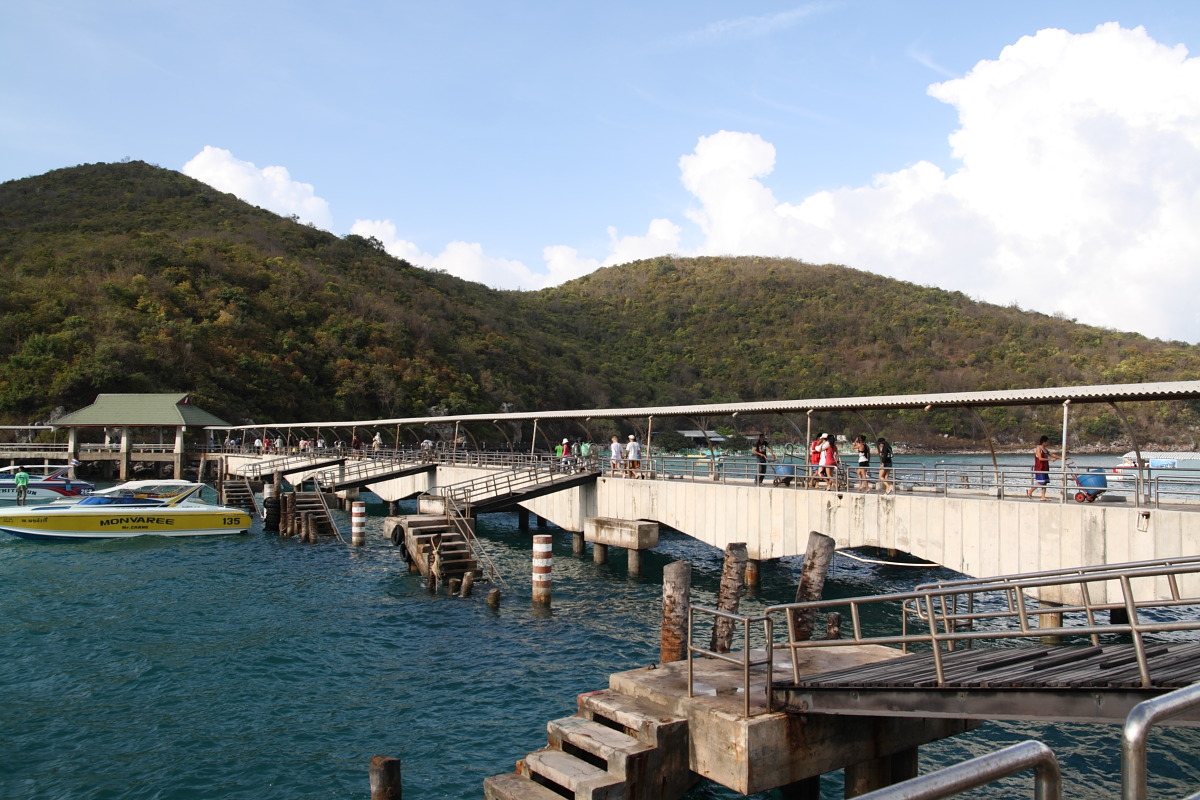
The repairs land on top of a much larger change that opened in August 2026 and that most visitors have not seen yet. The pier's pedestrian approach has been rebuilt as the Wave Bridge, a 310-metre covered walkway with a curved steel roof shaped, the city says, after the waves of Pattaya Bay and the ridge of Pratumnak Hill.
It is more useful than it sounds. The aluminium-composite ceiling throws light down the whole length, inbound and outbound passengers now have separate lanes instead of one scrum, and there is CCTV and colour-changing lighting after dark. In practical terms: a shaded 310-metre walk instead of an exposed one, which in April matters, and a far easier walk with a suitcase.
It is also, quietly, the best free thing on this stretch of coast at sunset — part of the city's push to be taken seriously as a conference destination, and the kind of detail that belongs in a modern Pattaya travel guide rather than the city's old reputation.
Koh Larn ferries: times, fares and which pier to aim for
The crossing itself is unchanged, and it remains the single best-value entry in any Pattaya travel guide: one of the cheapest island boat trips anywhere in the country. The Koh Larn beaches are 7km offshore, and you reach them for the price of a coffee.
- Public ferry to Na Ban — 30 baht, about 45 minutes. Weekday departures from Bali Hai at 07:00, 10:00, 12:00, 14:00, 15:30, 17:00 and 18:30, with extra sailings at weekends.
- Public ferry to Tawaen Beach — 30 baht, about 40 minutes, but only 09:00 and 11:00 on weekdays. Weekends add late-morning and afternoon boats.
- Speedboat — roughly 250–400 baht per person, 15 to 20 minutes, leaving every 15 to 30 minutes between 08:00 and 17:00.
- Last boat back — the final public ferry leaves the island around 18:00. Miss it and you are chartering a speedboat or staying the night.
- On the island — songthaews and motorbike taxis run from Na Ban to the beaches for 20–50 baht; motorbike hire is usually 300–400 baht a day.
One piece of advice worth more than the rest: unless you specifically want Tawaen, take the Na Ban boat. It runs all day, it lands you in the island's only real village, and from there every beach is a short ride away. Travellers who plan around the two Tawaen sailings end up either rushing or waiting.
The green sea, explained
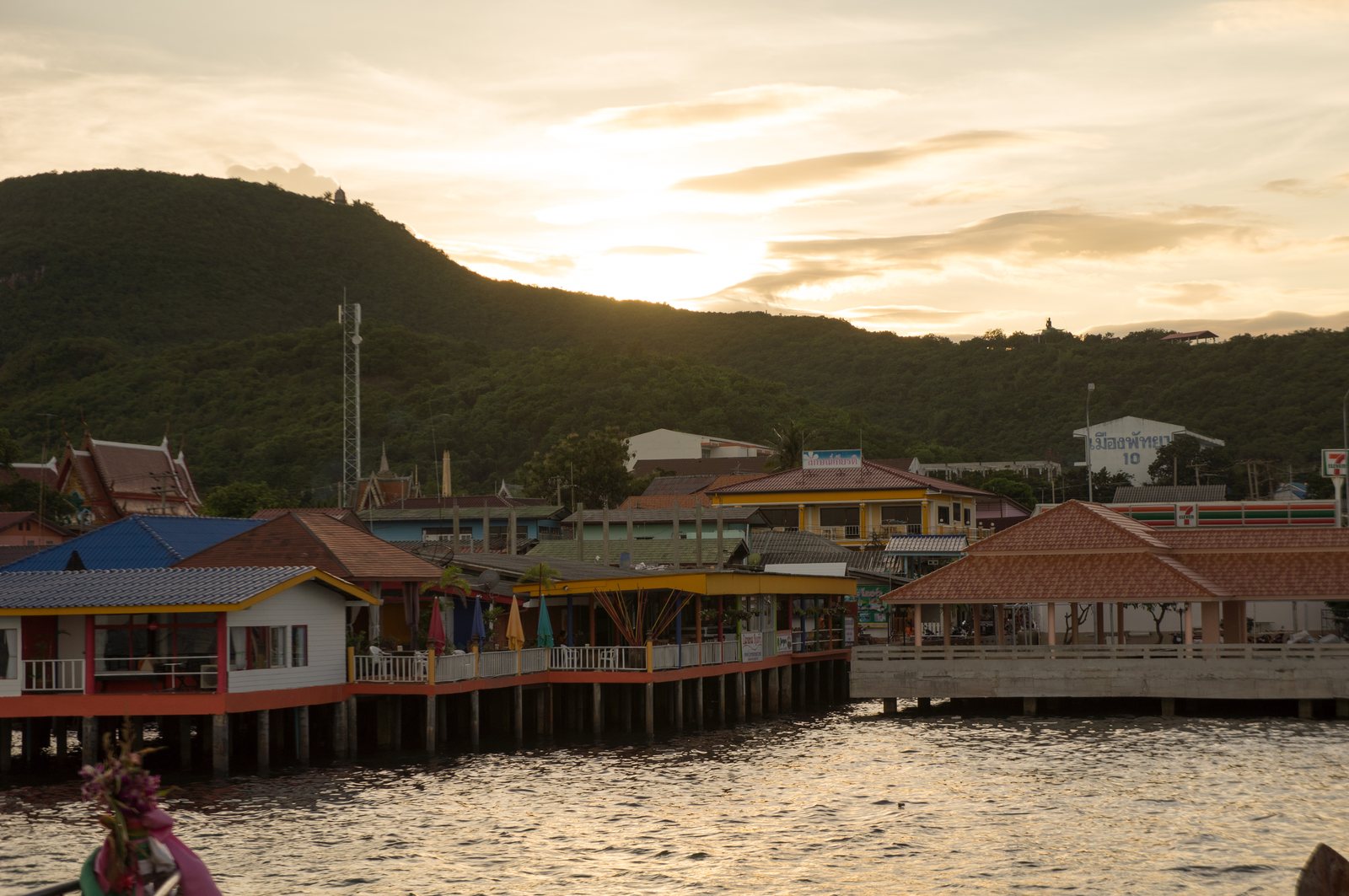
If you have seen photographs of Koh Larn's water looking like pea soup this week, that is real and it is temporary. On 30 September the sea around the island turned a vivid green after the monsoon rains, and Thailand's Department of Marine and Coastal Resources identified it as a plankton bloom — fresh water, sediment and nutrients washing off the land, plankton multiplying fast in response.
No swimming ban was issued. Officials said conditions would gradually return to normal, without putting a date on it. Blooms like this have hit the same coast before and cleared within days to a couple of weeks. The practical reading for anyone doing serious Thailand vacation planning around a beach day: the island is open, the boats are running, and if snorkelling is the point of your trip, keep the day flexible and ask at the pier what the water looks like that morning.
Things to do in Pattaya when the sea is not cooperating
This is where Pattaya earns its keep. The list of things to do in Pattaya that have nothing to do with the beach is longer than the city's reputation suggests, and early October is exactly when you need it.
- The Sanctuary of Truth — an all-teak carved temple-palace on the headland at Naklua, still unfinished after four decades and the most impressive piece of Thai culture in the province.
- Jomtien's night market and beach road — quieter and more residential than central Pattaya, and the better base for families. Our Pattaya and Jomtien guide covers where to stay.
- Nong Nooch Tropical Garden — 500 acres of landscaped gardens south of the city, easily half a day.
- Seafood at Naklua market — grilled prawns and squid at a fraction of the beachfront prices, and closer to proper southern cooking than the Bangkok street food most visitors meet first.
- Walking the Wave Bridge at dusk — free, ten minutes, and the best view of the bay you will get without paying for a rooftop.
Fitting Pattaya into a Thailand itinerary
The argument for putting Pattaya in a Pattaya travel guide shortlist at all is proximity. It is roughly two hours from Bangkok by bus or minivan, which makes it the easiest coastline to reach in the country and a natural first or last stop on a Thailand itinerary that has to start and end at Suvarnabhumi.
- Getting there — buses from Bangkok's Ekkamai terminal run roughly every 30 minutes for about 120–150 baht; minivans from Suvarnabhumi are quicker and similar money. Grab and Bolt both work in Pattaya, and the local songthaews cost 10–20 baht a hop.
- Two nights is the sweet spot — one day on Koh Larn, one day on land. Three if you want Nong Nooch as well.
- Pair it with Bangkok — two or three nights in the capital, then the coast, with no internal flight required.
- Push further east — Koh Samet is two hours on, and Koh Kood travel through Trat is the long, quiet, genuinely beautiful option among the Thailand islands on this coast.
- Read the seasons — the Gulf's east coast dries out through October and November, so a trip two or three weeks from now gets markedly better water than one this week.
Practical tips for Bali Hai Pier and Koh Larn right now
- Buy your ferry ticket at the pier booth, not from a tout. It is 30 baht, printed, and nobody needs to help you with it.
- Arrive 20 minutes early for the 07:00 or 10:00 boat. Those two fill, and with repair hoardings on the berths the walk to your boat may be longer than it looks.
- Take the Na Ban ferry unless Tawaen is specifically where you want to be.
- Carry small notes. Songthaews, beach chairs and island food stalls are cash-only, and the island's ATMs charge.
- Check the water before you commit to snorkelling while the plankton bloom clears.
- Do not plan to catch the last boat. Aim for the 16:00 or 17:00 departure from the island and leave yourself a margin.
- Bring reef-safe sunscreen and shade. Tawaen rents umbrellas and loungers; the quieter coves on the west side rent nothing at all.
- Walk the Wave Bridge on the way out. It is the newest thing in the city and it costs nothing.
Pier maintenance is the least glamorous story in Thailand travel news, and for anyone planning to travel to Thailand this season it is one of the more useful. Bali Hai moves more day-trippers than almost any pier in the country, and a rebuilt pontoon at the island end means fewer scrambles across a pitching gangway with a toddler and a cooler bag. Add the Wave Bridge, 30-baht boats and the shoulder-season weather turning in your favour, and the case for the Koh Larn beaches this month is better than it has been all year. Any honest Pattaya travel guide should say so.
More Thailand travel news
Sources
- Pattaya City Council presses ahead on boundaries, piers, traffic and public services — The Pattaya News, 30 September 2026
- Pattaya unveils the "Wave Bridge" at Bali Hai Pier: a new landmark for a MICE city — The Nation Thailand, 11 August 2026
- Koh Larn sea turns green after rains — ASEAN Now, 30 September 2026
- Koh Larn ferry schedule 2026: Bali Hai Pier times and prices — Pattaya Knowledge
- How to visit Koh Larn, Pattaya's paradise island — I Am Koh Chang, September 2026
- Pattaya Bali Hai pier renovation progresses amid challenges — Pattaya Mail