The most useful piece of Thailand travel news for anyone heading north this cool season is not a new flight or a festival. It is a bus that looks like a tram. Chiang Mai Tram by Lannatique started carrying passengers on 18 November 2026, running a loop of 15 stops around the old city for 20 baht a ride, and it quietly fixes the problem every first-time visitor to Chiang Mai runs into: the temples look walkable on a map and are exhausting in 32°C.
Here is what it is, where it stops, what it costs, and how to build it into a trip — the practical version of this week's Thailand travel news.
What the new Chiang Mai tram actually is
Despite the name, this is not a railway. The vehicles are battery-electric and rubber-tyred, styled to look like the trams that once ran in Thai cities, and they share the road with everything else. Thai and regional media have described the service variously as an "electric tourist tram" and a "tram-style bus"; the second is the more accurate description. Chiang Mai's long-discussed light rail project is a separate thing entirely and is not involved here.
The operator is Asset World Corporation, run as a social enterprise with net revenue after costs reinvested in community projects along the route. Arun Plus supplied the clean-energy side and Toyota the passenger technology — stop displays, live route mapping, real-time vehicle tracking. The Tourism Authority of Thailand's Chiang Mai office, the provincial administration and Chiang Mai Municipality are all partners. Each vehicle seats 12, is air-conditioned and carries PM2.5 filtration, which matters more than it sounds in a city that spends every February and March under burning-season haze.
There is a nice piece of history buried in it: the loop broadly revives the old Route 5 city bus, which served Chiang Mai from 1982 until it was withdrawn in 2002, leaving the old city without public transport for more than twenty years.
The route: 15 stops around the old city moat
The loop runs roughly 14 to 16 kilometres depending on which report you read, and a full circuit takes about 40 minutes. Vehicles are scheduled to depart every 15 minutes. The stops, in order:
- Zheng He Heritage House
- Lannatique
- Wat Sri Don Chai
- Suriwong Book Centre
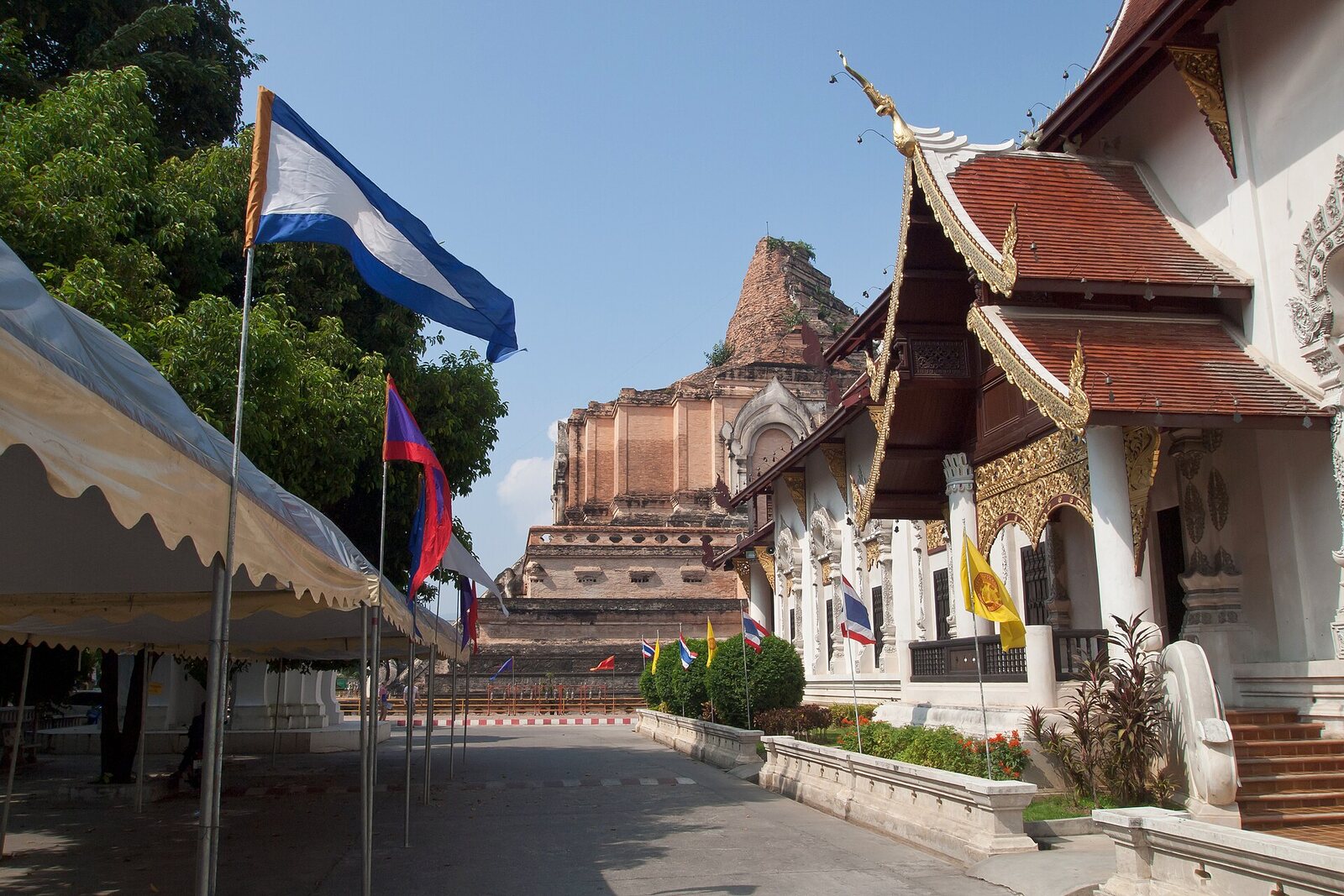
- Wat Chedi Luang
- Wat Phra Singh
- Wat Lok Moli
- Chang Moi creative district
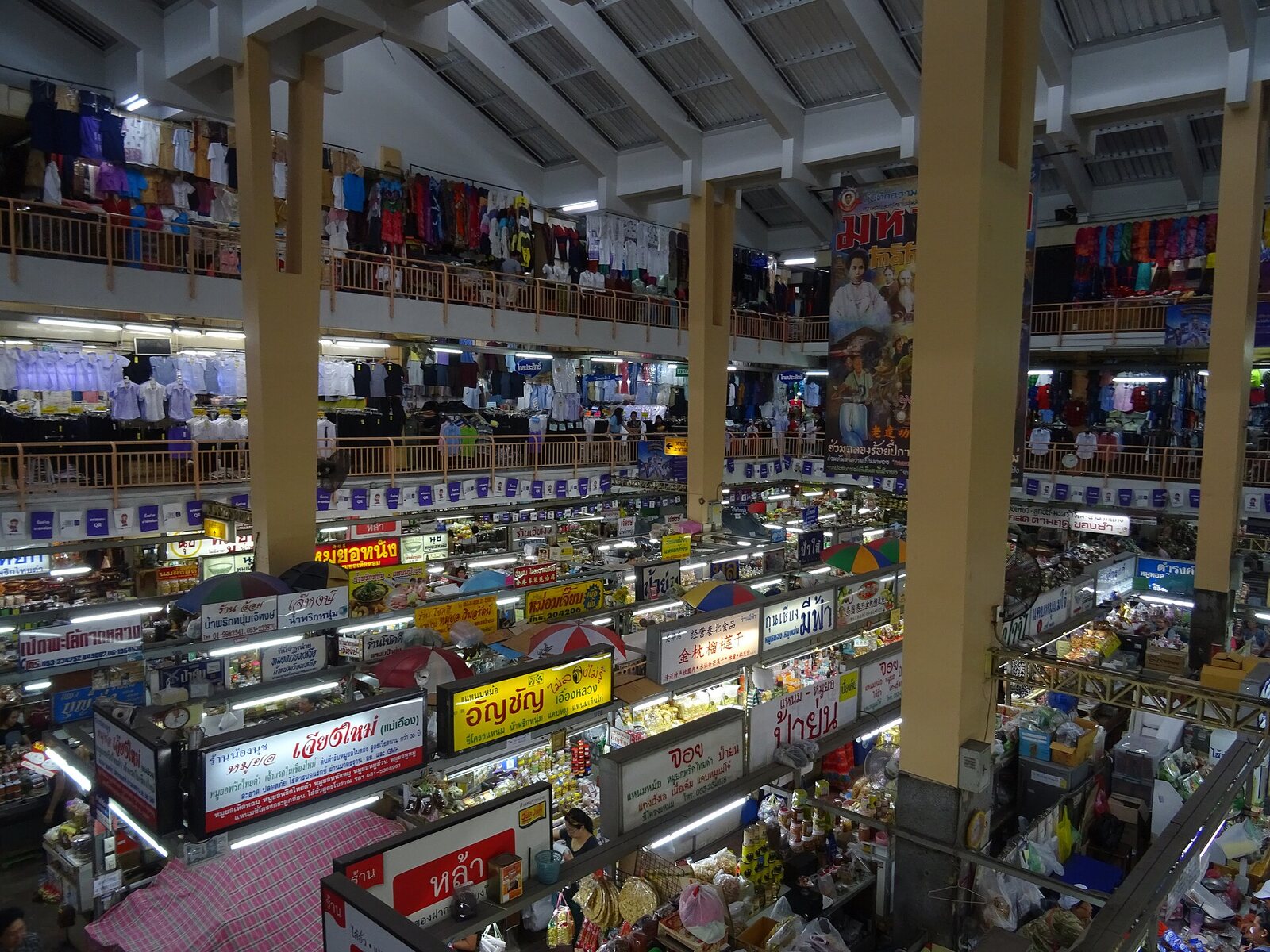
- Warorot Market (Kad Luang)
- Tha Phae Road Soi 1
- Wat Mahawan
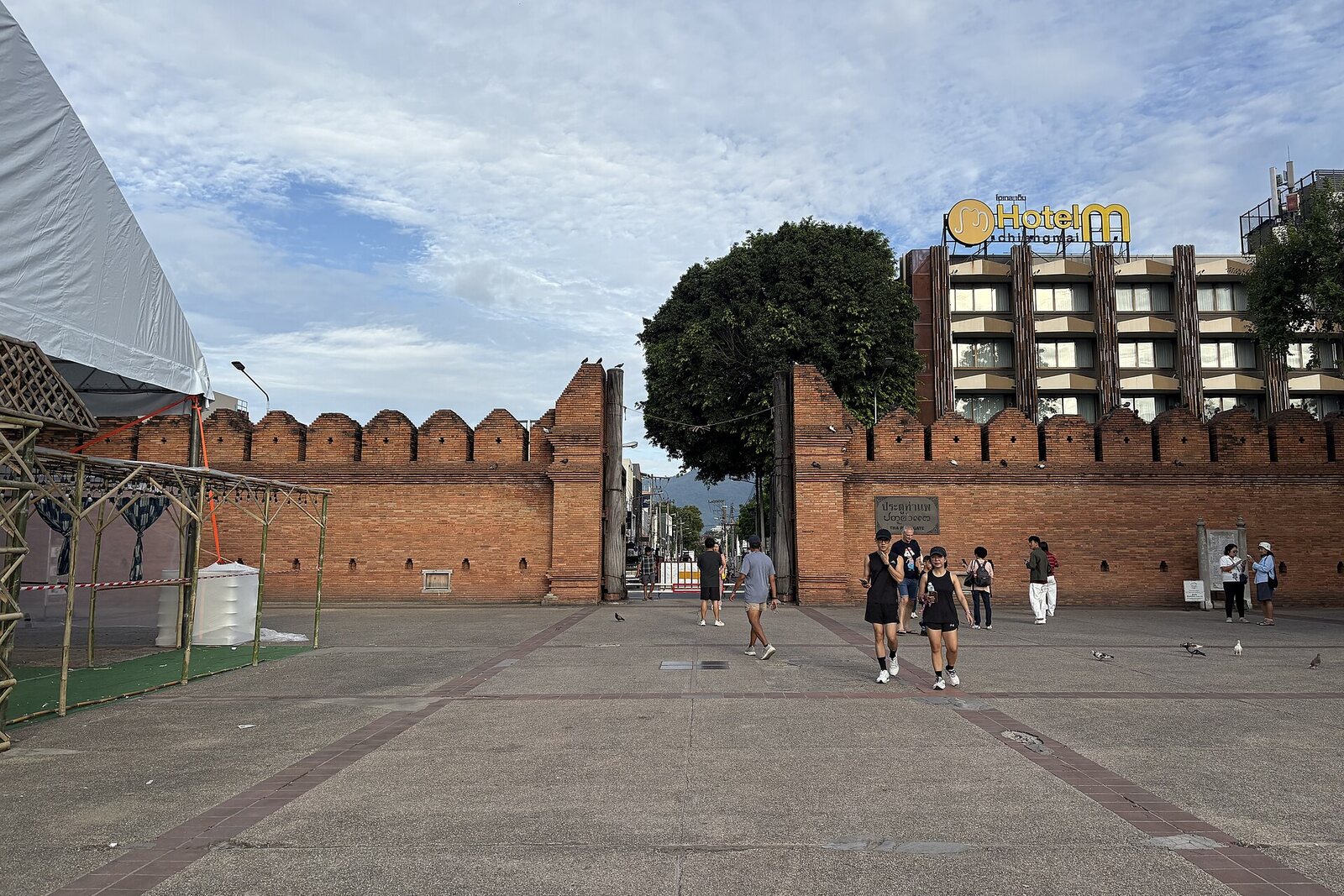
- Tha Phae Gate
- InterContinental Chiang Mai The Mae Ping
- Chiang Mai Ancient House
- Meliá Chiang Mai
That list is the whole argument for the service. Wat Phra Singh, Wat Chedi Luang and Wat Lok Moli are the three temples every visitor wants and the three that sit awkwardly far apart on foot. Warorot Market and Tha Phae Gate are the two places everyone ends up anyway. Four of the stops are hotels, which is how the project pays for itself.
One scheduling quirk worth knowing: on Sundays the tram does not call at Wat Chedi Luang or Wat Phra Singh, because Ratchadamnoen Road closes for the Sunday Walking Street market. Plan those two temples for a weekday, or walk the last few hundred metres from Wat Lok Moli.
Thailand travel news: fares, passes and how to pay
A single journey is 20 baht. An all-day pass with unlimited boarding is 99 baht, and longer-term passes for residents and long-stay visitors start at 450 baht with ID. Children up to 90 centimetres tall and passengers aged 60 and over travel free. Tickets are bought through a QR code system and scanned as you board, so bring a phone with data rather than assuming you can pay the driver in cash.
The sums are straightforward. Five rides pays for the day pass, and a day spent temple-hopping around the moat is easily five rides. For comparison, a shared red songthaew across the old city runs 30 to 40 baht a head, a Grab or Bolt is typically 60 to 120 baht for the same hop, and a tuk-tuk will ask 100 to 150 baht and more from a hotel rank. The tram is the cheapest fixed-price option in the centre, and the only one where nobody negotiates with you.
Fitting the tram into a Thailand itinerary
Chiang Mai usually gets two or three nights on a first Thailand itinerary, and that is exactly the length of stay the tram changes. Day one: ride the loop end to end to get your bearings, then get off at Wat Phra Singh, walk to Wat Chedi Luang and rejoin at Tha Phae Gate. Day two: Warorot Market in the morning for northern Thai food, Chang Moi for coffee and galleries, the old city wall at dusk.
It also makes the city friendlier at the two ends of a trip where energy is lowest — the afternoon you land and the morning you leave. For Thailand vacation planning purposes, that is worth more than the 20 baht suggests, and it is the kind of Thailand travel news that changes a day rather than a budget. Our Chiang Mai guide has the temple opening hours and the day trips out to Doi Suthep.
Set against the rest of the country, the contrast is the point of a two-week trip. Bangkok street food in Yaowarat is at its best in the cool season, with grilled river prawns and mango sticky rice at 60 to 120 baht a plate, and the Airport Rail Link into town costs 45 baht against 350 to 500 for a Grab. Our Bangkok guide covers the neighbourhoods.
Then go east for the water. The best of the things to do in Pattaya are offshore — the ferry from Bali Hai Pier to the Koh Larn beaches is 30 baht and takes 45 minutes, and the Pattaya and Jomtien guide has the pier timings. For quieter Thailand islands, Koh Kood travel runs through Trat on a 400 to 600 baht ferry from Laem Sok pier, about 75 minutes.
Practical tips for riding the Chiang Mai tram
- Buy the 99 baht day pass if you are temple-hopping. Below four rides, pay as you go.
- Set up a Thai QR payment before you travel. Tickets are scanned from a phone, so an eSIM or a roaming data plan is worth having on arrival day.
- Avoid Sunday for Wat Chedi Luang and Wat Phra Singh. The tram reroutes around the Walking Street market.
- Ride the full loop once. Forty minutes in air conditioning is the cheapest orientation tour of any Thai city.
- Dress for the temples, not the tram. Covered shoulders and knees at Wat Phra Singh and Wat Chedi Luang; a light scarf in the bag solves it.
- Go early for Warorot Market. The food floor is busiest and best before 10am, and the tram is quietest then too.
- Check times before you build a day around it. Reports of the operating hours differ — see the note below.
Small infrastructure changes a city more than big announcements do. A 20 baht loop past the four temples people actually visit will do more for a three-night stay than another campaign, and it is the rare piece of Thailand travel news that costs a traveller almost nothing to act on. If you are planning travel to Thailand between now and March, Chiang Mai in the cool season — dry, 15°C at dawn, the north at its best — has just become easier to get around.
Plan the city with our Chiang Mai guide, check dates against the festival finder, and follow the rest of our Thailand travel news as the route settles down. A little Thai culture goes a long way here: Chiang Mai's temple calendar runs all winter.
Source: The Thaiger, 20 November 2026 — Chiang Mai launches electric tram with fares from 20 baht (publication date not stated); The Star / The Nation (ANN), 19 November 2026 — Chiang Mai opens electric tram-style bus service with 15 stops (publication date not stated); Pattaya Mail, 20 November 2026 — Chiang Mai electric tram opens with 15 stops and fares starting at 20 baht (publication date not stated); Asset World Corporation press release, 20 November 2026 — All Aboard! Chiang Mai's First Tram takes to the City! (publication date not stated).
More Thailand travel news
Plan around a festival
Thailand runs a festival somewhere most weeks of the year. Check what falls inside your own travel dates.
Check festivals against your travel dates · All Thai festivals by month
Sources
- Chiang Mai launches electric tram with fares from 20 baht — The Thaiger, 20 November 2026
- Chiang Mai opens electric tram-style bus service with 15 stops — The Star / The Nation (ANN), 19 November 2026
- Chiang Mai electric tram opens with 15 stops and fares starting at 20 baht — Pattaya Mail, 20 November 2026
- All Aboard! Chiang Mai's First Tram takes to the City! — Asset World Corporation press release, 20 November 2026