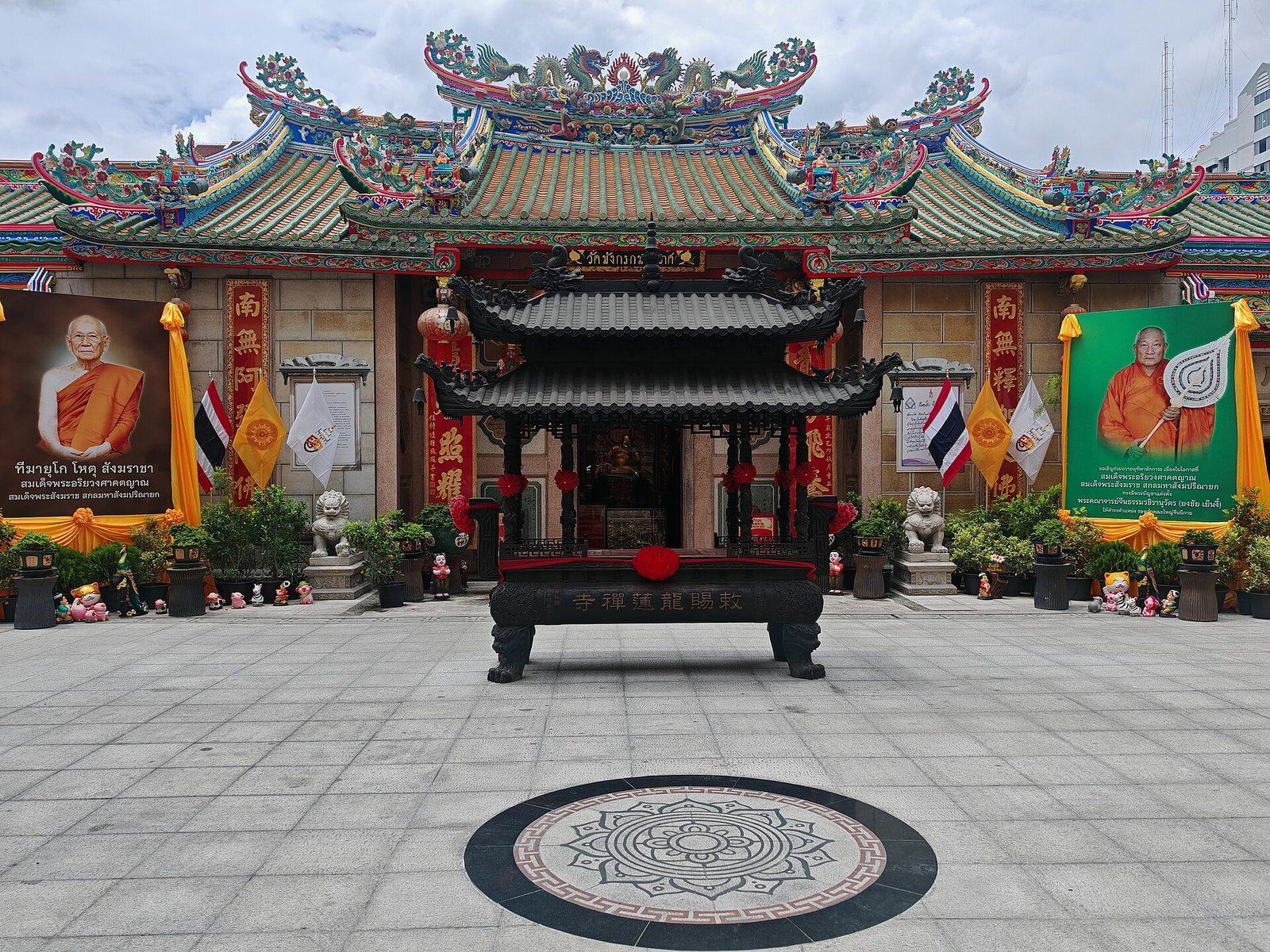
One of the best things Bangkok tourism has to offer this month is free, lasts nine days and is easy to walk. From 10 to 18 October 2026, Yaowarat — the mile of gold shops, neon signboards and food carts everyone calls Chinatown — goes almost entirely vegan. Yellow flags appear over the woks, the shrines fill with incense smoke, and one of the world’s great Bangkok street food streets rewrites its menu overnight.
The festival is Tesagan Gin Je, loosely “the festival of eating jay”, and it honours the Nine Emperor Gods. Phuket’s version, with its firewalking and piercings, gets the photographers. Bangkok’s is quieter, denser and far easier to fold into a first Thailand itinerary — you can arrive at six, eat your way up one side of the street and be back at your hotel by ten.
What the Vegetarian Festival actually is
It is a Taoist observance, kept in the ninth month of the Chinese lunar calendar, which is why the dates move every year. For nine days, participants wear white, keep to a strict plant-based diet and visit shrines to make merit. The point is cleansing — of the body, and of the year so far.
“Jay” is stricter than vegan. Out go meat, poultry, seafood, eggs and dairy, and out go the five pungent vegetables too: garlic, onion, shallot, Chinese chives and single-bulb garlic. Strong flavours are said to disturb the mind. What replaces them is a century of Teochew cooking with mushrooms, tofu skin, taro, pumpkin and some genuinely excellent mock meat.
The yellow flags and the red เจ
Learn one Thai character and the whole city opens up for nine days. A bright yellow flag carrying a red เจ (jay) marks every participating stall, restaurant, bakery and convenience-store shelf — not just in Chinatown but in 7-Elevens, mall food courts and packaged snacks nationwide. If the flag is flying, the food behind it follows the rules.
Dates, hours and where to stand
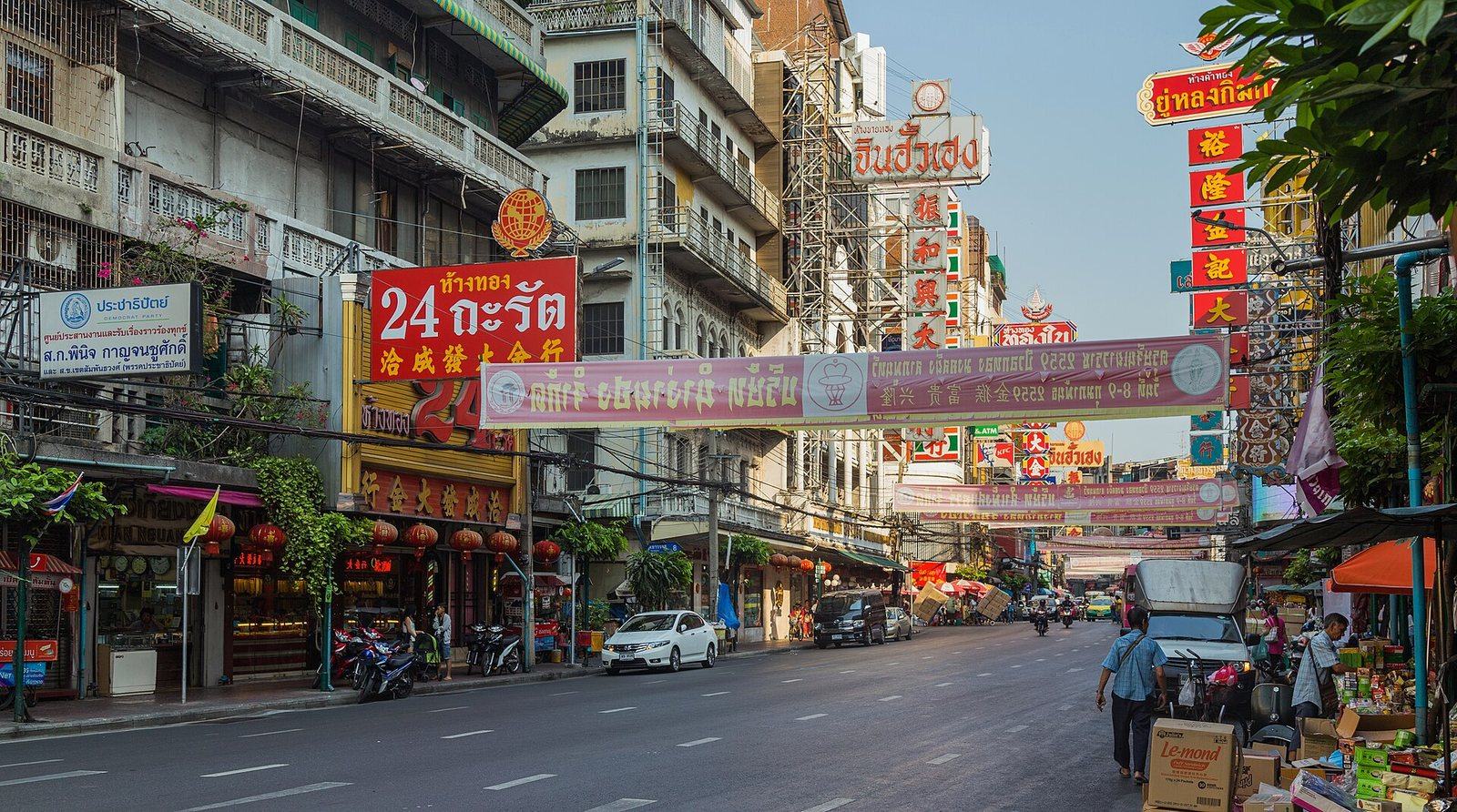
The 2026 festival runs 10–18 October, with the pole-raising ceremony the evening before and closing rites on the 19th. Yaowarat Road, in Samphanthawong district, is the centre of it. In the evenings the Bangkok Metropolitan Administration closes two to three lanes to traffic, which turns roughly a kilometre of road into one long open-air kitchen.
Timing matters more than most Bangkok tourism advice admits. The shrines are at their most atmospheric early — from about 07:00, when devotees arrive before work. The food street belongs to the evening: stalls fire up around 17:00, peak between 18:00 and 22:00, and the best queues form before the light goes. Chinese opera troupes usually perform near Charoen Krung Soi 20 in the early evening.
Entry to everything — street, shrines, temple — is free.
Seven shrines, one temple, and a short walk through Thai culture
The ceremonial side of the festival is spread across a handful of Chinese shrines within about fifteen minutes’ walk of each other, which makes for one of the most rewarding slow walks in the city.
Wat Mangkon Kamalawat — Leng Noei Yi to almost everyone — is the anchor, a Chinese Mahayana temple on Charoen Krung Road with a dragon-crested roof and a courtyard that disappears under incense smoke during the festival. From there the circuit takes in the Kwang Tung Shrine, Tai Hong Kong Shrine, Chow Sue Kong Shrine in Talat Noi, Rong Kueak Shrine, the Che Chin Kor Pagoda and Wat Bamphen Chin Phrot.
This is living Thai culture, not a performance for visitors. Cover your shoulders and knees, ask before photographing anyone mid-prayer, and step around — never over — offerings on the ground. White clothing is traditional and welcome if you want to join in.
What to eat, and what it costs
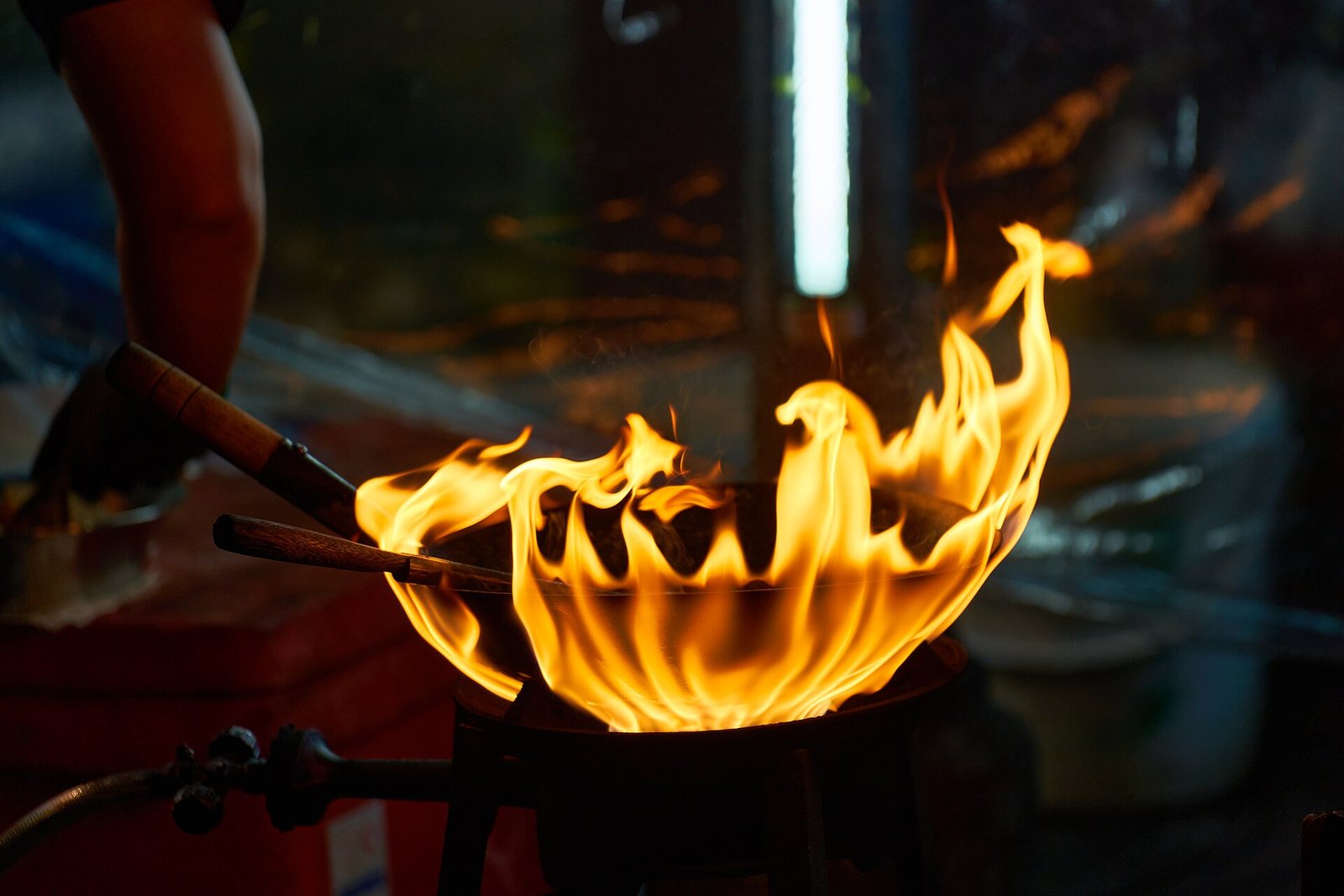
Jay cooking is the reason to come. Look for guay jab — peppery rolled rice-noodle soup — rebuilt with mushroom broth and fried tofu; pad see ew with taro; mock-meat satay over charcoal; pumpkin and sweetcorn fritters; chestnuts turned in black sand in a giant wok; fresh soy milk with tao huay (warm tofu pudding); and, because coconut cream breaks no rules, mango sticky rice.
- A plate of noodles or rice — 50–80 baht at a street stall.
- Fritters, dumplings and snacks — 20–40 baht a portion.
- Fresh soy milk or juice — 25–40 baht.
- Mango sticky rice — 60–100 baht.
- Dinner for two, grazing across four or five stalls — 250–400 baht.
Bring cash in small notes. Many vendors now accept Thai QR payments, but a 1,000-baht note at a 40-baht stall makes nobody happy. If the crowds defeat you, ICONSIAM across the river runs air-conditioned jay counters through the same nine days.
Getting to Chinatown without losing an hour
The MRT Blue Line changed Bangkok tourism in this part of the city. Wat Mangkon station surfaces on Charoen Krung Road, two minutes from the temple and about five from Yaowarat Road; fares run roughly 17–45 baht from anywhere on the line.
By river, the orange-flag Chao Phraya Express Boat costs about 16 baht and stops at Ratchawong Pier (N5), a five-minute walk from the action — the prettiest approach at dusk. A Grab or Bolt car from Sukhumvit runs about 120–220 baht, but have the driver drop you a few blocks out: once the lanes close, walking is quicker than sitting.
Fitting the festival into a Thailand itinerary
October is the shoulder month, and it is underrated for Thailand vacation planning: the rains are tapering, hotel rates sit below the November–February peak, and the festival calendar is dense. Three nights in Bangkok is enough for the Grand Palace, Wat Pho, a river trip and two evenings in Chinatown.
After that, the classic move for anyone who wants beach time without a domestic flight is two hours south-east to Pattaya and Jomtien, where the list of things to do in Pattaya now runs from the Sanctuary of Truth to quiet Jomtien mornings, and a 40-baht ferry reaches the Koh Larn beaches in about 45 minutes. If you would rather chase the Thailand islands proper, the Andaman parks are open again from the middle of the month.
One more reason to travel to Thailand in October: the dates stack neatly. Phuket’s Vegetarian Festival runs on the same nine days, Ok Phansa falls on 26 October, and Loy Krathong follows on 24–25 November.
Practical tips for visitors
- Go on a weekday. Saturday and Sunday evenings on Yaowarat are shoulder-to-shoulder; Tuesday at 18:00 is a different festival.
- Eat first, walk second. Start at 17:30 while stalls are fresh and seating exists, then do the shrine circuit at 20:00 when the crowds shift to the street.
- Jay is not allergy-safe. Soy, wheat gluten and peanuts are everywhere. Ask, and carry a written note in Thai if you need to.
- Small notes only. 20s, 50s and 100s. Bank ATMs on Charoen Krung charge foreign cards around 220 baht per withdrawal.
- Dress for the shrines, not the heat. Shoulders and knees covered; white if you want to take part.
- Skip the taxi for the last stretch. Closed lanes mean the final 500 metres is always faster on foot.
- Book Chinatown-side rooms early. Hotels around Hua Lamphong and Talat Noi fill for these nine days.
It is a nine-day window, it costs almost nothing, and it is the rare piece of Bangkok tourism that locals turn out for in bigger numbers than visitors. If your trip lands anywhere near it, build an evening around it.
More Thailand travel news
Sources
- Bangkok Vegetarian Festival 2026 (Yaowarat): dates and guide — Expats Thailand
- Vegetarian Festival in Bangkok — what to know about the Jay Festival — Hotels.com Go Guides
- Your guide to Thailand's Vegetarian Festival (Nine Emperor Gods Festival) — I Travel for Vegan Food
- Your ultimate guide to Bangkok's Vegetarian Festival — North of Known
- Phuket Vegetarian Festival 2026: 10-18 October schedule — Phuket 101
- TAT targets 2.7 trillion baht in 2026 with high-season events and festivals — The Nation Thailand, 11 September 2026