Bangkok Vegetarian Festival
- 🌱 Fully vegan
- 🍜 Street food
- 🏮 Shrines & procession
- 🚇 Easy city access
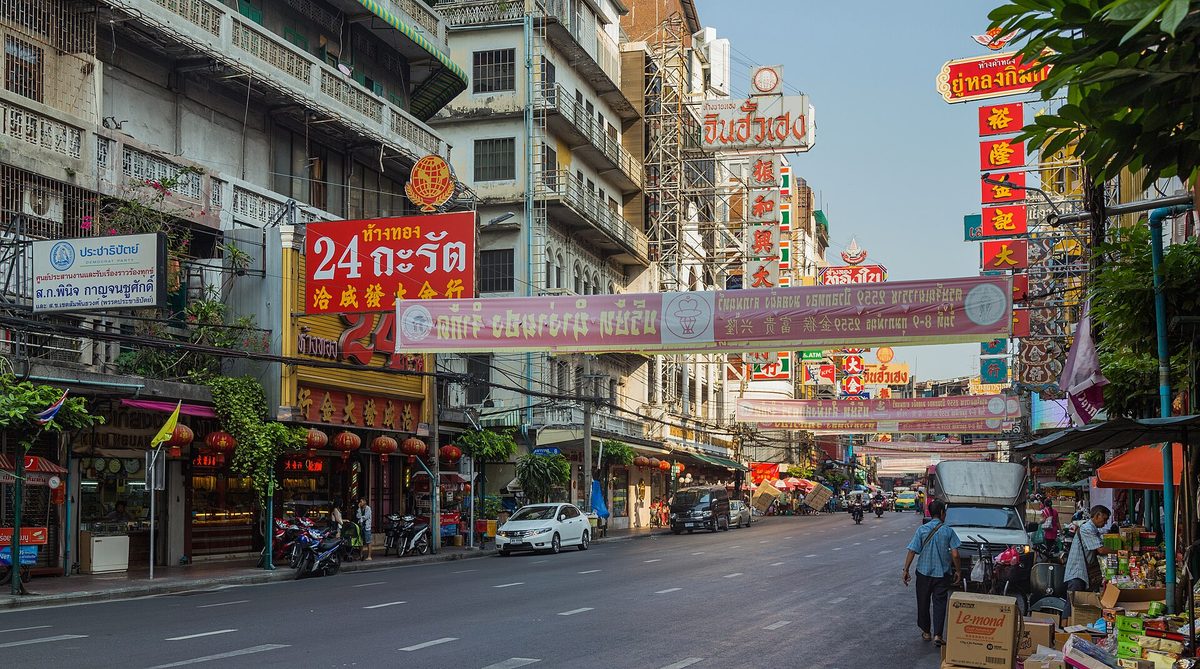
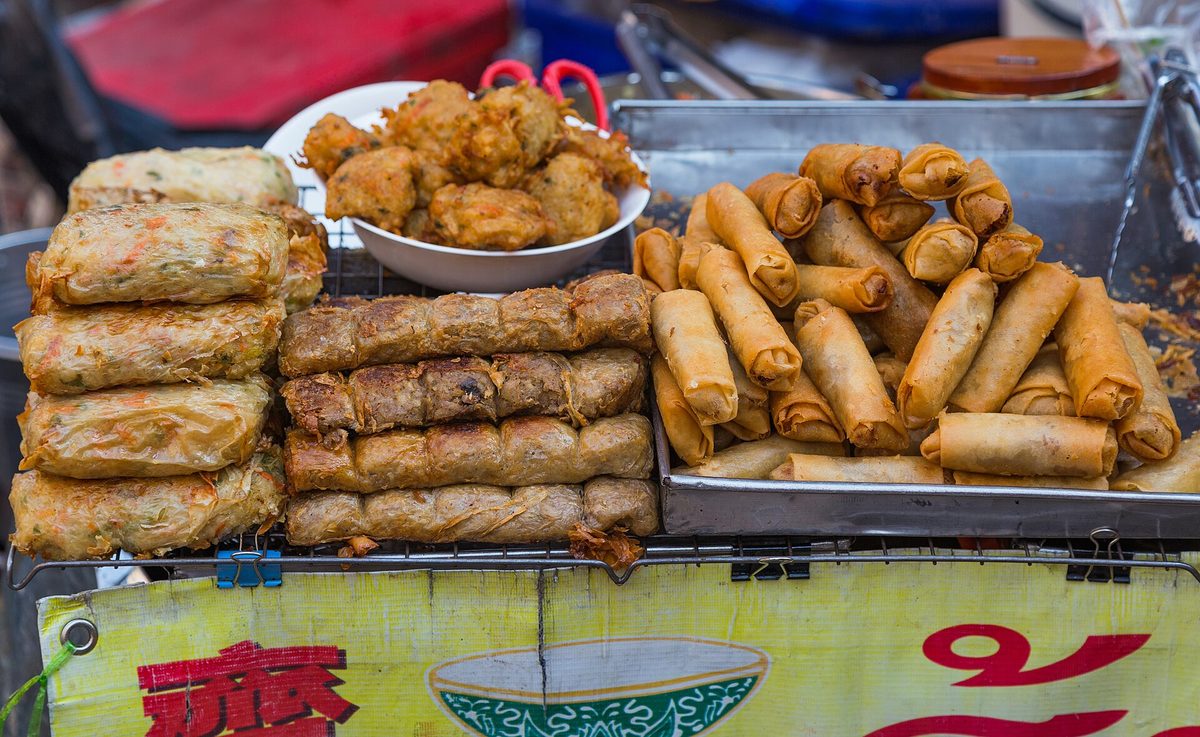
For nine days each autumn, Bangkok's Chinatown stops serving meat. Yaowarat Road fills with yellow flags, every other stall turns out vegan dim sum and mock-meat noodles, and the Chinese shrines run ceremonies and processions through the night. It is the single best week of the year to eat vegan in Thailand — and most visitors only find out about it by accident, because its English name is misleading.
It is a vegan festival, not a vegetarian one
The event is called the Vegetarian Festival in English, but the food sold throughout the nine days is strictly jay (เจ) — and jay is stricter than Western veganism. It excludes all meat, dairy and eggs, and also the five pungent vegetables: garlic, onion, shallot, chives and leek.
That matters because "vegetarian" menus in Thailand can quietly include fish sauce, oyster sauce or shrimp paste at any other time of year. During the festival, none of that applies. If a dish is marked jay, it is safe.
The phrase to learn is gin jay (กินเจ) — literally "eat jay". Telling a vendor pom gin jay (men) or chan gin jay (women) communicates "I eat vegan" more reliably than any English word will, and vendors will go out of their way to accommodate it.
When it happens
The festival follows the Chinese lunar calendar, running for the first nine days of the ninth lunar month. In practice it lands in late September or October and the date moves substantially year to year — 2025 fell eleven days later than 2026.
| Year | Dates | Notes |
|---|---|---|
| 2024 | 3–11 October | — |
| 2025 | 21–29 October | — |
| 2026 | 10–18 October | Yaowarat street event runs 9–18 October |
| 2027 | 30 September – 8 October | Derived, not yet confirmed by TAT |
Because the dates shift, do not assume last year's window. The 2026 nine-day observance runs 10–18 October, while the wider Yaowarat street festival opens a day earlier on 9 October.
Where to go
The festival is centred on the Chinatown Gate at Odeon Circle, at the eastern end of Yaowarat Road. From there, stalls line both sides of the street — well over a hundred of them — with illuminated decorations overhead and the Chinese shrines open late.
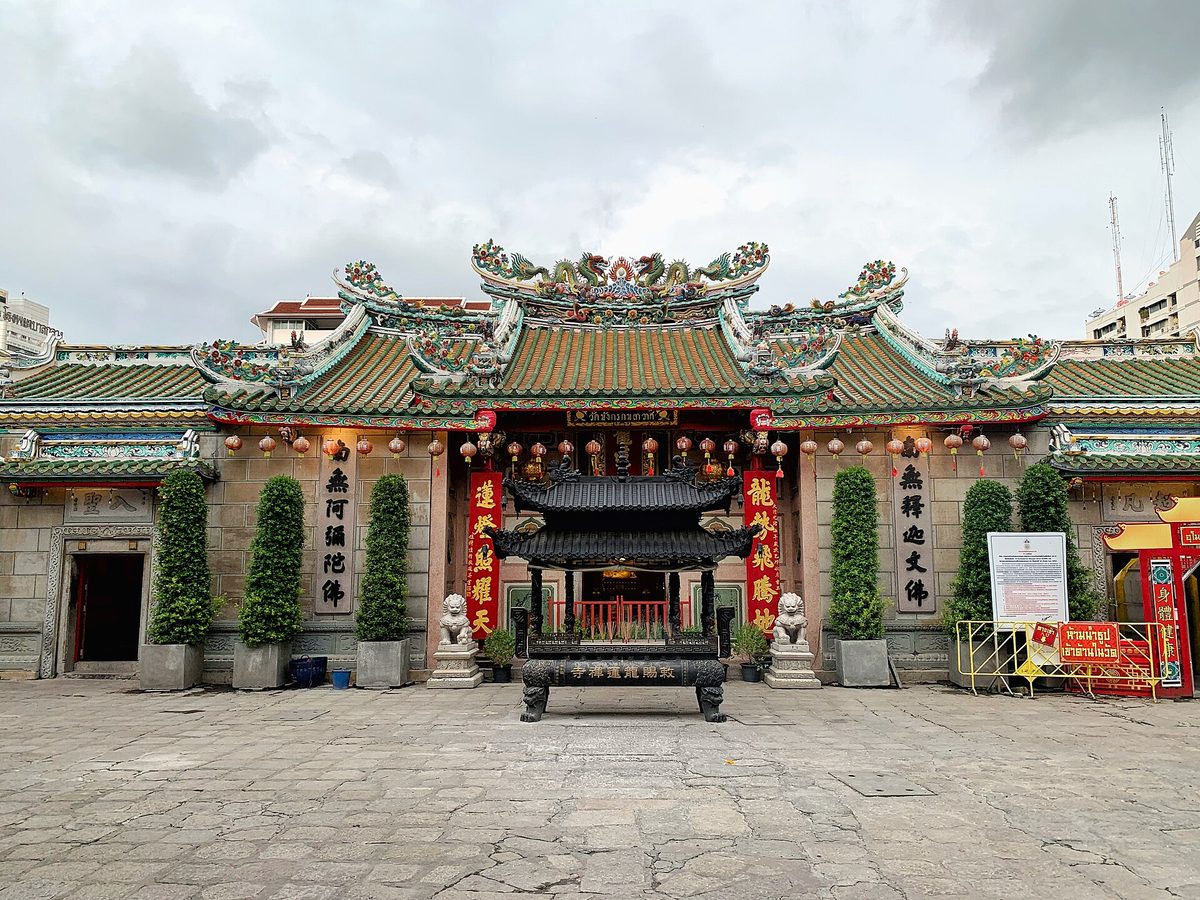
The main set-piece is a procession of deity palanquins drawn from 22 Chinese shrines around the Yaowarat area. Smaller ceremonies run at individual shrines throughout the nine days; schedules are set shrine by shrine and usually posted only days in advance.
Go in the evening. The stalls are busiest and best stocked after dark, the decorations are lit, and the heat is survivable.
What you'll see — and what you won't
If you have seen photographs of devotees with skewers through their cheeks, walking over hot coals or climbing bladed ladders, <strong>that is Phuket, not Bangkok</strong>. Those trance rituals belong to the southern celebration and its <em>mah song</em> spirit mediums.
Bangkok's version is food, shrines, lanterns and a palanquin procession. It is a street-food and atmosphere event, and a superb one — but travellers who arrive in Yaowarat expecting the piercing spectacle leave disappointed. If that is what you came for, you want the <strong>Phuket Vegetarian Festival</strong>, which runs on the same dates.
Eating jay: what to look for
Spotting compliant food is easy once you know the signal: look for strings of yellow and red triangular flags, usually printed with the red Thai character เจ. Anywhere you see them, the food is fully jay — stalls, restaurants and shophouses alike.
- Jay dim sum — Bangkok and Phuket both have deep Chinese culinary roots, and this is where it shows
- Mock meats — some are excellent; others taste noticeably milder than the versions they imitate, because the garlic and onion are gone
- Noodle soups and Chinese-Thai fusion — the bulk of what you'll find on the street
- Coconut-based desserts — naturally jay and widely available
- 7-Eleven's annual jay range — limited-edition instant noodles and microwave meals sold only during the festival, and genuinely worth a look
The observance is not only dietary. Participants commonly wear white and abstain from alcohol, gambling, lying, stealing and killing across the full nine days. You are not expected to join in, but it explains the tone: this is a religious observance that happens to produce extraordinary street food, not a food fair with a theme.
Getting there
Take the MRT. Yaowarat is effectively gridlocked for the whole nine days, and a taxi into Chinatown during the festival is a bad idea at any hour.
MRT Wat Mangkon is the station you want — it sits directly in the heart of Chinatown, a short walk from the stalls. Hua Lamphong, one stop along, also works if you are coming from that direction.
From Suvarnabhumi (BKK): Airport Rail Link to Phetchaburi, change to the MRT Blue Line, then ride to Wat Mangkon. Roughly an hour door to door.
From Don Mueang (DMK): SRT Red Line to Krung Thep Aphiwat (Bang Sue), change to the MRT Blue Line, then on to Wat Mangkon. Around an hour, traffic-independent.
What it costs
The festival is free and the food is street-stall cheap. A full evening of grazing along Yaowarat costs very little, and the jay dishes are generally priced the same as everything else on the street.
October is shoulder season in Bangkok — the rains are ending and high season has not started — so flights and hotels are below their December peak. This is an inexpensive week to be in the city.
The only thing worth budgeting for is a hotel within reach of the MRT Blue Line, which makes getting in and out of Chinatown straightforward on nine consecutive busy evenings.
Why go
If you are vegan, this is the week to be in Thailand — the one time of year when an entire district cooks for you by default and you can stop interrogating menus. If you are not, it is still one of the most atmospheric street-food events in Asia, and it costs nothing to walk into.
Either way, check the dates before you book. The nine days move by as much as three weeks between years, and arriving a week early means Yaowarat's famously carnivorous street food and none of the flags.